
Key Highlights
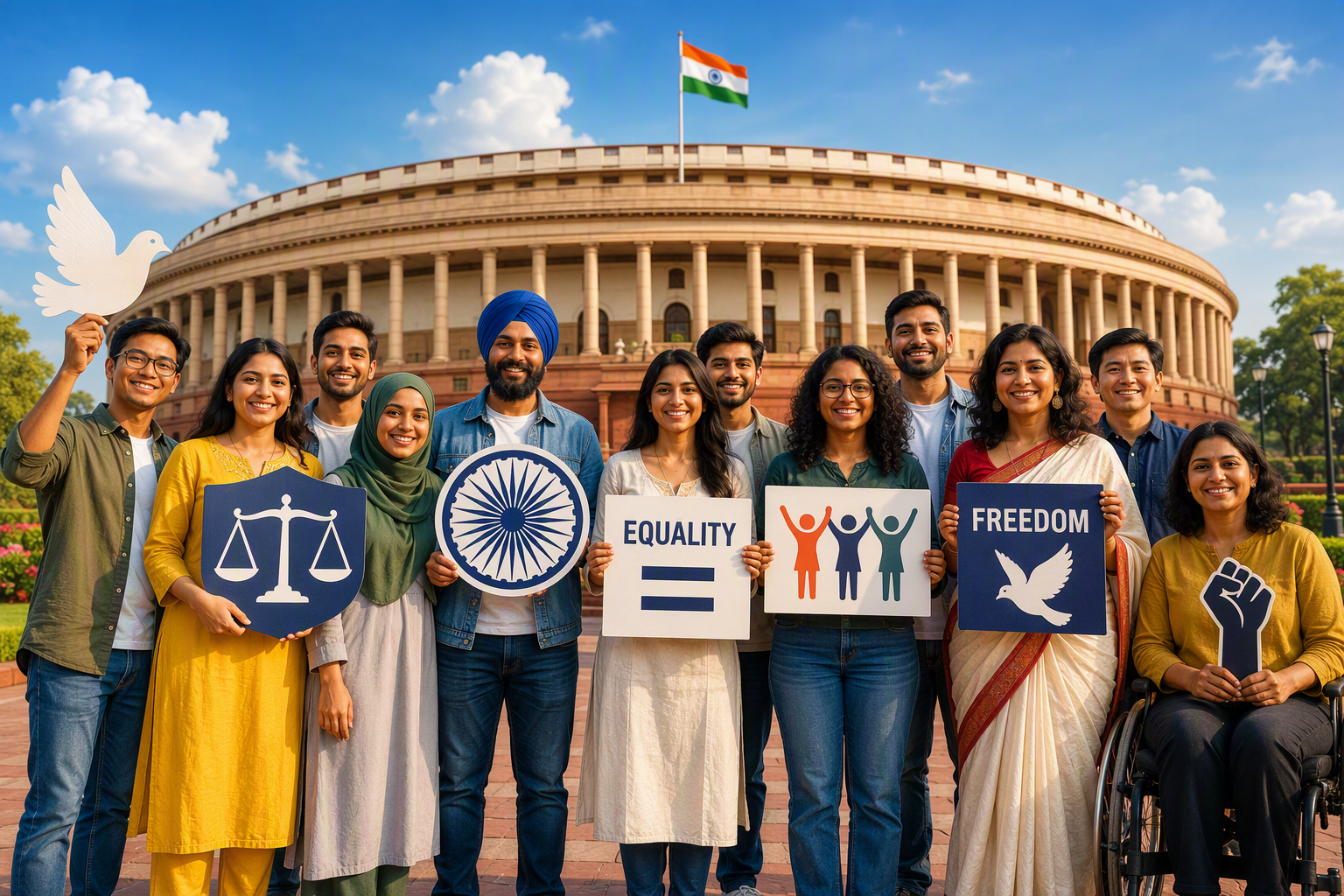
- The fundamental rights in the Indian Constitution give the citizens of India six key protections in Part III of the Constitution.
- These rights help to make sure that everyone is the same in the eyes of the law, keep freedom of speech safe, protect life, and give constitutional remedies to people.
- The Supreme Court and High Courts use judicial review to make these rights work in a democratic society.
- These rights in Part III of the Constitution can have some limits that are there to keep public order and are put in for good reasons.
- Kesavananda Bharati said that these rights link to the basic structure of the Constitution and show how far any constitutional amendment can go.
- Fundamental rights in the Indian Constitution are different from directive principles or fundamental duties.
Introduction
If you want to know how many fundamental rights there are in India, this is where you should start. The Indian Constitution gives you six fundamental rights. These include your freedom of speech, your personal liberty, and your right to have an equal chance in public employment. You can also get help from constitutional remedies if you feel your rights are not being respected. These basic human rights are important in a democratic society. They protect you from any unfair action by the state.
The Supreme Court says that these rights are linked to the basic structure of the Constitution. In the Kesavananda Bharati case, the Court showed how important these rights are. So, these rules are not just on paper. They are very important for all of us.
Overview of Fundamental Rights in India
Fundamental rights are civil rights that people get in the Indian Constitution. You will find these rights in Part III of the Constitution. They keep human beings safe from unfair things that the state may do. These rights also help build a secular state and let us have a democratic society.
The enforcement of their guarantees happens in a court of law. This can be done at the Supreme Court and in the High Courts as well. These rights from the Constitution protect citizens of India. These are mostly for public employment and matters of employment. Some of these rights are there for all people and not just citizens of India. But there are reasonable restrictions for these rights. These can be about public order, national interests, and a national emergency. These things can limit the rights people get.
The Kesavananda Bharati case linked these rights to the basic structure of the Constitution. It also made sure the Supreme Court can do judicial review of laws. This case showed how these rights work together with directive principles.
Definition and Meaning of Fundamental Rights
Fundamental rights are basic human rights and civil liberties. You can find these in Part III of the Constitution. They work to keep citizens of India and all human beings safe from unfair actions by the state. These rights give equal protection, personal liberty, and protection of life. Fundamental rights also stop discrimination. Plus, they offer some educational rights to people.
What makes constitutional remedies stand out is that they can really be used and enforced. If an aggrieved person finds that their rights are not being respected, they have the right to go to a court of law for help. A person can even reach the supreme court if needed. These legal protections are very helpful to protect human dignity. They also matter when it comes to public employment, educational institutions, and compulsory education. In a democratic society, these things are very important for all of us.
Rights are not always without limits. Things like public order and national security can change how rights are used in real life. Other legal rules can also have an effect on rights. There are some big cases about this. For example, in Maneka Gandhi v Union of India, the court made ideas like due process and personal liberty mean more under the constitution. But in Kesavananda Bharati v, the court said that the basic structure of the constitution must stay safe. A secular state makes sure of this through judicial review.
Historical Origins in the Indian Constitution
The idea of fundamental rights in the Indian Constitution is important for human beings living in a democratic society. These rights are written in Part III of the Constitution. They help give all people equal protection, personal liberty, and freedom of speech. The Constitution has constitutional remedies through these rights, so anyone can speak out if there is any misuse of power.
Over time, what these ideas mean has changed. This happened because of talks in parliament and decisions by the supreme court and high courts. The supreme court and high courts played a big part in how these ideas are used. This was very important when people talked about public order, state power, and the rights people have in a secular state. Their enforcement of those rights helped shape the way things are now.
A big shift came with the Kesavananda Bharati case against the State of Kerala. The Supreme Court said that Parliament can change the constitution, but it cannot take away the basic structure of the constitution. After this, in the case of Maneka Gandhi v Union of India, the court read the idea of personal liberty in a wide way. This made the place of fundamental rights in our law even stronger.
Keywords used: fundamental rights, the constitution, supreme court, kesavananda bharati, basic structure, personal liberty, case of maneka gandhi v, union of india, state of kerala, basic structure of the constitution, kesavananda bharati case
Significance and Features of Fundamental Rights
The importance of fundamental rights in Indian society is clear. They make sure that everyone is equal under the law. These rights also protect our personal liberty, keep our human dignity safe, and give us the right to life. On top of this, fundamental rights help to bring fairness in public employment and in all matters of public employment.
Their features are important too. The Supreme Court can help keep basic human rights safe from any illegal action by the Union of India. These rights can be protected because of constitutional remedies. They also show the values of a secular state and work along with the directive principles. As part of the basic structure, they stay at the center of India’s constitutional system. The next parts will tell you more about their goals, why they are important, and how far they reach.
Objectives and Importance in Indian Society
The main goals of fundamental rights are to give people safety, fairness, and a sense of human dignity. In India, these rights make sure that all citizens of India have equality before the law, along with personal liberty and equal protection. There is also a strong prohibition of discrimination. These rights help people in a democratic society live with human dignity.
They are important in our daily lives. They have a big part in public employment and educational rights. These rights help to keep a secular state strong. They protect human beings from unfair use of power. The goal is to make a balance between freedom, public order, and national interests.
Court decisions have made the goals of the constitution stronger. The case of Maneka Gandhi v made the meaning of personal liberty and protection of life much bigger. The Kesavananda Bharati case made sure that even Parliament cannot take away rights linked to the basic structure of the constitution. This is why fundamental rights are still a key shield for people and for the whole constitutional system.
Key Characteristics and Scope of Fundamental Rights
One key thing about fundamental rights is that they are in Part III of the Constitution. These rights are basic human rights. You can ask a court of law to protect these rights if something goes wrong. The constitution gives us constitutional remedies for this reason. If someone’s fundamental rights are not respected, the Supreme Court or High Courts can help fix things. These are not just good ideas. The courts will step in when you need them, so people get help with their basic human rights.
Another thing to know is the scope of these rules. Some rights are for only citizens of India. There are others that help all people. These rights cover civil liberties and public employment. They deal with matters of employment too. Also, they make sure there are rules for educational institutions in a secular state.
Their reach goes far, but there are some limits. Reasonable restrictions help keep public order and protect national security. Judicial review looks at the actions of the Union of India or any other group to see if they went too far or broke the constitution. The basic structure keeps these rights important in a democratic society. They must also work in line with the directive principles.
List of Fundamental Rights in India
The list of fundamental rights is in Part III of the Indian Constitution. The Indian Constitution gives these basic human rights to people. These rights help make sure everyone gets equal treatment by the law. They also protect personal liberty and the protection of life. They work to make things fair when it comes to public employment. There are also some educational rights in the constitution for all.
Today, the country has six main groups of rights. These groups are:
- Right to Equality
- Right to Freedom
- Right against Exploitation
- Right to Freedom of Religion
- Cultural and Educational Rights
- Right to Constitutional Remedies
The Supreme Court is there to help use these rights when people need it. These rights are different from the directive principles and fundamental duties, but they all work together as part of the constitutional framework. Now, let’s see how many groups there are and what laws help each group like educational rights, constitutional remedies, and freedom of religion.
Number of Fundamental Rights in the Indian Constitution
There are six fundamental rights in the Indian Constitution now. You will find these rights in Part III of the constitution. These are the core rights that are in the constitution. At the start, there were seven fundamental rights. But the 44th Amendment took out the Right to Property. Now, the Right to Property is only a legal right. It is not one of the fundamental rights in the constitution today.
The six group of fundamental rights are:
- Right to Equality can be seen in Articles 14-18. This is about all people being equal under the law. It also means that no one will be given any new titles.
- Right to Freedom is in Articles 19-22. People have the freedom of speech. They also have protection of life and personal liberty.
- Right against Exploitation, Right to Freedom of Religion, Cultural and Educational Rights, and Right to Constitutional Remedies are all included too.
These fundamental rights are here to protect citizens of India. But there are also some of them that help all human beings. People use these rights in different ways. Each article in the law talks about how to use them. Some rights are made for public employment and matters of employment. Some rights are for people in educational institutions or for compulsory education. A few say how religious instruction and religious worship should go. Other rights let minorities practice their own ways.
The Supreme Court and the High Courts help look after and keep these rights safe by using something called judicial review. But, sometimes, there can be reasonable restrictions. Things like public order, the country’s national interests, and even a national emergency can hold back some rights.
Some important case law like Kesavananda Bharati v and the case of Maneka Gandhi v has helped defend the basic structure and basic features of these rights for everyone.
Summary Table of Fundamental Rights and Corresponding Articles
If you want a quick summary table, here are the fundamental rights and the articles in the Indian Constitution that match them. These rights belong to Part III of the Constitution. The Supreme Court and High Courts can help people get these rights through the process of judicial review. The fundamental rights make sure all people are equal before the law, keep everyone safe, make public employment fair, support freedom of conscience, and protect the rights of minorities.
| Fundamental Right | Corresponding Articles | Brief scope |
|---|---|---|
| Right to Equality | 14-18 | Equality before law, non-discrimination, public employment, abolition of titles |
| Right to Freedom | 19-22 | Freedoms, protection in criminal matters, protection of life and liberty |
| Right against Exploitation | 23-24 | Human trafficking, forced labor, employment of children in hazardous work |
| Right to Freedom of Religion | 25-28 | Freedom of conscience, religious worship, limits on religious instruction |
| Cultural and Educational Rights | 29-30 | Cultural protection, educational institutions, right of minorities |
| Right to Constitutional Remedies | 32 | Direct remedies for enforcing basic human rights |
The case of Maneka Gandhi v gave a wider meaning to the word liberty in Article 21. When there is a national emergency, some rights can be limited. But Articles 20 and 21 will still be protected.
Right to Equality (Articles 14-18)
The Right to Equality is the first big group in the Indian Constitution. It is about being equal in the eyes of the law. It also works to stop unfair treatment. The goal is to give people equal chances in public employment. It helps to end untouchability and also puts a stop to giving out titles. These rights are there to help make a secular state. They also make sure that people get their basic human rights.
For people in India, this right is important for public jobs and for how the law treats people each day. If there is any violation, people can turn to constitutional remedies in the Supreme Court or High Courts. This right is also connected to personal liberty, the protection of life, and the values of the directive principles. The articles below explain all parts of the Right to Equality in detail.
Article 14 – Equality Before Law
Article 14 is a rule in the Indian Constitution. It says everyone will be treated the same by the law. This is called equal protection. The state cannot treat people in an unfair way. It can only be done if there is a good reason. Many rules use this part. It helps make the Indian Constitution fair for all people.
The idea of fundamental rights is very important in public employment for citizens of India. It helps make sure that people get fair treatment in matters of employment. The application of fundamental rights in Article 14 has an effect on many choices made by the state. This covers how citizens of India get jobs and the way they go to a court of law for help.
The Supreme Court and the High Courts use Article 14 to see if what the state does is fair. Even when there are reasonable restrictions in a law, the idea of equality stays strong. Article 14 also helps to keep life safe. It is close to the basic structure rule that comes from the Kesavananda Bharati case. This rule stops any change that can harm the most important parts of our Constitution.
Article 15 – Prohibition of Discrimination
Article 15 says that the state cannot treat citizens of India unfairly. It does not let the state give different treatment because of religion, race, caste, sex, or place of birth. This article helps make sure there is a prohibition of discrimination. The law should treat all people in the same way. It also shows that India is a secular state.
This rule is very important in places like schools and other public spots. The rule says that the state cannot stop people from getting things or going places because of who they are. This support for human rights helps life feel more fair. It also shows respect to people in public.
Key points under Article 15 include:
- The state should not treat people in a different way because of their religion, race, caste, sex, or where they were born.
- This idea is needed for schools and for everyone getting chances in public places.
- If these rules are not followed, there are constitutional remedies. The supreme court and high courts can help when such problems come up.
Like many other rights, this one also fits inside the bigger plan of public order. It follows rules given by the constitution. At the same time, it helps add more to the directive principles.
Article 16 – Equality of Opportunity
Article 16 deals with equality of opportunity in public employment. This is for the citizens of India. It looks at matters of public employment and tries to see that everyone gets a fair chance. It says that jobs in the state should not be given out in an unfair way because of who a person is.
This right is closely tied to equality before the law and the rule that stops unfair treatment. In a secular state, people should get government jobs no matter which religion or other things they belong to. This is why Article 16 is one of the most useful ways to protect our fundamental rights. It helps stop prohibition of discrimination on grounds of religion and makes sure everyone gets a fair chance.
Its core idea includes:
- People in India get equal chances when it comes to public employment.
- There is help to keep people safe from unfair treatment or being left out in matters of public employment.
- The Supreme Court and High Courts can use the law to take action for these rights.
Like other rights, the bigger rules in the constitution let the government put reasonable restrictions when needed, such as for public order. Still, Article 16 is a strong shield for basic human rights. It works with directive principles and educational rights to help people get fair access to chances.
Article 17 – Abolition of Untouchability
Article 17 says that untouchability must stop. The indian constitution talks about human dignity in this part. It says that all human beings should not be left out from society. It also gives every person the same rights under the law.
This article is about more than what is shown in its text. In a democratic society, it helps people not be treated unfairly. It also lets them feel welcome in daily life and in public spaces. There is a good effect on chances for public employment and all matters of public employment.
If this practice keeps happening, there are constitutional remedies to stop it. You can get help by going to a court of law. The Supreme Court and the High Courts will be there to protect your rights if they get violated. Article 17 of the constitution also looks out for your life and dignity. It does not allow any kind of caste-based humiliation. This is supported by the constitution, which means it is part of the basic structure for equal citizenship and justice.
Article 18 – Abolition of Titles
Article 18 talks about the abolition of titles. The constitution says that there must not be any special ranks in society. This is because the law should see all people as equal. The article stops any status that comes from family or awards. So, it helps everyone to be equal as citizens.
This is important because in public life, people should not have titles that make some feel above others. Because of this, Article 18 helps make things fair in public employment. It also protects how citizens of India are treated in official places.
If someone has a question about state actions or titles, they can take the issue to a court of law. The Supreme Court and High Courts get the final say on what the constitution says about these matters. A constitutional amendment is possible, but it cannot break the basic structure of the constitution. Article 18 is here to make sure public order and state actions always follow the rule of constitutional equality.
Right to Freedom (Articles 19-22)
The Right to Freedom is a group of key rights found in the Indian Constitution. It lets people have freedom of speech. People can form groups, enjoy personal liberty, and have protection of life. There are also rules to keep the government from doing unfair things. These fundamental rights are important for any democratic system.
Still, these freedoms have some limits. The constitution lets the government set rules for things like public order and national security. There are other reasonable restrictions the government can put in place too. The supreme court and high courts check that these freedoms are kept safe in a court of law. Now, due process is a big part of this. The following articles show how the constitution makes a balance between your liberty and actions by the state.
Article 19 – Protection of Six Freedoms
Article 19 gives the citizens of India some key rights. People have the freedom of speech. They also have the right to freedom of assembly and freedom of association. You can move from one place to another. You can live anywhere you want. You can pick any type of work you like. All these rights help the people take part in how a secular state is run.
These freedoms let people speak, meet, travel, and work with respect. They shape how the public lives, the choices in public employment, and affect matters of employment. But the constitution does not let these freedoms go without limits, because liberty has to fit with a fair and safe social order.
The six freedoms stay safe. But there can be some limits on these freedoms. These limits happen because of things like reasonable restrictions.
- Public order
- National security
- Other limits found in the constitution
Courts like the Supreme Court and High Courts make sure that the limits in the constitution are lawful. They do this in a court of law. This helps to keep personal liberty safe. It also makes sure that the basic structure of the constitution is not harmed. Article 19 is for citizens, not for every person in India.
Article 20 – Protection in Criminal Offenses
Article 20 is for people that someone says have broken the law. It is an important part of the Indian Constitution. This article is there so that the criminal law is not used in a wrong way. It is one of the fundamental rights. It helps protect you from being punished in an unfair way.
This is important because it helps to keep basic human rights and personal liberty safe. People must have these rights, even when the court of law brings them to court. Fairness should always be at the center in every court of law. Article 20 matters for all human beings, not just those who are citizens.
The supreme court and high courts use this article as a strong shield. When there are problems with public order, the state needs to follow the rules used in criminal cases. Article 20 does not directly deal with matters of employment. Still, it is important for every part of life. It always helps with the protection of life and liberty.
Article 21 – Right to Life and Personal Liberty
Article 21 says people in India have the right to life and personal liberty. This rule in the Indian Constitution is a big promise to everyone. It says nobody can take away someone’s life or personal liberty unless there is a law. And the law must be used in the right way.
Over time, the Supreme Court made Article 21 mean more than before. The case of Maneka Gandhi v was very important. It connected liberty with fairness and due process. This change made judicial review much stronger. It also put Article 21 at the center of a democratic society.
Today, Article 21 is a strong shield in the constitution for human beings. It keeps people safe from unfair action by the state. High courts help enforce it when needed. Article 21 is about the protection of life and works in many different situations. It is now deeply tied to the basic structure of the constitution. Even when things become unusual in the constitution, Article 21 stays protected. It cannot be stopped in the way some other rights can.
Article 22 – Protection Against Arbitrary Arrest and Detention
Article 22 stops the police from arresting or keeping a person without reason. This article matters to us. It helps keep your personal liberty safe and strong. If the state can take people with no checks, then fundamental rights lose their value. This rule is one of the most useful protections for fundamental rights.
For human beings, it is important that things are fair if they face arrest. Article 22 helps with this. It gives the right to protection of life. This stops public officers from having more power than they should. Article 22 and due process go together. This makes sure things are done the right way.
When these rules are not followed, people can go to a court of law. The Supreme Court and High Courts see if the detention is done the right way. Even when the Union of India says public order is at risk, the law must still be followed by the state. Article 22 is important because it keeps basic human rights safe from unfair arrest or keeping someone in custody.
Right Against Exploitation (Articles 23-24)
The Right against Exploitation helps keep human beings safe from harm and from being forced to do things. The Indian Constitution does not let people buy or sell others. It does not let anyone force people to work. It also does not let people make children do bad or risky jobs. These rules show that human rights and human dignity are important to us all. The goal is to keep everyone safe and make sure people get treated in a good way. It protects human rights and stops the employment of children in unsafe places.
If the rights given by the constitution are not followed, you can use constitutional remedies. You have the right to go to the supreme court, high courts, or any court of law. This is linked to the protection of life. It also covers compulsory education and elementary education for every child. When you read about directive principles, you see how these support the basic structure of the constitution. They help make sure people are not taken advantage of. The next two articles show these guarantees in a simple way.
Article 23 – Prohibition of Human Trafficking and Forced Labor
Article 23 says that human trafficking and forced labour are not allowed. This law is for all human beings, not just citizens of India. The rule means that no one should treat a person like a thing. No one can force someone to work if they do not want to.
This article is part of fundamental rights. This is important because when people are treated badly or made to work in unfair ways, it takes away their basic human rights. It also hurts their human dignity. The article also deals with public employment and jobs. It sets a minimum standard so that no one can be forced to do something against their will.
Its core protections include:
- Human trafficking is not allowed.
- Forced labour and anything like it are not allowed.
- Victims can go to a court of law and get constitutional remedies.
The Supreme Court can step in if someone breaks Article 23. Even when the state says it is about public order, the court does not let people be used in a bad way. Article 23 is there to protect us. It keeps us safe and helps us get educational rights. It also supports the basic structure made to promise justice and protection of life.
Article 24 – Prohibition of Child Labor
Article 24 is about child labor. It says the constitution does not allow the employment of children under 14 years in hazardous conditions. Children cannot work in factories or do jobs that are unsafe. This helps protect basic human rights.
The article is important. It says childhood is the time to grow. Children should have compulsory education and elementary education. They should not do any dangerous work.
The article also highlights educational rights. It tells us that kids must feel safe. They should be able to learn and not be used in wrong ways.
If someone does not follow this rule, the problem can end up in a court of law. The Supreme Court or High Courts can step in to help. Article 24 is not about public employment in the normal way, but the rule does affect how the constitution looks at matters of employment and the protection of life. Its power is strong and matches the basic structure of the constitution. It also goes along with the promise of giving all human beings dignity.
Right to Freedom of Religion (Articles 25-28)
The Right to Freedom of Religion shows that India is a secular state. It keeps the freedom of religion and the freedom of conscience safe for us. People in India can practice their religious worship without fear. There are also rights linked to how people can practice faith. These rights help make sure all faiths get equal respect.
These fundamental rights are not just ideas or beliefs. They are also about educational institutions and how people learn about religion. The constitution makes rules for the Union of India and other authorities. It tells them how much they can be involved with religion. Public order is key and helps control what can and cannot be done. If the rules are broken, the Supreme Court or High Courts can step in. They fix these problems in a court of law. The next article begins by explaining the main guarantee of these rights.
Article 25 – Freedom of Conscience and Religion
Article 25 of the Indian Constitution gives you the freedom of conscience. You can choose your religion, practice it, and share it with others. This main right lets all people have their own beliefs. The state cannot block this freedom. It also shows that personal liberty is important in a democratic society. Because of this, many different religions can grow side by side.
But there are some reasonable restrictions. They help keep public order safe. They also look after national security. These rules make sure your rights and the needs of the community stay balanced in a secular state.
Article 26, 27 & 28 – Managing Religious Affairs, Freedom from Taxation, and Education
Articles 26, 27, and 28 of the Indian Constitution show how the country looks after religious affairs and educational rights. People in India are free to practice their own faith in the way they want. They can worship as they like, and the state will not come in their way. Also, people do not have to pay taxes that are just for supporting any one religion. This helps the country stay fair to all groups and keeps it secular.
The Indian Constitution also gives people the right to set up and run educational institutions. This lets people and groups open schools or colleges that fit with their values or beliefs. That way, they can teach what they feel is good, and this supports their personal liberty and the educational rights of all.
Cultural and Educational Rights (Articles 29-30)
Cultural and educational rights are important in India. Articles 29 and 30 of the Indian Constitution protect these rights. These rules help minorities keep their culture, language, and way of writing. They also let people set up and run their own educational institutions.
The constitution makes sure all people feel proud and equal. It gives everyone the freedom to show who they are. There is a chance for all to get educational rights. The laws help groups feel included with their language and culture. Everyone can be part of society without worry and not be scared of unfair treatment.
India is a secular state. The focus on educational rights and the constitution gives everyone a chance, no matter their background. These protections show a big belief in human rights and human dignity. They help build a democratic society. People are free to be themselves, and the country keeps its diversity strong.
Article 29 – Protection of Interests of Minorities
Protecting the interests of minorities is important for a strong and steady democracy. Article 29 in the Indian Constitution makes sure that every group, like those with different languages and cultures, has the right to keep their identity. The article stops unfair treatment based on language, culture, or religion. This helps people hold on to their traditions and way of life. The Supreme Court uses judicial review to help make these rights real. It looks out for the equal protection for all Indian citizens under the law. Article 29 supports the idea of human dignity for everyone.
Article 30 – Right of Minorities to Establish and Administer Educational Institutions
Article 30 of the Indian Constitution gives minorities the right to start their own schools and colleges. They can do this if they belong to a religion or a language group. This helps them keep their culture and who they are. It makes sure they can use education for this.
When minority groups open and run educational institutions, Article 30 supports equality of opportunity for all. It protects the fundamental rights of the people in India. This part of the Indian Constitution also shows that India is a secular state. It helps make a country where different types of people all feel included.
Right to Constitutional Remedies (Article 32)
The right to constitutional remedies in Article 32 lets people go straight to the Supreme Court if they feel their fundamental rights are being taken away. This means anyone can reach the court if their rights are not safe. It helps keep the justice system open for all. It also protects human dignity and keeps the basic structure of the Indian Constitution strong. The courts use judicial review to see if someone’s rights, like freedom of speech or equality of opportunity, are being broken. If so, they work to fix it. This supports democracy in India and helps protect everyone’s rights through the enforcement of their fundamental rights.
Role and Importance of Article 32 in Safeguarding Fundamental Rights
Article 32 is a key part of the Indian Constitution. It protects fundamental rights. If someone’s rights are taken away, this article lets people go to the Supreme Court. They do not need to go anywhere else first. It gives a way for judicial review. This helps to keep human dignity safe.
Article 32 makes sure everyone has the right to get help from the law. It shows the importance of justice in a democratic society. If you feel your rights are not respected, you can ask the Supreme Court for help. This article keeps the basic structure of the constitution strong. It protects citizens from state actions that could harm their rights.
Conclusion
The fundamental rights written in the Indian Constitution help protect the freedom and dignity of each person. These rights give people power. They bring justice and equality. They help us feel like we all are one big group in a democratic society. When we respect these rights, like cultural and educational rights, every person can have their voice heard. People can get more chances in life. The system uses judicial review and constitutional remedies to protect these rights. This shows that the nation does well when everyone gets their basic human rights.

