
Key Highlights
- The geography syllabus can be seen in the prelims, mains exam, and also as an optional subject on the UPSC exam.
- In general studies, you’ll look at both Indian and world geography. The topics will cover things about the physical, social, and economic sides.
- Prelims is about picking the right answer, but in mains you need to explain your answers well, and do good answer writing.
- The optional subject has two papers. Each one gives you 250 marks.
- NCERT books, maps, previous year papers, and current affairs help you get ready for the UPSC in the best way.
Introduction
If you are getting ready for the UPSC exam, you need to focus on the geography syllabus. This subject plays a big part at every stage of the civil services process. You will see it in the prelims, mains, and also if you choose it as an optional subject. Geography can help you get good marks because it links ideas, maps, places, and current affairs in a way that makes sense. You do not have to feel lost. When you know what UPSC will ask for and how the geography syllabus is shaped, it will help you use your study time well and make things feel less hard.
Overview of Indian Geography Syllabus for UPSC
The Indian geography syllabus for the UPSC exam is a part of general studies. It can also be an optional subject for civil services students. You need to study the physical setting, resources, and agriculture.
The syllabus will cover industry, transport, settlements, and regional planning. There are political aspects in it, and you will learn about new issues in indian geography too.
For the prelims, the geography syllabus is in general studies. You will get questions with options to pick from here. In the mains, things change. GS Paper 1 asks you to write more and explain your answers. The big thing you need to know is this: in prelims, you just pick answers based on what you know. In mains, you need to explain your answers, add structure, and give examples. The next parts will show you these main differences in a simple way.
Importance of Indian Geography in UPSC Exam
Indian geography is a key part of the UPSC exam. You have to read it for general studies in the prelims. You will read about it again in GS Paper 1 when you take the mains exam. If you choose geography as your optional subject, you will read these same topics again. This way, you can save time and also remember more for the mains exam and general studies.
In the prelims, you will get questions on things like the physical features of India and the world. You need to know about rivers, mountain ranges, passes, oceans, weather details, and land forms. It is also good to pay attention to maps. The UPSC often asks map-based questions about places that are talked about in the news. So, make sure you read about current affairs in this area.
For mains, Indian geography helps you answer questions about resources, agriculture, urban developments, disaster management, environmental issues, and regional gaps. If you understand the geography syllabus early, it makes it easy to remember facts and to write good answers. This will help you with your study plan because Indian geography is a high-value area.
Key Components Covered in the Syllabus
The geography syllabus has many topics, but you can get through it if you break things into smaller parts. UPSC does not look at geography as only maps or landforms. It covers physical geography, human geography, economic geography, and world geography. All these areas are linked to each other.
For Indian geography in mains, you start by studying the land and the climate. After that, you learn about the people, what they make, the plans, and the main problems in India right now. You should look at how the different regions of India, their resources, and how development happens, all change each other.
Key components include:
- In physical geography, you can learn about things like relief, drainage, climate, soils, and natural vegetation.
- Human geography talks about the way people live. It covers things like population, how people move, where towns and cities grow, and the way cultures spread in different areas.
- Economic geography looks at how people use the land and resources. It talks about farming, industries, how things are moved, and how people trade.
- World geography helps you know how climate systems work, how ocean currents move, and the ways landforms change.
- You can also read about planning for regions, thinking about environmental issues, and planning development the right way.
- Today, people think about issues like food security, how soil erosion changes the land, and how to handle disasters.
These topics help us get a better idea of human geography, physical geography, world geography, ocean currents, economic geography, natural vegetation, and environmental issues. The issues like soil erosion, food security, and disaster management help us understand more about our world.
Indian Geography Syllabus for UPSC Prelims
For prelims, the geography syllabus is part of general studies. It has both Indian geography and world geography. You will get questions on physical geography, economic geography, and social geography. The focus is wide. So, you need to be clear about the ideas. It is better to keep going back to what you read and revise. Do not just keep reading new things all the time.
NCERT books are a good way to start. They make tough ideas easier to read. When you study for the prelims, you have to read about things like oceanography, climatology, geomorphology, rivers, mountain ranges, passes, and places on the map that show up in the news. Be sure to get your answers right because the prelims are objective. The next two parts will tell you what to read for physical geography and what to read for human and economic geography.
Physical Geography Topics
Physical geography is important for the UPSC prelims. In the exam, there are questions about landforms, climate, and water. They like to check if you understand the ideas well. If you do not know the basics, it gets tough to cut out the wrong answers. So, many people begin with NCERT books. After that, they read map facts again to get more ready for the test.
Micro topics matter in the UPSC exam. The UPSC can ask questions from small parts of big themes. This is common when there is something about current affairs or a special detail in physical features.
Give extra attention to:
- There are geomorphic processes. These are called endogenetic and exogenetic forces.
- You can see many physical features like mountain ranges, rivers, watersheds, and passes.
- Oceanography talks about things such as ocean currents, tides, waves, and salt in the water.
- Climatology tells us about monsoons, air mass, jet streams, and how tropical cyclones happen.
- You will read about soil profile, soil types, and what takes place during erosion.
If you get ready for these in the right way, the questions in prelims will feel more clear. They will also be easier to answer.
Human and Economic Geography Coverage
Besides physical geography, the prelims also tests you on human geography and economic geography. These topics are about how people live, work, travel, and set up spaces. In both world geography and Indian geography, UPSC can ask about many things. They may ask questions on population, people moving to new places, resources, farming, factories, and how cities grow.
You should not think of these as things that never change. Current affairs can make these topics come back up again. A place in the news could be tied to people moving, jobs at the port, where businesses are set up, or if the number of people there goes up or down.
Focus on these areas:
- There is more people now, and many people move to new places. How old people are in a group also changes.
- People live in many parts of the country. More cities are getting bigger, and big city areas keep growing.
- Farming is a part of this, but there are many problems with food. The money of a country can go up and down.
- Factories, how people travel, buying and selling things, and energy resources are all important.
- The world has many resources, and you can find them in many places. These things connect with current affairs and what is happening now.
This mix can help you when you start work on GS Paper 1. It also helps with answer writing.
Indian Geography Syllabus for UPSC Mains (GS Paper 1)
In mains gs, geography now has more details. You need to talk about patterns. You should also compare different places. It is important to connect indian geography with world geography in a clear way. At this time, answer writing practice is very important. Good practice in answer writing helps a lot for exams like mains gs.
GS Paper 1 often asks you about indian geography and world geography. You will get questions on things like the physical setting, the monsoon, resources, farming, industries, the population, towns, and how places are planned. The syllabus is not just for writing lots of facts. You have to show how all these things are linked. You also need to explain what causes what, what happens after, and how things can change from one place to another. The next parts will cover the big topics in indian geography. After that, they will go over world geography and indian geography together. This will help you see how both of them compare.
Major Topics in Indian Geography for Mains
The study of indian geography in mains gs covers both how things are made and how they change over time. First, you have to know about the physical setting of India. Then, you read about resources, farming, industry, where people live, planning, and things about the public. The UPSC likes questions on topics where indian geography links with people, the economy, and things to do with policy.
This means you need to do more than just give names or say what words mean. You should explain how these patterns make a change in real life. For example, you can talk about how changes in the monsoon affect farming. You can also say how some places do well, and some do not, and how this changes development.
Major topics include:
- We talk about things like the structure, relief, drainage system, watersheds, and also physiographic regions.
- It covers the way the mechanism of Indian monsoons work, how they change rainfall, and also about floods, droughts, and tropical cyclones.
- The resources here are land, water resources, minerals, forests, wildlife, and energy resources.
- We also go over things like agriculture, agro-climatic zones, different crop patterns, and food security.
- You get info about urban developments, slums, important metropolitan regions, and planning concerns.
- There are some other big and new things, such as environmental issues, disaster management, desertification, and soil erosion.
World Geography vs Indian Geography in Mains
One good way to see what mains are about is to think of indian geography and world geography as two different things. World geography helps you learn the big geographical concepts and see patterns all over the globe. Then, indian geography takes those ideas and uses them to study India’s physical setting, the resources it has, how the regions are different, and problems the country faces with development.
In the mains exam, UPSC wants you to talk about ideas, see how they match, and show how these things work for each area. This is what makes it different from the prelims. In the prelims, you only have to find the right answer. But in the mains exam, you have to make your answer step by step, connect the reasons, and tell what happens because of them.
| Area | World Geography in Mains | Indian Geography in Mains |
|---|---|---|
| Scope | Global landforms, climate systems, ocean features, human patterns | India’s relief, drainage, monsoon, resources, settlements, and planning |
| Human focus | Cultural regions of the world, population models, migration | Population distribution, tribes, urban sprawl, metropolitan regions |
| Economic angle | World agriculture, trade, resources, industry patterns | Economic geography of India, agriculture, industries, transport, trade |
| Regional study | Global climate and relief patterns | Physiographic regions, river systems, island territories, regional disparities |
Detailed Breakdown of Geography Optional Syllabus
Yes, indian geography is part of the optional subject in the mains exam. The geography syllabus has two papers. Each one is worth 250 marks. Paper I covers the main rules of geography. Paper II is about the Geography of India.
This optional subject is still one of the most popular optional subjects. The reason is because it goes well with general studies. It can also help when you write essays. If you want to pick this subject, you should look at both papers on their own. The next two parts will talk about the main ideas in Paper I and the main themes in Paper II in a simple way.
Paper I: Principles and Concepts in Geography
Paper I of the optional syllabus is about the big ideas in geography. You will get to know how the earth works and how the climate system moves. You will also see how people around the world live and how we use different models and ideas to explain this. If you want to write well about these geographical concepts, this paper is very important.
The syllabus is big, but it is split into parts. These parts are physical geography, human geography, economic geography, environmental geography, regional planning, and models. This will help you have a clear path to follow when you study or review the content.
Important areas include:
- The topics in geomorphology talk about things like continental drift theory. You also learn about how plates move, earthquakes, tsunamis, and how the land changes its shape.
- In climatology, you read about the sun’s rays or solar radiation, the heat budget, and how air moves high up in the sky. There is more about monsoons, jet streams, and air mass too.
- Oceanography deals with the bottom topography of the Atlantic, the salinity of the oceans, tides, currents, and coral reefs.
- Some human and economic topics focus on how people live. You also read about how they trade with the world, food security, and how they make settlements.
Paper II: Geography of India – Core Themes
Paper II is about the geography of India. If you choose indian geography as your optional subject, you will have to read a lot about this topic for paper ii. There will be questions on the land, people, and economy of India. You also need to know about development plans and what is happening right now in the country. It is important to understand all this as you get ready for the test.
The syllabus begins with the physical base. After that, it talks about development problems. This is good, not only for the optional Paper II, but also for GS Paper 1. It can help you when you have to write essays as well.
Core themes include:
- The physical setting talks about the land, the buildings, slopes, how water moves, the different physiographic regions, climate, the indian monsoon, and kinds of soil.
- There are many resources like land, groundwater, minerals, forests, marine assets, and energy resources.
- People do jobs in agriculture and industries, and there is transport, communication, and trade.
- Population spread, types of settlements, regional planning, political sides, and new issues are also in this group.
The topic of salinity of the oceans is mostly seen in Paper I. But in Paper II, you get the same topic, but you have to talk about it with the Indian context.
Major Subtopics in Indian Geography for UPSC
To do well with the geography syllabus, break it into smaller study blocks. This can help you know the exam pattern better. It also makes it easy for you to look back at your work without getting mixed up. Start with NCERT books so you build a strong foundation. After you read those, try standard books and practice often.
Key subtopics to study are physical features, drainage, climate, soils, vegetation, resources, settlements, and regional planning. For prelims, you will see these as clear or map-based questions. In mains, you need to look at them deeper and think about how they connect. The next two sections talk about two important groups you must know.
Geomorphology and Drainage Systems of India
Geomorphology helps you see why India looks the way it does. It shows how every part of this country is not the same. You need to know this for the prelims and mains. Landforms can shape the climate, rivers, where people stay, and even how development happens. If you know why things look or change in this way, you can answer many questions better.
Good drainage systems are also very important. The UPSC will give questions on river basins, watersheds, floods, and how rivers make patterns in different parts of the country. You will find these topics very useful when you do map-based revision.
Study these subtopics carefully:
- The structure and relief of India have the big mountain ranges and the wide plains.
- There are many river basins, different drainage systems, and several patterns of watershed in the area.
- Geomorphic processes come from things like erosion, how a slope forms, and changes in landforms.
- The basics of oceanography also talk about the bottom topography of the Atlantic. This will help you get more practice and make your ideas strong.
This group is here to help you have a good start in physical geography. It gives you questions that you can use in real life, too.
Climate, Soils, and Vegetation
Climate, soil, and plants are also a part of the area that can bring you marks. In the UPSC exam, you may see questions about these topics in many ways. A question about rain can be linked to crops. A question about climate change can be linked to events like disasters. A question about plants or trees can be about ways to save nature.
That is why you should get ready for them together and not by yourself. This will help with answer writing. Each theme ties in with the other. So, it is easier to write answers when they link in this way.
Important micro topics include:
- The way the monsoon works, how rain falls in different places, what changes happen in the weather in the west, and storms that start in the tropics.
- A soil profile shows the soil layers. There are different kinds of soil. You can find them in many places. Soil can get damaged, and you need to know how to look after the soil.
- There is natural vegetation, forests, and wildlife resources in the world. When people cut down forests, new problems come up. The main problems of deforestation can hurt the land, animals, and the people who live nearby.
- Climate change can change a lot of things. It can cause problems in the oceans. Coral reefs get hurt if they lose their color. This is called coral bleaching.
These are good places to get the best results if you want steady learning. They also help you keep up with new links.
Micro Topics and Frequently Asked Areas in Prelims
In prelims, small topics can change your score by a lot. It is not enough to read books in a broad way. The UPSC will ask about the small differences you know in each topic. A smart way to study is to look at the exam pattern and read previous year questions. You should look for the topics that come up again and again.
Questions that use maps, climate details, important passes, river locations, types of soil, ocean facts, and places that have been in the news need to be read again and again. These topics may look small, but they show up a lot in many types of questions. The next parts will show how practice with maps and learning about different places can help you get ready for the prelims.
Map-Based Questions and Practice
Map-based questions are important for learning geography. These questions can help you do well on your first exam. They also make your answers in the main exam better. When you practice using a map, you get better at knowing where things are. In UPSC, they ask about places you read about in the news. So, it is good to practice with a map every day.
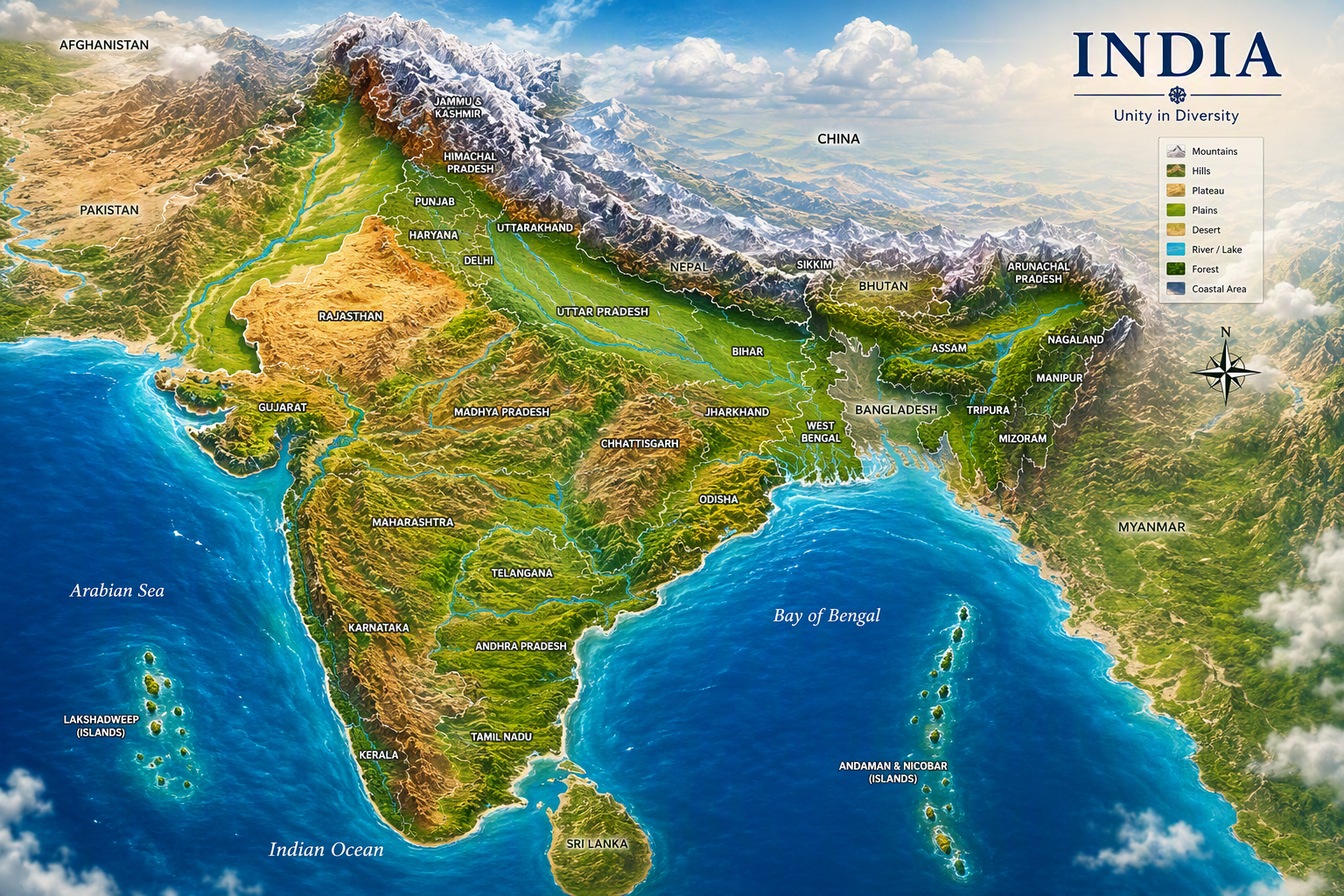
Maps are not just for showing rivers and states. You can use them to look at urban developments, the world, and important places too. This way, your study will feel better and more complete.
Practice maps for:
- The text talks about rivers, mountain ranges, passes, coastlines, and island areas.
- It also has places near the Indian Ocean and the countries you will find around it.
- The text points out important ports, big metropolitan regions, and main urban developments.
- It includes some cultural regions of the world, and these can sometimes cross over with other topics.
- The text lists places that have been in the news due to fights, problems, or changes in the environment.
Even if you do mind mapping for just five minutes each day, you can help your memory a lot.
Important Regions and Features in India
Some parts of India are talked about more for the gs paper. The reason is that they connect things like land, law, money, and weather that can feel hot or cold. If you read about these topics as one group, it will be easier for you to remember them. You will also give better answers. This will help you when you take the starting test and in GS Paper 1.
You need to look at things based on the region. For example, you can connect a location to things like climate, crops, floods, how people move, or planning. This way of thinking can save you time. It also helps make your answers better.
Important areas to track include:
- The main physiographic regions in this area have different types of land and relief.
- The coastal area and islands are connected to the Indian Ocean.
- There are places that have drought, flooding, desert land, hills, and areas where people need tribal development.
- Some of these regions have to handle disaster management and many environmental issues.
- Decentralized planning covers things like panchayati raj and how to use watershed management.
This way of learning starts with the region first. It helps you get to know Indian geography in a simple and connected way.
Recommended Books for Indian Geography UPSC Preparation
The best booklist for the geography syllabus begins with NCERT books. The books are simple, and they help you get strong basics. The books are also trusted, and they build your ideas before you read more tough things. For the UPSC exam, this is key. If you don’t know the basics well, it will be hard for you to read again later.
After you read ncert books, choose some good reference books too. Mix these with newspapers like Indian Express. This helps you know how things are happening now. Pick sources that are good for learning facts and for answer writing.
The next two parts will give you a list of helpful books. They will also show you how atlases, maps, and online resources can help you get ready.
Best Books for Prelims and Mains
A good booklist for the geography syllabus should be short and clear. You do not need a lot of books for general studies or upsc exam prep. First, read books that cover the basics. Then, use some other books that help you with answer writing. These books can also give more support for your optional subjects.
The text says you need to start practice using books from your school. Then, you can add books by famous writers to your plan. This is a good way to keep your work neat and stop you from having notes everywhere.
Useful books include:
- You can use NCERT Class 11 and 12 books. These books are good for basic ideas in human geography, physical geography, and indian geography. They also help you with strong revision.
- A good book to read is Certificate Physical and Human Geography by G C Leong.
- Other helpful books are Physical Geography by Savindra Singh and Human Geography by Majid Hussain.
- You may read Indian Geography by D R Khullar or Geography of India by Majid Hussain. Some books also cover models, thought, and settlements. You can read those as well.
If you use these a lot, the base for both your prelims and mains will get much stronger.
Atlases, Maps, and Online Resources
Books by themselves are not enough for geography. You will also need atlases, maps, and some online resources. These things help you link places to different topics. This is good for answer writing practice. It helps a lot with mapping for prelims and answer writing in mains as well.
If you want the official geography syllabus PDF for UPSC, go to the official UPSC website. This is the safest way to get it. Use this document as your main guide. You should build your study plan with it. At the same time, read about what is happening right now in the world. This will help you use your geography knowledge better.
Helpful resources include:
- Use atlases and blank maps every day. This will help you get better at finding places.
- Study maps by themes, like rivers, the climate, industries, and where people live.
- Read Indian Express, The Hindu, Down to Earth, Yojana, and Kurukshetra. This helps you stay up to date and connect current news.
- Try previous year papers and test material often. This will help you practice answer writing and get better at it.
These tools help people to move from only reading to getting ready for exams.
Preparation Tips for Indian Geography UPSC Exam
To be ready for the geography syllabus, it is good to keep things simple. Start with the basic books. They help you get a strong foundation. Then, go over each topic by itself. When you feel you know the main ideas, connect the geography syllabus from the books with news and things happening now. With this way, your UPSC exam work will feel steady and not too hard.
Don’t delay answer writing practice. Your geography skills will get better when you write answers, draw small maps, and solve previous year papers. A good way to study is to use the right sources many times instead of read more books. The next two sections will tell you about study methods and common problems people have when they study.
Study Strategies for Effective Coverage
You can get ready for indian geography in a good way if you follow some easy steps. First, look at the basics. Check your syllabus well, so you know what to read. After you do that, start solving questions. This will help you stay on track with the exam and not read at random. The clear tips guide you in indian geography the right way.
One good way to learn is to read, write, and do mapping together. This helps you know the ideas better. It also lets you practice how to keep these ideas in your mind and talk about them later.
Use this strategy:
- Start with NCERT books. This will help you build a strong foundation and understand the main ideas.
- Before you begin each unit, read the geography syllabus carefully.
- Try to solve previous year questions so you can find out what topics come up again and again.
- Begin answer writing practice after you have finished one or two units.
- Try to link static chapters to current affairs that you read in trusted newspapers and magazines.
Try to add maps and diagrams when you can. They help you get better marks. They also make your answers feel more complete.
Common Challenges & How to Overcome Them
Many people think geography is tough, because the syllabus is big. Some read a lot of books, but they still feel lost. There are people who just remember facts and do not practice writing. A few students also do not look at the exam pattern. This makes it hard for them to revise later. The answer is to follow a clear way of study and not to panic.
You need to start with a strong foundation. After you do that, try to use fewer sources. When you follow this, it will be much easier to write and plan your work. Even the topics at the optional level will not feel too hard when you read them in smaller parts.
Common challenges and fixes:
- Weak basics: Go back to read ncert books. Take your time and read the main ideas slowly.
- Poor presentation: Make your answer writing clear and easy to read. Use small maps, simple diagrams, or write your points well.
- Confusion in wide topics: Split topics such as world distribution of plants, social forestry, climate, and settlements into several small parts.
- Lack of exam focus: Look at previous year papers. Try to find the exam pattern.
It is good to study geography every day, even if it is just a little. This helps you remember what you learn for a long time. Doing something often works better than working extra hard once in a while if you want to be good at geography. Consistency is what helps you most.
Conclusion
To sum up, it is very important to know the Indian Geography syllabus for the UPSC exam. This will help you do well in both Prelims and Mains. You should get to know key parts of geography, like physical geography, human geography, and other big topics. This will make it easier for you to answer questions.
You can use good books and online sources to help with your study. Doing well is not only about working hard. It is also about using smart ways to learn. If you want expert tips that are made for you, feel free to ask for a free talk or trial. You can get advice from experts on how you can work through the geography syllabus for the UPSC exam in a better way.
Frequently Asked Questions
Is Indian Geography included in both Prelims and Mains UPSC Syllabus?
Yes, Indian Geography is in both stages of the UPSC exam. In the prelims, you will find this topic in the general studies section. Here, the geography syllabus comes in an objective way. Later, in the mains, you need to write about Indian Geography in a long and detailed way. This will be part of GS Paper 1. There, you should give more facts and examples about the topic.
How should I approach studying Indian Geography for UPSC successfully?
Start the geography syllabus by reading NCERT books. These will help you get the basic ideas. After this, read the standard texts. Check previous year questions while you study. Go over maps again and again. Try to match what is happening now with what you read in the books. For the UPSC exam, practice answer writing. Use diagrams when you write answers, because these are very important along with reading.
Can I choose Indian Geography as part of the UPSC Optional Subject?
Yes, you can take Geography as your optional subject for the mains exam. In the optional syllabus, Paper II focuses on indian geography. So, indian geography is not just a small section. It is a big part of your optional preparation.

