
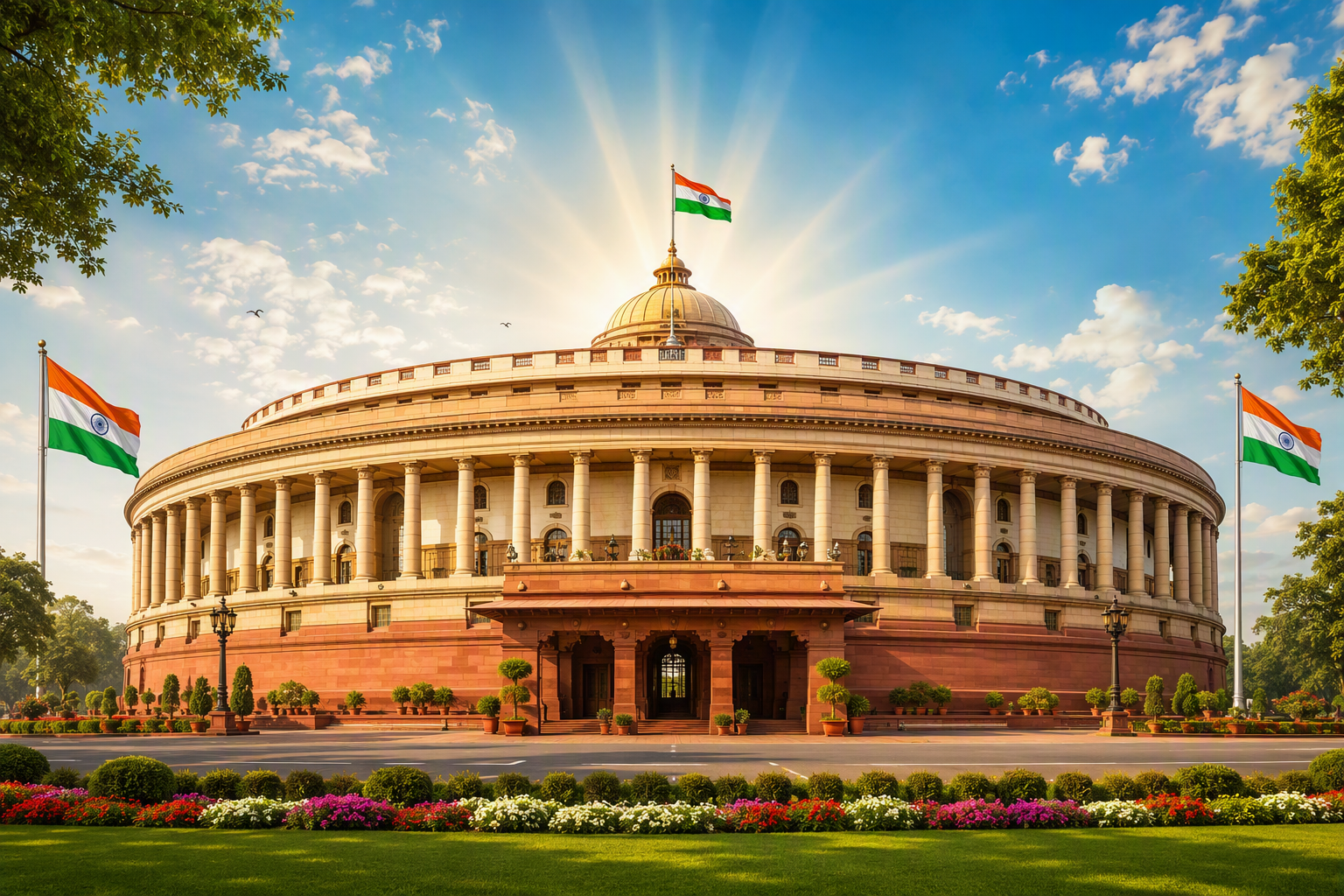
Key Highlights
- Lok Sabha is the lower house of the Indian Parliament. Rajya Sabha is the upper house. Vidhan Sabha is the legislative assembly for a state.
- People vote to pick Lok Sabha members. Members of Rajya Sabha are not picked by people. They are chosen by state legislatures.
- The Rajya Sabha is a permanent body. Lok Sabha and Vidhan Sabha can be dissolved and new ones formed.
- Money bills always start in Lok Sabha. This means Lok Sabha has more control over money bills.
- Rajya Sabha speaks for the states and union territories in the Parliament of India.
- Vidhan Sabha helps make laws and set up the government in each state.
Introduction
The Indian Legislature has several parts at both the national and state levels. This can be confusing for many people. You may read or hear about the parliament of india, houses of parliament, and state legislature all at once. But what is different about them? The main things to know are where they work, who is chosen, and how long they stay at their jobs. If you know these facts, it becomes much easier to understand how Indian politics, elections, and law-making take place.
Overview of Indian Legislature Structure
India’s Indian Parliament works with a bicameral legislature to run the union government. At the top level, there are two houses in the Indian Parliament. These are called Lok Sabha and Rajya Sabha. They both meet at Parliament House in New Delhi.
States do things their own way using a state legislature structure. Some states use only one house. This is a unicameral legislature. But at the national level, the system still has two houses. If you want to know how everything works, you should look at these main groups: lok sabha, rajya sabha, and vidhan sabha.
The Three Pillars: Lok Sabha, Rajya Sabha, and Vidhan Sabha
Lok Sabha is also known as the house of the people. It is the lower house in the Parliament of India. The members of parliament here are picked from many different places. Lok Sabha plays a big part in choosing the government for the whole country.
Rajya Sabha is called the council of states. It is the upper house of the Parliament. This upper house gives states and some union territories a way to take part when making laws for the country. Rajya Sabha is not like the lok sabha. It does not get dissolved. It keeps working all the time and stays as an ongoing chamber.
Vidhan Sabha is the legislative assembly in the state legislature. It looks after political matters and laws within each state. To say it simply, Lok Sabha works for all the people in the country. Rajya Sabha is for states at the Parliament. Vidhan Sabha, on the other hand, makes laws inside a state.
Central vs State Legislatures
The union government runs things at the center with help from the Parliament of India. It moved away from old colonial groups, such as the central legislative assembly. Now, all the work happens in Parliament House. Both the Lok Sabha and the Rajya Sabha help make national laws.
The state legislature is mainly active inside each state. The main group for the people in the state is the Vidhan Sabha. The Vidhan Sabha watches over how things be run in the state. It does not deal with big national issues. The Government of India takes care of those. So, its work is more about the state and local needs. Still, the state legislature and the Vidhan Sabha are very important for everyone.
Here is the real difference. The lok sabha and the rajya sabha deal with things for the whole country, like the union government, money for all of India, and main laws. The legislative assembly, or vidhan sabha, takes care of things like education, how daily work happens, and state-level politics. So, if the rules or talks are for India as a whole, the Parliament—which is the lok sabha and rajya sabha—makes the decision. If the topic is only about one state, the legislative assembly is the main group that works on it.
Why Understanding Their Differences Matters
These things are not only in books. They shape how the Parliament of India and the states act under the Constitution of India. When you understand what each house does, it is easier to read and think about political news.
For example, the Lok Sabha has the power to start a motion of no confidence. The Rajya Sabha does not have this power. In the same way, what happens in state politics depends a lot on how strong the legislative assembly is. Even when people talk about the new Parliament and its legislative functions, it is easier to understand if you know which group they mean.
Key reasons this matters include:
- You can know when something should go to the national Parliament or when it should be sent to the state legislature.
- You can see why Lok Sabha has more say over money and why it gets to decide if the government will stay.
- You can better follow what people say in debates, committee work, and when big steps about the constitution happen.
Historical Background and Evolution
India’s law-making system has been many years in the making. A long time ago, the imperial legislative council and the central legislative assembly had a big part in making laws. These groups from before set up ways that people still use today in both the legislative assembly and the legislative council. All this started during the times when the country was under foreign rule.
After India became free, the Constituent Assembly of India made a plan to show how the country will be run. The Constitution of India also was made to help follow this plan. Because of this, people get to vote and have a say in who leads them. This is how the lok sabha, rajya sabha, and the law-making groups in states started in the way we see them now. If you want to know what is different about each house, you need to know how the constituent assembly and these houses came to be.
Origins of Lok Sabha and Rajya Sabha
The Lok Sabha and Rajya Sabha started when India changed from a colony to a nation that makes its own laws. Before that, there used to be different groups, but the Constituent Assembly put together a new plan for India. This plan became the Indian Constitution. Now, people choose who will be in the Lok Sabha and Rajya Sabha, so power is in the hands of the public.
Lok Sabha is known as the house of the people. It shows the direct choice of the public at the top level. Rajya Sabha is called the council of states. It lets the states have their say in Parliament and shows that India works as a group of states. Having these two houses is an important part of the national legislature.
The first meeting of rajya sabha took place in 1952. This showed that the new system started working fast. After this, parliament house became the main spot where plans for the nation take shape. Both houses now join the views of the people and states in one system. This helps make sure all voices get heard.
Establishment of Vidhan Sabha in States
The Vidhan Sabha is the legislative assembly for a state. This group was started as part of the state legislature after India became free. Parliament looks after things for all of India. But every state needs its own group to make sure people have a say. The Vidhan Sabha helps states talk about laws and make rules for people who live in the state.
Some states in India also have a legislative council. This means the state legislature there has two houses. Other states have just one elected house. So, the state rules are not always the same across the country. But the legislative assembly is still the main elected group in state politics.
You can see many different kinds of people and ideas in places like West Bengal. People talk a lot about who gets to help make laws and how everyone gets a voice. The Indian government set things up so there are laws for the whole country and also for each state. The Vidhan Sabha is the place where people in the state have the most say about what happens in their own lives.
Constitutional Provisions Defining Each House
The Constitution of India builds the houses of parliament and the state legislature. It calls the Rajya Sabha the council of states. It is clear about who can be in the Rajya Sabha. It tells how to form the Rajya Sabha and how it keeps working with time. The Constitution of India also says how to elect members and what is needed to join Parliament. It helps the work done by parliamentary committees and sets up rules for their own secretariats.
Lok Sabha is called the people’s house in the country. Vidhan Sabha is the group of people who make laws in the states. At the national level, the council of ministers has to answer to Lok Sabha together. This shows that Lok Sabha is very important. It helps form the government and checks if the government is doing its job.
Important constitutional features include:
- Rajya Sabha is always there. It cannot ever be dissolved.
- Money bills have to start in Lok Sabha. Rajya Sabha can just suggest changes but cannot pass them by itself.
- Each house needs rules, a set way to do things, and staff to help with the conduct of business.
Composition and Membership
The three houses are not the same in what they are made of. They have a different number of members in each one. The number of seats is also not the same in all three houses. Each house gives people, states, and regions a voice in its own way. So, the way they speak for others changes in each house.
Lok Sabha and Rajya Sabha both have members of parliament. But the two get their members in different ways. Vidhan Sabha is for the states and does not work the same as these two. If you want to see how they are different, look at the total number of members. Also, see how people get there. You can check if there are any seats saved for special groups or if some members are picked but not chosen by voting.
Number of Members in Lok Sabha, Rajya Sabha, and Vidhan Sabha
Lok Sabha and Rajya Sabha both show how strong the nation is. In 2025, the Lok Sabha had 543 members. At this time, Rajya Sabha has 245 members. Out of these, 233 get chosen, and 12 get picked by nomination. The rules let these numbers grow, but both the Lok Sabha and Rajya Sabha now have less than the highest limit.
Vidhan Sabha is the name for the legislative assembly in each state. The number of members is not the same in every state. Every legislative assembly is part of a state legislature, so its size depends on the state. Because of this, and not like the Parliament of India, you cannot compare each legislative assembly by using just one number. You need to look at each house or state to see how it works.
| House | Nature | Current or general membership pattern |
|---|---|---|
| Lok Sabha | National lower house | 543 members of Lok Sabha, directly elected |
| Rajya Sabha | National upper house | 245 members of Rajya Sabha, 233 elected and 12 nominated |
| Vidhan Sabha | State legislative assembly | Number of seats varies by state |
Representation by Population and States
Representation in Lok Sabha and Rajya Sabha is not the same. In Lok Sabha, seats are linked to how big an area is and how many people live there. Because of this, many feel Lok Sabha is the house that is closest to people. In Rajya Sabha, seats are given to states and union territories. These seats depend on the number of people in each state or union territory, but the split is not always fair for today.
The chart shows that each state has a different number of seats in the Rajya Sabha. Uttar Pradesh has 31 seats. West Bengal has 16 seats. Smaller states or union territories can have only a few seats. There are some union territories that do not have their own legislatures, so they do not send people to the Rajya Sabha.
Key points to remember:
- Lok Sabha seats are decided by how big each area is and how many people live there.
- Rajya Sabha members are picked using proportional representation by the state legislatures.
- Vidhan Sabha is the house that stands for people in each state, and each area of the legislative assembly gets members to speak for them.
Reserved and Nominated Members
Membership in the Lok Sabha, which is the lower house, is not the same for every seat. Some seats in Lok Sabha are set aside for people who do not have much power. These seats are there for Scheduled Castes and Scheduled Tribes. The law also makes a place for women in the Lok Sabha. Because of this, the way people can be members in the lower house is different.
Rajya Sabha is not like the other house. The upper house has some people who are nominated members. The President of India picks these members. They are chosen because they have done good work in art, writing, science, or have helped other people. This point makes Rajya Sabha stand out. The lower chamber is different. It is elected and does not use the same system.
There are some rules from Parliament. A person who works at an office of profit under the Government of India cannot become a member.
Here are the main distinctions:
- The lok sabha has some seats that are kept aside for certain groups.
- The rajya sabha has 12 people who are chosen by the president of india.
- The vidhan sabha is mostly known as an elected legislative assembly for the state.
Election and Appointment Processes
One big way these two groups are not the same is in how people get to be members of each house. The Election Commission of India is part of the larger election commission in the country. They both help to make things fair when people pick leaders for the whole country and for the states.
Members of the Lok Sabha are picked through direct elections. In Rajya Sabha, the state legislatures choose members using proportional representation. This is not direct like Lok Sabha. The Vidhan Sabha stands for the legislative assembly in the states. Elections choose who will be in the legislative assembly.
These methods decide who will get to be the members of parliament. They also set how members talk and work in parliament. Once elections are over, the conduct of business depends on the way these members were picked.
Election to Lok Sabha
Lok Sabha elections use a direct way of voting. People old enough to vote in their area take part. The one who gets the most votes wins. This is called the first-past-the-post system. The Lok Sabha is named the house of the people because it is linked straight to them.
The Election Commission of India is the one that handles what happens before, during, and after the vote. It looks after things like who gets nominated, how voting works, and the oath process. A person who wants to take part needs to be an Indian citizen. They have to be at least 25 years old. That person must also be listed as a voter for any parliament seat. After people vote, the party or group with the most seats gets to make the government. The prime minister will then lead this group.
Main features include:
- People from all parts of India get to vote in a direct way for the Lok Sabha.
- The Election Commission of India checks and runs the whole election.
- Members of the Lok Sabha pick the speaker of the Lok Sabha after the house is formed.
Election and Nomination to Rajya Sabha
The Rajya Sabha takes a different path. The Rajya Sabha is also known as the council of states. Most members of the Rajya Sabha are picked in an indirect way. Members are chosen by the legislative assemblies of the states and by the legislative assemblies of eligible union territories. The voting in Rajya Sabha is done through proportional representation. The method used is called single transferable vote. Everyone can know how each vote is given because it is an open ballot.
In this system, the ordinary voters do not pick the members of Rajya Sabha on their own. Instead, people who get elected in the state, known as legislators, are the ones who choose the members of Rajya Sabha. Also, the President of India picks 12 members who are well-known or good at something special. The Vice President of India is the chairman of the house by office.
Its entry process can be summed up like this:
- Indirect election is done by the state legislatures.
- Proportional representation works with the single transferable vote system.
- The President of India picks nominated members.
Election to Vidhan Sabha
Vidhan Sabha elections take place because the legislative assembly makes up a big part of the state legislature. People of the state vote in these elections to decide who will run their state. In this way, voters get to say how their state government will be. So, these elections can change a lot about the politics in that area.
The text connects how elections and democracy work in India. It explains how West Bengal is part of the country’s way to make laws. Lok Sabha chooses members of parliament who work at the top level for all of India. Vidhan Sabha chooses people in the state who help make state laws and run the state government.
The steps are simple to follow. Here are the main points:
- Elections are for the state legislature, and not for the union government.
- The election commission makes sure that things be fair and open.
- The results show who will get more power in the legislative assembly.
Powers and Legislative Functions
All three bodies help to make laws, but they do not have the same powers. Their legislative functions change if the issue is about the whole country or a state. The way they work also depends on if the topic is about money, normal laws, or a constitutional amendment.
At the national level, Lok Sabha and Rajya Sabha work together to make laws. But when it comes to money bills, Lok Sabha holds more power. In state politics, Vidhan Sabha is very important because it handles most legislative functions in the state legislature. The next sections will talk about where Lok Sabha, Rajya Sabha, and Vidhan Sabha have the same powers and where they are different.
Law-Making Authority of Lok Sabha
Lok Sabha is the lower house, but it is not less powerful than Rajya Sabha. In fact, Lok Sabha has more authority than Rajya Sabha when it comes to some important things. The members of Lok Sabha get to decide who will form the government of India. The council of ministers needs to answer to Lok Sabha because it works for this house.
The main plus point of lok sabha is its role in money matters. Only lok sabha can start money bills, but this only happens if the president of india gives the go-ahead. Once the money bill passes in lok sabha, rajya sabha can offer its ideas to change it. Lok sabha can choose if it wants to use these ideas or not. A no confidence motion, or motion of no confidence, can also only begin in lok sabha.
Its major powers include:
- The group only can control votes of no confidence against the union government.
- It gets the last word on money bills.
- It helps keep the union government in power or can help take it out.
Powers of Rajya Sabha
Rajya Sabha is known as the upper house. The Rajya Sabha is on the same level as the Lok Sabha when we talk about many simple laws and bills about constitutional amendment. This means the Rajya Sabha is not just there to look good. The members of Rajya Sabha can talk about laws. They can give new ideas, agree, or ask for changes to rules that be for the whole country.
The Rajya Sabha also gets some special rights from the government. The Constitution allows Rajya Sabha to let Parliament make rules on things that, most of the time, are handled by the states. This can be done if two-thirds of its members agree. Rajya Sabha can also say yes to making new all-India services, that both the union and the states can use. The chairman of Rajya Sabha is the Vice President of India. He is the one who leads the house.
Important powers include:
- The house joins in when there is a constitutional amendment.
- It helps look after state interests by using special resolutions.
- The house keeps working because it does not end.
Role of Vidhan Sabha in State Legislation
Vidhan Sabha is important because it has a big part in state politics. The legislative assembly is inside the state legislature. Here, people meet to talk about laws and pass them for the state. This place also helps decide which group will lead the state.
This is what makes the Vidhan Sabha different from the Lok Sabha and Rajya Sabha. The Lok Sabha and Rajya Sabha are both under the Government of India. They are part of the Parliament of India. But the Vidhan Sabha mainly looks after what happens in a state. It deals with state problems and how things get done in a region. So, if you want to know how a state brings up a rule or policy, you need to look at the Vidhan Sabha.
Its role is clear in three big things that it does:
- The state legislature is the main place where laws are made in state politics.
- It shows what the voters in the state want.
- It helps the state legislature do work every day.
Tenure and Dissolution
The time that each group serves is not always the same in every place. This is one big way they can be different. Not every house follows one set pattern. That can change how things work in politics. Some groups might finish early. Others stay on, even when there are elections or changes in who is in charge.
Lok Sabha and Vidhan Sabha depend on voting terms. They can be dissolved. Rajya Sabha is different. It is a permanent body. It does not end even if the winter session is over or the Lok Sabha gets dissolved. This way, the parliamentary system gets both change and steady work. There is always a mix of new ideas and old members in the lok sabha and rajya sabha, which helps keep things moving.
Term Lengths for Lok Sabha, Rajya Sabha, and Vidhan Sabha
Lok Sabha members stay in the house for five years. But this can end sooner if the house is dissolved early. The Rajya Sabha works in another way. Members of Rajya Sabha serve for six years. About one-third of them finish their term every two years. That is why people say Rajya Sabha is a permanent body.
This way of doing things makes national politics move in two ways at once. The lok sabha goes through big changes when many people vote in each election. The rajya sabha takes more time to change, and it never changes all at once. In a state, the legislative assembly is called the vidhan sabha. People often talk about vidhan sabha with rajya sabha. That is because vidhan sabha is not the same every time; it does not stay like rajya sabha, which is known as a going-on chamber.
The broad tenure differences are:
- Lok Sabha: The term for lok sabha is five years. It may end before that if the body is dissolved.
- Rajya Sabha: The rajya sabha has a term of six years. It is a permanent body, and members’ terms finish at different times.
- Vidhan Sabha: The time period for vidhan sabha is set by the state legislature’s elections. It is not a permanent body.
Circumstances for Dissolution or Continuity
Dissolution does not happen the same way every time. The President of India has the power to end the lok sabha early. He can do this when the prime minister requests it. This might take place before the term ends. The lok sabha can also get more time if there is a national emergency. But, the rules of the constitution must be followed.
Rajya Sabha does not end at any point. The way it is set up helps it to keep going at all times. This makes it stable, even when big changes happen at the center. The text also says very clearly that a motion of no confidence is for the Lok Sabha and not for Rajya Sabha.
Here is the simple breakdown:
- Lok Sabha can end before its time if the President of India is given advice to do that.
- Rajya Sabha stays as a permanent body.
- Vidhan Sabha follows the state voting schedule and is not a permanent body.
Effects of Dissolution on Parliamentary Functioning
When the Lok Sabha ends, it does not work as the lower house anymore. A new election has to happen. A new set of people need to take charge of the lower house next. This means Parliament cannot do any full work until people choose their leaders. Once the new Lok Sabha gets started, the Ministry of Parliamentary Affairs looks after the next meeting.
Rajya Sabha keeps working at this time, so things stay steady in Parliament House. This matters for the parliamentary system because the whole national legislature does not stop at once. Members of parliament in Rajya Sabha stay in their seats, even when Lok Sabha has changes.
The practical effects include:
- There has to be a new election for the house that got dissolved.
- The rajya sabha keeps things going for the country.
- The time for meetings and laws changes until the new chamber is ready.
Key Roles and Responsibilities
Every house needs office bearers and set roles so that things work well. In the Lok Sabha, the speaker of the Lok Sabha, the leader of the house, the leader of the opposition, and the deputy speaker all have very important jobs. They help people with debate, keep order in the house, and guide how choices are made.
The houses are not only there to pass laws. They also ask the council of ministers questions. They hold debates. There are set rules to look at policy. If you want to know how the lok sabha, rajya sabha, and vidhan sabha work, you should see how they lead. They also work on the budget and check what is going on.
Leadership Positions in Each House
Leadership posts guide what people do each day in the house. In the Lok Sabha, the speaker of the Lok Sabha leads all the meetings. The speaker also decides how members should act during the conduct of business. If the speaker is not there, the deputy speaker takes over. The leader of the house is most often the prime minister, but sometimes another minister will do the job.
Rajya Sabha works in a way that is not the same as Lok Sabha. The Vice President of India is the chairman of Rajya Sabha. A member is picked to be the deputy chairman. Rajya Sabha has a leader of the house and a leader of the opposition, just like Lok Sabha does.
Key leadership roles include:
- The Speaker of the Lok Sabha and the deputy speaker
- The Vice President of India, who is also the chairman of the Rajya Sabha
- The leader of the house and the leader of the opposition in both Lok Sabha and Rajya Sabha
Functions During Budget Sessions
Budget work is a time when you can see how the houses are not the same. During this session, the government gives its yearly money plan in the Lok Sabha. This really matters for how Parliament and the council of ministers work together.
Money bills give a lot of power to Lok Sabha at this time. Rajya Sabha can talk about these bills and can say what they think or ask for changes. But Rajya Sabha cannot stop a money bill or put in changes that must be followed by Lok Sabha. Parliamentary committees also help. They look closely at the plans and help make the conduct of business more clear and useful.
During budget periods, the houses:
- Talk about revenue, spending, and public borrowing.
- Check financial proposals with help from parliamentary committees.
- Follow different rules for money bills. Lok Sabha has more power with money bills.
Oversight, Debates, and Committees
Law-making is only one thing they do. The houses check the work of the government of india. They do this by talking in debates, asking questions, and working in groups. This job helps the democracy in the country. It lets people see what the government of india is doing.
Rajya Sabha Secretariat and Lok Sabha both help with things like research, record keeping, and giving support to committees. Parliamentary committees look at bills and policy in a deep way. They talk about the details, even more than what happens in the main house talks. This work makes Lok Sabha and Rajya Sabha more than just places where people come to vote.
Their accountability tools include:
- There are talks about public policy and what the government should do.
- Parliamentary committees look at things and check what is happening.
- The parliamentary secretariat and other workers help keep everything in the parliament running well.
Conclusion
In short, understanding how the lok sabha, rajya sabha, and vidhan sabha are not the same helps you see how India makes laws. Each group has its own job in running the country. They have different powers, ways people get in, and steps for elections. When you know these things, you become more aware and can take part in India’s democracy. This helps you if you are a student, at work, or just want to know more about politics in India. With this knowledge, you can talk about problems that matter to us all in a better way. If you want to read more or have questions about lok sabha, rajya sabha, or vidhan sabha, you can ask for help.
Frequently Asked Questions
Which house has more legislative power, Lok Sabha, Rajya Sabha, or Vidhan Sabha?
Lok Sabha is the top house in the country. It has more power because it deals with money bills, which are about money and taxes. It can also decide if the government should stay or leave through no confidence votes. Rajya Sabha matters for passing normal laws and things in the Constitution. Vidhan Sabha is strong in its own state and can take control of what happens there, but it does not have much power over rules for the whole country.
Who conducts elections for Lok Sabha, Rajya Sabha, and Vidhan Sabha?
The Election Commission of India is in charge of making sure the election system works in the right way when leaders are picked. In Lok Sabha elections, people choose members of parliament by voting directly. But for Rajya Sabha, members get chosen in another way since the state legislatures make the decision. Vidhan Sabha elections take place inside every state but follow the same rules as the bigger elections.
What are the eligibility criteria for membership in each house?
To join the Lok Sabha, you must be a citizen of India. You need to take the oath before you start. A person has to be an elector and at least 25 years of age if they want to stand for the Lok Sabha.
For the Rajya Sabha, the Constitution of India says you need to be a citizen and take the oath too. You must be at least 30 years of age for this. A person cannot hold an office of profit if they want to be in the Rajya Sabha, as this can stop them. There are some other rules that you have to follow as well.

