
Key Highlights
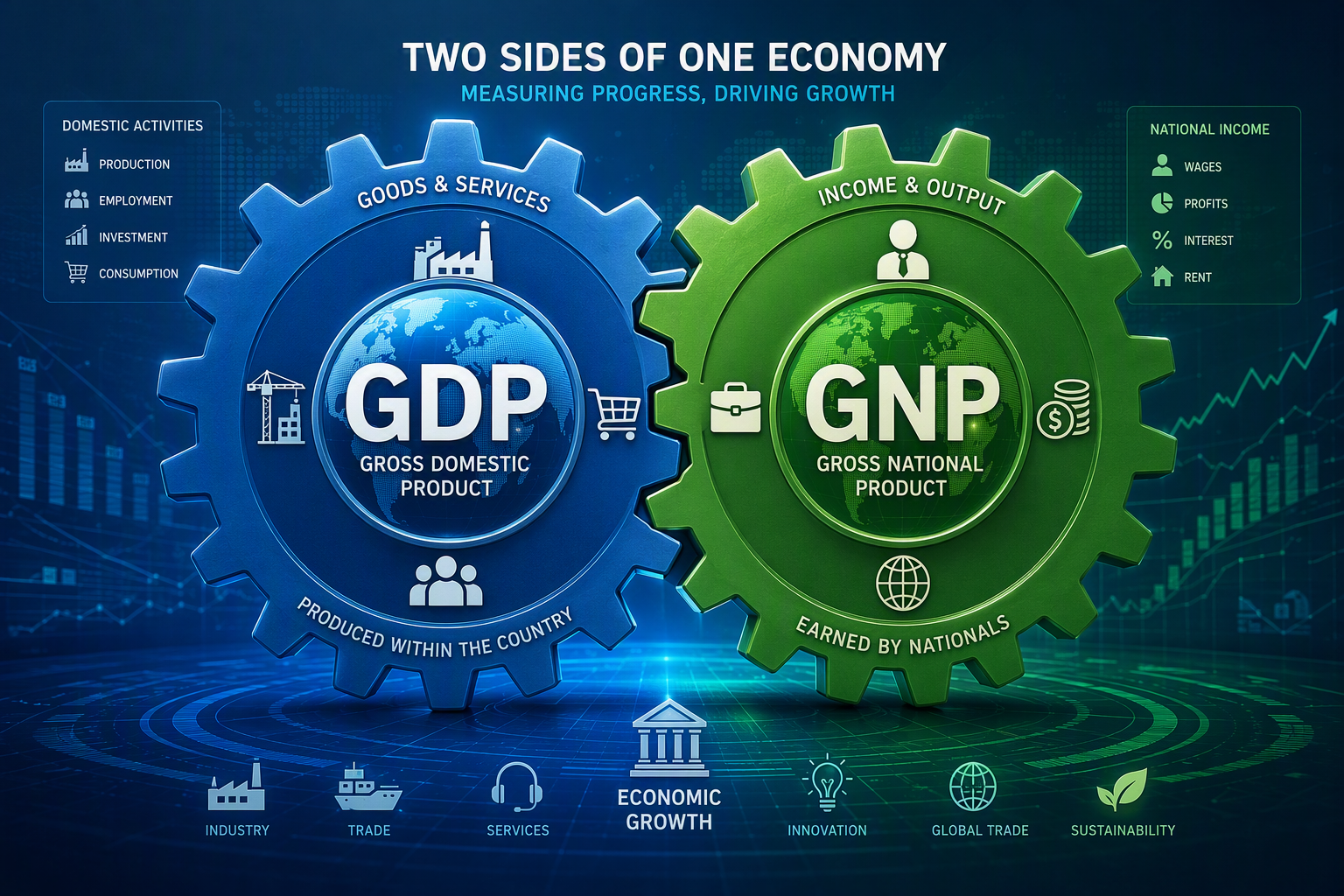
- GDP vs GNP shows two ways to look at the economic activity of a country.
- GDP tells us about what is made inside national borders and is a key economic indicator.
- GNP counts national income earned by a country’s residents, even when they earn it in other places.
- Both measures help us see economic growth, policy moves, and signals for where to put money.
- Foreign companies, money sent home, and income made overseas are what often cause the gap between them.
- Looking at both together gives a better view of economic indicators and how things are going overall.
Introduction
Understanding gross domestic product and gross national product can help you to better read the economy around you. These two are used a lot when people want to track things like production, earnings, and national income. But they do not mean the same thing. Gross domestic product helps you look at what is made within a country’s borders. Gross national product shows what a country’s residents get, even if the money comes from other countries. When you know this, it gets much easier to see what is going on with economic trends and read financial news.
What Is GDP and GNP?
Gross domestic product tells us the market value of all final goods and services made within a country’s borders for a specific period. It shows the output of a country by showing the value of all final goods from domestic production. People use it a lot as one of the key economic indicators.
Gross national product shows what people of a country make and get paid for, no matter where they work in the world. GDP looks at what people make in India. GNP includes the money that Indians earn outside India too. This changes how we see national income. The next parts will explain this in clear steps.
Definitions of GDP and GNP Explained
GDP means the total market value of all final goods and services made inside a country’s borders during a set time. In national income accounting, people use it to see how the domestic economy is doing. Under the system of national accounts, GDP looks only at what is produced inside the country.
GNP counts all the things that residents of a country make, no matter where they are. If citizens of a country make money outside the border, that amount is added to GNP. At the same time, money that foreign residents earn inside the country is not included in GNP.
The main parts of these measures are spending and how income flows work. GDP is often worked out by adding up things like consumer spending, investment, government spending, and net exports. GNP begins with GDP. Then, it changes the number to count net income from outside the country. This can be money made overseas or payments from foreign nationals.
Key Differences Between GDP and GNP in Simple Terms
The best way to look at GDP vs GNP is to ask yourself this question: Are you checking where things are made, or who is making money from it? GDP talks about the economic output that happens inside the country. GNP talks about what the country’s residents make and earn, no matter if they are in or out of the country.
Here is the difference in simple terms:
- GDP is the value of goods and final goods made inside a country’s borders.
- GNP looks at economic output linked to a country’s residents, no matter where they work.
- GDP counts what foreign companies make in the country.
- GNP does not count that income if it goes to foreign residents.
Here is a quick example. A factory in India that is run by a company from another country adds to India’s GDP. This is because the work is done in India. But if an Indian professional works in the United States and earns money there, that adds to GNP, not GDP. That is the main difference.
What Does GDP Measure?
GDP is the market value of all final goods and services made inside a country’s borders during a specific period. People use it to see economic activity of a country. It helps show if the domestic economy is getting bigger or getting smaller.
GDP is one of the top economic indicators to check economic growth and economic health. It shows you what is going on inside the country. It does not matter if the producer is local or from another place. To know what makes up that number, you need to see its main parts.
Components Included in GDP Calculation
GDP is often found by the expenditure approach. This way, people count up all the money spent that leads to domestic production. It lets people like economists, businesses, and those in charge see how demand can change what is made and the investment decisions they take.
The main components are:
- Consumer spending to get final goods and services.
- Business will put money in work that can help make more.
- Government spending is for services to people and better things like roads or bridges.
- Net exports is when you take all that is sold to other places, then take away what is bought from others.
GDP can be seen in two ways. You can look at it as nominal GDP or as real GDP. Nominal GDP is based on the current prices in the market at that time. Real GDP changes these prices to take out the effect of the price level going up or down. So, real GDP is better if you want to know about true economic growth and not just what happens when prices go up. GNP starts with GDP and then looks at income coming in from and going out to other places in the world.
How India’s GDP Reflects Economic Activity
India’s GDP shows the market value of goods and services made within the country’s borders. This includes domestic production from areas like farming, making goods in factories, healthcare, and IT services. It helps you see the economic activity of a country by looking at where the output is made.
Think about the cars, clothes, electronics, and the service businesses that work in India. The things they make add to India’s GDP. This happens if the business owners are from India or if they are foreign companies. This is the reason GDP is seen as one of the main economic indicators to tell if there is growth and stability inside India.
To figure out India’s GDP, economists add up consumer spending, investment, government spending, and net exports. When these numbers go up, India’s GDP often goes up as well. This helps those who make decisions get a full look at the country’s activity. GNP goes a step further, as it also counts money made outside the country by people from India.
What Does GNP Measure?
GNP shows the value of goods and services that be made by a country’s citizens and people, even if the work or trade happens outside the country’s borders. This means it looks at who owns things and who gets the money, not only where it comes from.
GNP helps us know more about national income and how an economy is doing over time. It tells us what people from the country earn all around the world. It does not count what foreign residents make inside the country. People use GNP along with other economic indicators like GDP. This helps to show how important overseas earnings are for an economy and shows key economic trends.
Main Elements Considered in GNP Calculation
GNP is tied to national income and gross national income. It starts with GDP, but it also counts money that residents get from working or investing in other countries. At the same time, it takes away income that goes to foreign residents living in the country. This gives a better look at the economic activity of a country based on what its people earn, not just where things are made.
The main elements considered are:
- GDP is the starting point.
- Net factor income from abroad.
- Net income receipts from overseas investments and work.
- Income paid to foreign residents. This amount gets subtracted.
This means foreign assets and overseas investments can help grow GNP if they bring in money for the country’s residents. But if foreign nationals take profits or earnings out of the country, it lowers the national total. So, while GDP looks at what is made inside the country, GNP is about money that comes in from other places for the country’s residents. It also goes down when money goes out with foreign nationals.
The Role of Indian Citizens Abroad in GNP
Indian citizens who work outside India help to grow India’s GNP. This is because the money they earn adds to the net income of the country. When an Indian works in the United States or the Middle East and sends money home, the income is counted as part of India’s total earnings.
It does not become a part of India’s GDP. India’s GDP only counts economic output made inside its own borders. The money that country’s citizens earn outside of India changes GNP, not GDP. But, if foreign residents make income in India, it is added to India’s GDP instead.
This is why GNP is helpful to see a wider view of a nation’s earnings. In the countries where many people work overseas or send money home, the difference is big. For India, money from people in other countries shows how global work by Indian citizens adds to national income and not just what is made inside the country.
GDP vs GNP: Real-World Differences
In real life, the gdp vs gnp can tell two different things about a country’s economy. GDP talks about where the value of all goods and services is made. GNP talks about who gets to earn money from that economic output.
This is important for things like economic indicators, economic health, and economic decisions. A country can have strong domestic production and a high GDP. But if much of the income goes to people who are not from that country, then GNP can be different. A simple example from India shows this in an easy way.
Example Showing the Difference for India
Take a simple example. Let’s say India’s GDP is Rs. 200 lakh crore. This number shows the economic activity of a country inside its borders. It adds up what local firms and foreign companies are making in India. This gives a big sign of domestic economic growth.
Now, let’s add the net income from abroad, which is Rs. 10 lakh crore. This includes things like remittances and the money Indian people earn from overseas jobs and businesses. If you add that to India’s GDP, India’s GNP will be Rs. 210 lakh crore. That extra Rs. 10 lakh crore shows how much people in India earned apart from the income in india’s gdp.
| Measure | Example for India |
|---|---|
| GDP | Rs. 200 lakh crore from domestic production within India |
| Net income from abroad | Rs. 10 lakh crore from overseas earnings and remittances |
| GNP | Rs. 210 lakh crore |
| What it shows | GDP tracks location of output; GNP tracks earnings of residents |
This is not the same as net national product. Net national product also makes changes for loss from depreciation.
When GNP Offers a More Complete Economic Picture
Sometimes, looking at GNP data can show more about national income than GDP does. This happens when a country’s residents make a good amount of their money from other places, not just their own country. In these cases, you do not get the whole picture if you only look at domestic production.
GNP is more useful when:
- People can make good money from overseas investments.
- Money sent home from other countries is a big part of net income.
- A lot of people go out of the country to work for many years.
- You may want to match what people in the country earn with the market value of all final goods made in the country.
For countries like India, many people live and work in other countries. They send money back to their families at home. GNP helps to show the real economic power of the country. GDP is important because it shows what is made inside the country. But GNP also counts the money people get from other parts of the world. When you look at both GNP and GDP, you get a better idea of how the economy is doing.
Conclusion
To sum up, knowing the difference between GDP and GNP helps you see how strong or weak an economy is. GDP looks at the economic activities that take place inside a country’s borders. GNP also counts what the country’s people do in other places, so it gives you a bigger picture of how well they are doing. Both ways to measure the economy have their own uses. It is good to know which one to use when looking at economic indicators. If you keep these points in mind, you will get a better sense of what is going on in the economy, both at home and in the world. If you want to learn more about these economic activities and ideas, feel free to reach out for a chat!
Frequently Asked Questions
How does the income of Indians working abroad affect GDP and GNP differently?
Income that Indian people earn in other countries helps grow the GNP because it adds to India’s net income and national income. It does not count for GDP, as this economic output takes place outside India. Money from foreign assets that Indian residents hold also helps GNP, not GDP.
Are there disadvantages to using GDP instead of GNP when comparing countries?
Yes. When you look at GDP vs GNP, you find that GDP does not count the money people earn in other countries. It might also make the country’s economy look stronger if many foreign firms make goods there. So, GDP might not always show true economic health. In national income accounting, both of these economic indicators help us see economic growth in a better way.
Has there been a significant gap between GDP and GNP for major economies like India?
Yes, the gap can mean a lot for India. This is because overseas remittances and money sent home by people working abroad add to the GNP data. This makes it higher than India’s GDP. These economic trends show the national income can be different from the domestic production. This usually happens when money earned outside helps support the economic activity of a country.

