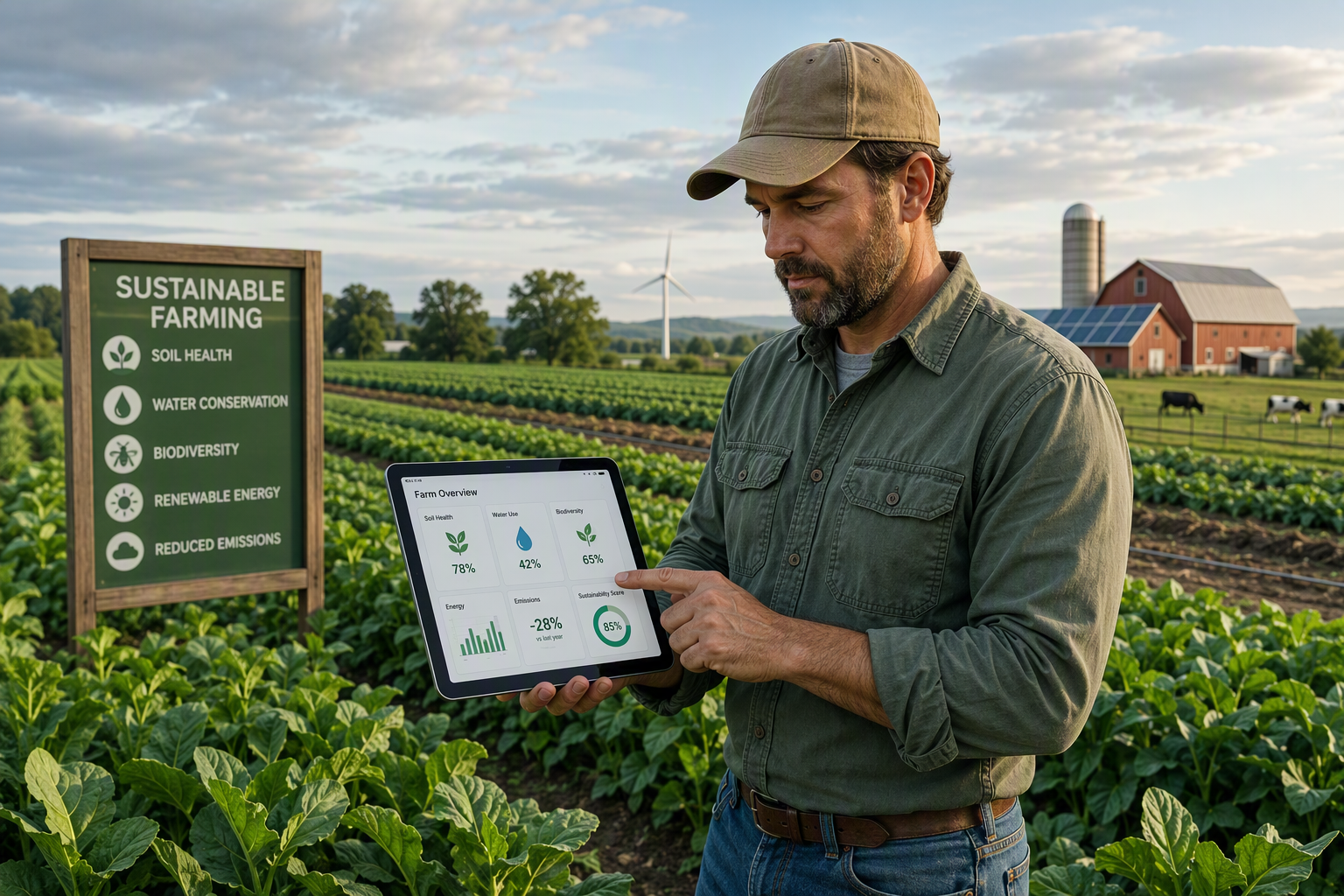
Key Highlights
- A carbon credit is equal to one metric ton of checked emissions reductions.
- A farmer can get a carbon credit if they start using approved ways that give clear climate benefits.
- A lot of farm projects join voluntary carbon markets when they get help from a project developer.
- A carbon offset is when someone buys credits and retires them to cover their own emissions.
- Good records, regular checks, and checks from outside people help keep credit quality strong.
- Carbon programs can help with sustainable development while making a new way for farms to earn money.
Introduction
Farmers are a key part of climate action. The way you manage your land can help reduce emissions. You may even be able to earn a carbon credit when you do this. This can give you more income and support sustainable development at the same time as helping with climate change. So, how can you earn carbon credits by using better farming practices? The answer is to follow approved farm work, measure your results with care, and use a process that can turn proven results into real credits that you can sell. This guide will show you how to do that in a way that is easy to understand.
Understanding Carbon Credits for Farmers in India
A carbon credit is a confirmed unit that shows there is less greenhouse gas released or more carbon stored. One carbon credit means one metric ton of carbon dioxide or an equal amount. For farmers in India, this is usually with a project type on a farm that helps land use, soil care, or puts in more trees.
In practice, project development is just as important as the work you do on the farm. A carbon credit can be used later by buyers to make up for their carbon output. In India, using a carbon credit is mostly a choice. Some businesses in regulated areas have to meet rules given by the Indian CCTS. Before you get involved, it is good to know how a carbon credit works. You need to know why it may be a good fit for your farm as well.
What are Carbon Credits and How Do They Work?
A carbon credit is a unit that shows a proven cut, stop, or take away of emissions. One carbon credit stands for one metric ton of carbon dioxide taken care of or not put into the air. With these units, we can see and count how climate action in one spot helps the world.
The process goes through some clear steps. First, a project is set up and put into action. The climate benefit from it is then measured. This is done by using approved ways and following monitoring rules. After this, the project is sent to a registry for listing. Before any credits are given, independent auditors look over the data, the way things were done, and all the calculations.
Once they are approved, verified carbon credits get a unique serial number in a registry. You can move, sell, or retire them. This makes sure they will not be used again. In India, if you want verified carbon credits to be registered, you have to work with a trusted registry following the set method. Then, you need to pass both checks to show your work is right.
Why Farmers Should Consider Carbon Credits
For many farmers, a carbon credit can be much more than just a climate label. The carbon market can help you add to your income. It can also reward you when you use better ways to work with your land. If you care for your soil or try to lower emissions on your farm, the carbon market can help you get more from the work you already do.
There is also a bigger benefit. Buyers use credits as a carbon offset for emissions they cannot cut right away. This means your farm work can help them reach their sustainability goals. At the same time, you make real environmental impact where you live and work.
Farmers may think about carbon programs because they can give:
- You can get a new way to earn money, which is tied to proven results from your farm.
- There is help for long-term care of your land and making better plans.
- You will have people to work with on the project who know the market rules.
This is important for both voluntary systems and compliance systems. The two have different ways to join. They also have different ways for people to buy in the market.
Types of Carbon Credit Markets
Carbon credits are part of two main market systems. One is the compliance carbon market. This one is set up by government rules. In this system, groups that produce emissions may need to have allowances. Sometimes, they can also use credits, but there are certain limits in place.
The carbon market helps to keep track of these credits and allowances.
The second type is voluntary carbon markets. In these markets, businesses and people join in on their own. This often helps support company climate goals and easy-to-understand sustainability reporting. In both types of systems, credit quality is very important. Buyers want the carbon credit transactions to be trusted. They look for solid checks, clear registries, and steps that stop double counting.
Voluntary vs Compliance Carbon Credit Markets
The biggest difference is easy to see. In voluntary carbon markets, people can choose to take part or not. In a compliance market, people have to join because of the law or rules. This changes who gets in, how prices go up or down, and what regulatory requirements there are.
For farmers, voluntary systems can be more useful. Many activities on farms or land use are done with a project developer under a crediting program that has been approved. On the other hand, compliance systems mostly cover big regulated areas such as power or industry. But rules in the market can change based on where you are.
| Aspect | Voluntary Market | Compliance Market |
|---|---|---|
| Participation | Optional | Required by regulation |
| Main buyers | Businesses, institutions, individuals | Regulated emitters |
| Pricing | Market driven | Policy driven |
| Farm relevance | Common for land-based projects | Usually less direct |
| Project setup | Often works with a project developer | Must fit stricter regulatory rules |
Opportunities for Small and Large Landowners
Yes, small landowners can take part in carbon programs. The main point is not just about how big the farm is. It is more to do with whether your project type can give results that can be measured and checked. So, a small farm could still join if what you do on the land is clear and fits a method that is accepted.
Bigger landowners might find it easier to join the carbon market. This is because bigger size can help pay for project watching and costs. But even then, a project developer can work with both small and large farms. They help set up a project that works in the carbon market and fits what the registry wants.
Useful opportunities often include:
- There are ways to change soil and land care that help to keep more carbon in the ground.
- You can do tree work on land that is not used or is in bad shape.
- It is good to track and record what you do now on the farm to get better at it.
- You should work with a project developer to help register what you do and support your sales.
Next, let’s talk about the farm practices that people often connect to credits.
Popular Sustainable Practices That Earn Carbon Credits
Not every farm change will count, but some steps that are better for the environment are often tied to carbon credit. The best options are things you can check and track using approved ways, where you can see a clear and measurable climate impact by regular checks.
For farmers, this often means using ways that help the soil hold more carbon. It also means using steps to improve carbon sequestration and cut down on greenhouse gas emissions, compared to how things were before. People like these actions for carbon offset projects, because you can see the change that happens from start to finish.
The two groups below are some of the most useful places to begin when thinking about greenhouse gas, soil carbon, carbon offset, carbon sequestration, or greenhouse gas emissions.
Conservation Tillage and Cover Cropping
Conservation tillage and cover cropping come up a lot in farm carbon programs. This is because they can help the soil hold more carbon. Put simply, when you use these methods again and again and check the results the right way, they may help the soil keep or build up soil carbon as time goes by.
These methods are helpful for more than just farming. For a carbon credit program, they can help with carbon sequestration. This works if the project can prove that the change is more than what is usually done. There must be clear results compared to a starting point.
Farmers may think about these since they can help with:
- There can be higher soil carbon when there is less disturbance to the soil.
- The ground stays covered all year, and this helps with better carbon sequestration.
- A good carbon credit chance comes when you keep strong records and do proper monitoring.
To be eligible, you need to use project rules, have evidence, and make sure things are checked. This is why you should always make your practice choice match an approved way of working.
Agroforestry and Improved Livestock Management
Tree-based systems play a big part in farm carbon work. When you practice agroforestry, you add or protect natural carbon sinks. This can help store more carbon on the land over time. You can see these land-based steps a lot in voluntary carbon projects because they join farm work with long-term climate action.
Better ways to manage livestock can help a lot, especially when changes on the farm lower emissions compared to usual ways. To get verified carbon credits, every project needs to stick to approved methods. It also has to pass a check done by someone outside the project before any credits can be given.
These farm approaches may support:
- There is agroforestry practice on land that is not used much or has gotten worse.
- The value of carbon offset comes from actions you can measure, either by taking carbon out or by cutting down on what gets released.
- These climate action goals are linked to using land in a way that lasts longer and is good for the earth.
The main idea is this: practice by itself is not enough. It needs to be something you can measure. It should also add more value, and someone has to check it by the program rules.
Getting Started: What Farmers Need to Apply for Carbon Credits
Before you sign up for a carbon credit program, you should have more than just a good plan. You need a clear project design. You should also have all the records that show what you do. Your plan should match a real certification standard or crediting program. This is how a farm activity can become a project that people can check and review.
It is also very important to do your due diligence. Buyers, auditors, and registries need proof the project is real and that the results are extra and can be measured. A good project design document with strong farm data can make the whole application go more smoothly. The next sections will talk about what to get ready.
Required Documentation and Records
Good paperwork is important for any farm carbon project. You should have records that show what you do, where it takes place, when it starts, and how you will measure results. This is needed for your project design document, which is used for project design, sign-up, and checks.
During due diligence, auditors and registries want to see clear and connected information. A project developer can help put this together, but the data still has to come from your farm. If your records are not good, it will make it harder to get things checked and verified.
Useful records often include:
- The project area needs details about the land and what work is being done there.
- You have to give basic and ongoing information for how the farm is managed.
- There should be monitoring data to help work out the carbon credit numbers.
The main goal is to show that your project uses an approved way of working. It is also important that other people can look at the results you report and check them on their own.
Tools and Resources for Measuring Carbon Impact
To figure out how many credits a project could make, you need to start with a baseline. This means you first measure your starting carbon footprint. Then, you check the results after you start new ways of doing things. This is the main idea behind carbon accounting.
Approved methods, registry systems, and program rules are the main tools for this work. They help guide how people measure, report, and check carbon emissions. Many projects also use independent auditors and registry platforms. These platforms keep track of issuance, ownership, and when credits are retired.
Helpful resources usually include:
- Carbon accounting methods that follow accepted program rules.
- Monitoring tools that use the greenhouse gas protocol.
- Registry platforms that track credits using unique serial numbers.
If you want good results, you should use the tools the standard asks for instead of guessing or using rough numbers. This will help you get numbers you can trust.
Step-by-Step Guide: How to Get Carbon Credits as a Farmer
If you want the exact path, the process is simple, even if there is a lot of paperwork. The first step is to know your current emissions and land practices. After this, you pick activities that are allowed. Then, you make sure these match the program rules. In the end, you get the project ready.
First, you register under a known standard. Next, you watch your results. After that, you pass checks. Then, you enter the carbon market. Many land projects and small companies follow this same path.
The steps below show the five clear stages. This will help your offset project begin strong.
Step 1: Calculate Your Emissions Baseline
Start by writing down what your farm looks like now. Talk about how you manage the land. Make a note of any trees you have and what you do that may lead to carbon emissions or help store carbon. If you do not know your starting point, it will not be possible to show if there are real emissions reductions later.
This step is mostly about carbon accounting. In this step, you look at the greenhouse gas emissions or carbon stored right now. Then, you see what changes after the project starts. The amount of difference between them helps you know the climate benefit and how much credit you can get.
Keep the baseline data clear and true to real life. If you start with wrong numbers, your carbon footprint report may not stand up when someone reviews it. Good starting data helps you see the amount of carbon your project could lower or take away before you put more time into signing up.
Step 2: Choose Eligible Sustainable Practices
When you know your baseline, choose farm changes that fit the right project type. The best choices are not just the ones most people talk about. They need to match approved methods. They also have to show clear results as time goes on.
In farming, there are some ways to work that count as sustainable, like caring for soil and land, planting trees, or doing other things that help keep more carbon in the ground or reduce what gets put out. A carbon credit program will only count these changes if they really lead to good emission reductions or take carbon away from the air.
You might focus on practices such as:
- Use soil and land care steps that help store more carbon.
- Plant trees or set up agroforestry on land that is right for it.
- Make changes on the farm that result in climate impact you can measure as time goes by.
Choose with care. The right project type will make it much easier for you to do registration, tracking, and checking later on.
Step 3: Register with a Recognized Carbon Credit Platform
Now, you go from planning to making your formal start. Registration means you have to send your project to a known carbon standard and follow what they ask. Some common names you may have heard are Gold Standard, Verified Carbon Standard, and Climate Action Reserve. You need to choose one for your climate action project. Each carbon standard has its own steps to follow.
The process often starts when you get the project documents ready. Then, you need to pick the best method for your project. Once these things are done, you send the project to the registry or the right program for them to check.
In India, most people go through well-known international registries for voluntary projects. But, if you are in a field that must follow the rules, you will use local rules found inside the country.
These platforms are not just places where people list projects. They help keep track of who owns what, when things are issued, when transfers happen, and when units retire. Each time something is given out, it gets a serial number. This system helps the registry stop double counting. Because of this, these well-known platforms are important for people to trust the projects and feel safe when making sales later on.
Step 4: Monitor, Report, and Verify Your Project
After you sign up, your job goes on out in the field. You have to check how the project is doing as time goes on. You must also keep records that follow the approved plan. A lot of projects do well or badly at this point. This is because every claim must have proof to support it.
After that, the next step is reporting. Your data will be put together and looked at based on the program rules. Then, the check or verification step starts. Some trusted third parties will look at your documents, your numbers, and sometimes, what happened in your project. A project developer is often there to help handle this part.
Strong verification usually depends on:
- Ongoing checks that follow the approved steps
- Clear reports with farm records and the needed calculations
- A review done by independent third parties
This step shows that the project’s climate benefit is real and can be measured. It also shows that what you get from this project is extra and follows a greenhouse gas protocol framework.
Step 5: Sell or Trade Your Earned Carbon Credits
Once credits are given, people can move them to buyers on registries or in marketplaces. This is the time when the project starts to have market value. Some people want carbon offset credits so they can use them for their own climate reports. Other people use these carbon offset credits to balance out the emissions they still have.
Selling works well when you have your credits clearly tracked and recorded. Registries help with carbon credit transactions because they show when the credit was first given, who has owned it, and if it is retired now. This clear process helps buyers trust what they buy and keeps them safe from others making the same carbon credit claim twice.
When you are ready to sell, focus on:
- You need to find good carbon credit buyers in the market that matters.
- Use registry systems or some marketplaces to do deals.
- Make sure to keep track of all transfers and when you stop using the carbon credit for good.
At that point, your farm project will go all the way from the start—planning—to a checked and finished sale.
Conclusion
To sum up, knowing how to get carbon credits can really help farmers. It lets them do good for the environment and make some extra money too. When they use methods like conservation tillage and agroforestry, they may earn carbon credits. The step-by-step guide above makes the whole thing easier. It shows what to do starting with checking emissions, all the way to selling or trading credits. If you follow these steps, you not only help your bank account but you also do your part in fighting climate change. If you want to find out more or need help along the way, feel free to ask for info or support as you start this journey!
Frequently Asked Questions
Are there special carbon credit schemes for Indian farmers?
India mainly uses carbon credit systems on a voluntary basis for many farm-related activities. A few sectors that have more rules follow the Indian CCTS. For farmers, taking part often depends on the kind of project development they do. They must do a project type that can show clear climate benefits. It should also let them use a carbon offset and support sustainable development.
What is the verification process for carbon credit projects?
The verification process starts when independent third parties check the project design document and all the data. They also look at the calculations to see if they follow the rules of the chosen crediting program. If the project design meets these rules, a carbon credit can be given out. This credit goes into a registry, and both the credit and its records can be tracked openly.
How do small landowners participate in carbon credit programs?
Small landowners can take part if the project type they have can show clear and tested results. A project developer can help you put your papers together. They also guide you to pick the best way to do the work. A project developer will help with the sign-up as well. The size of the farm is not as important as how good the data is, how the carbon offset work is extra or new, and if the project can make a strong carbon offset.
Where can I sell my earned carbon credits in India?
You can sell issued credits through registries or marketplaces that work with the carbon market. These systems let carbon credit buyers check who owns the carbon credit, see the serial numbers, and confirm if a carbon offset is retired before the transaction. This way, people can feel good when they sell verified carbon offset credits.