
Key Highlights
- Invasive species are animals or plants that do not come from the local area. These can spread very fast. They can hurt native species and sometimes cut down biological diversity.
- In India, there are several reasons why invasive species spread. The top reasons are human activities, international trade, ballast water, problems in habitats, and climate change.
- These invasive animals and plants can cause biodiversity loss. They damage natural ecosystems. Their harm can also mean big economic costs. The effects can make life riskier for human health.
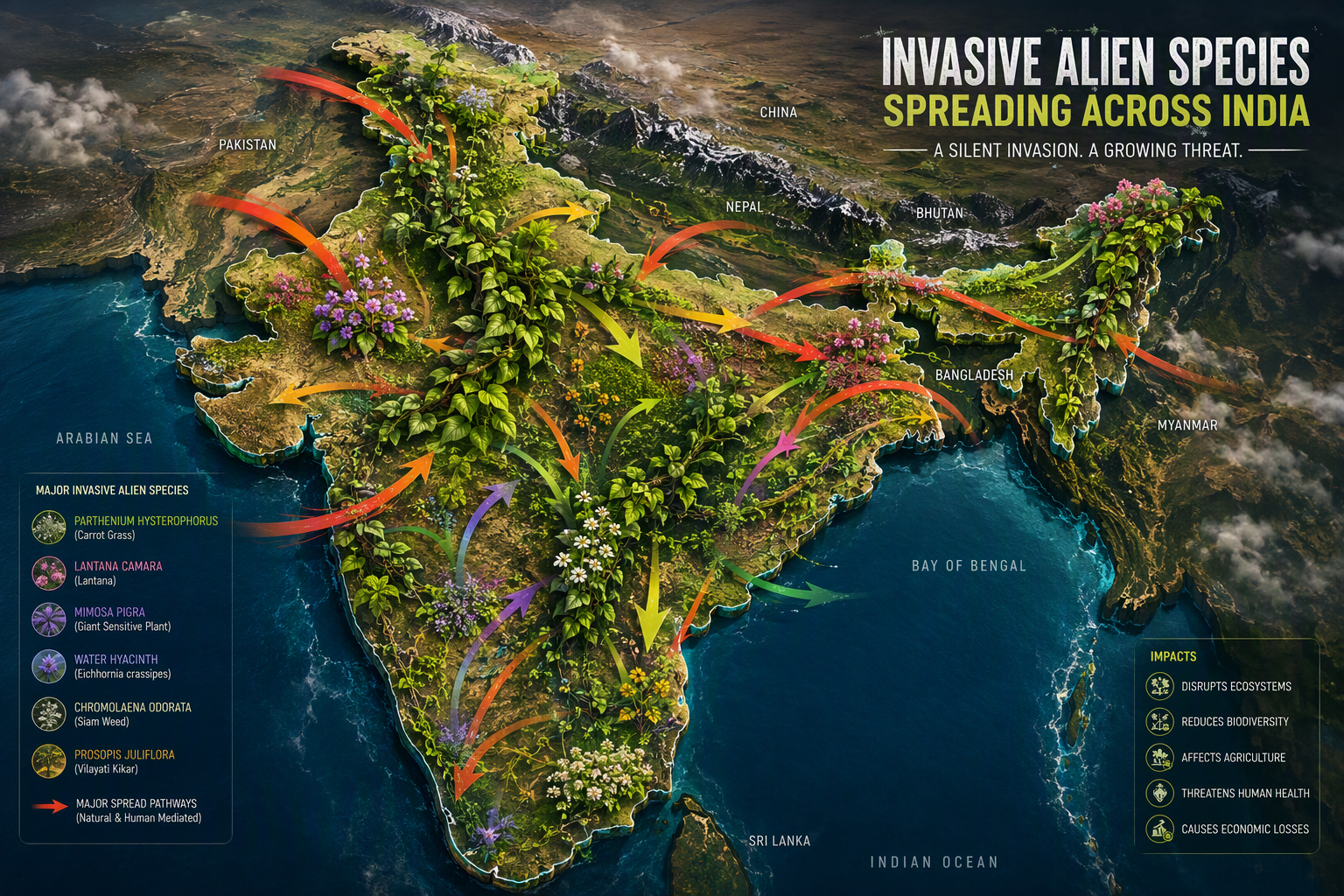
- Some main examples for the UPSC are lantana camara, parthenium hysterophorus, prosopis juliflora, water hyacinth, and african catfish.
- The government uses the Biological Diversity Act. It also uses quarantine steps, early detection, and several biodiversity conservation actions to stop them.
- Studies say the hidden management costs for these invasive species are much bigger than we knew before.
Introduction
Invasive species are important for the UPSC exam. This is because they connect ideas about the environment, the economy, governance, and the world right now. Invasive species are those animals or plants that come from outside their home and move into new places. They often harm native biodiversity in the area.
It is important to know about invasive species. Human activities help them spread. This impact is not just local but can go up to affect global biodiversity too. People talk about them in international debates. For UPSC, you need to study invasive species to understand biodiversity conservation, the laws linked to it, and real cases in India. This topic comes up in both the prelims and mains.
Understanding Invasive Alien Species for UPSC
For the UPSC exam, it is good to first have a strong base. Invasive species are not just exotic species that live in a new place. These are non-native organisms that move to an area, spread fast, and do harm to native species and the natural system.
This is why these words are important when we talk about global biodiversity, what people do, and how rules are made. You need to know the difference between alien types and invasive types. If you mix them up, you may not get the correct answer on tests. The next parts will help you understand it.
Definition and Meaning of Invasive Alien Species
Start with the basic meaning. Invasive species are not from the area. These can be plants, animals, fungi, or microbes. They move out from their natural range and then grow in number by themselves. They do not stay as quiet outsiders. They spread to new spots and change the way the ecosystem works.
Not every alien species or exotic species is bad for us. The main thing to watch is what they do to other living things. If these alien species take food, space, or light from native species, they turn into a real problem. They can also bring in sickness, change where animals go, or mess with how the ecosystem works.
For UPSC, here is something simple to keep with you: the word “alien” is used for something new and that has come from outside. “Invasive” is when it has been brought from the outside and is also not good for that place. A tool like the global invasive species database helps people see and track these bad or harmful species in the world. The topic of invasive species is important for short facts in prelims as well as the part where you have to explain things in mains.
Distinction Between Alien, Native, and Invasive Species
You need to know how to tell these terms apart. A native species is one that lives in a place and helps the food webs and the native biodiversity there. An alien species comes from somewhere else and is not in its original spot. An invasive species is an alien species that spreads and causes problems.
Here is the quick distinction:
- Native species are the ones that have been in an area for a long time. They live well with other life forms and take part in the local ecosystem functions.
- Alien species, also called exotic species, are those brought to a new place from somewhere else. This can happen by mistake or on purpose.
- Invasive species are a kind of alien species. They hurt habitats, replace native species, and cause problems for ecosystem functions.
So, what is the difference between invasive alien species and native species when we talk about how they affect nature? Native species help keep things balanced. Invasive species are different because they often take over and become more common than the species that are already in that place. This can cause a drop in the number of living things and can change the habitats in a big way. It also puts a lot of stress on native biodiversity. For the UPSC, it is important to know the difference between invasive species, alien species, invasive alien species, and native species.
Global and Indian Context of Invasive Alien Species
In a lot of areas, invasive alien species are a major cause of biodiversity loss. These species damage forests, farms, wetlands, and water bodies. This makes them key in global biodiversity and conservation plans.
At the global level, the Invasive Species Specialist Group watches over information and brings groups together. Their work is important because global invasive species do not stay in one area. Things like trade, travel, and shifts in climate help them move into new places.
In India, people feel more worried now. New studies say that real costs are higher than we thought before. A big study showed that the world lost over USD 2.2 trillion from 1960 to 2022. But the costs for India are not fully known. In fact, many reports say the real numbers are much bigger than what is shown.
This is why alien species and invasive alien species are big topics right now. They are linked to biological diversity and are much talked about in the news these days.
Important Characteristics of Invasive Alien Species
What helps invasive species do well? The answer is, they change fast, and their numbers go up quickly. Invasive species also spread fast when the land has been changed or is not in good shape. A lot of invasive plants grow quickly. They take the light, water, and food from the ground. This happens before native organisms get what they need.
UPSC wants you to do more than just remember what things mean. You should know the main things about them, how they get to a place, and how they use rapid reproduction to spread in local areas. The next parts will show these things in a simple way.
Traits That Enable Invasiveness
Invasive species do well because they know how to survive and spread fast. When these plants or animals get to a new area, they settle in quick. They can live in many places and in all kinds of weather. This gives them the chance to beat local plants and animals, especially in spots that have changed a lot.
Some common traits stand out:
- Rapid reproduction helps the population of these species to grow fast before any control work can start.
- Rapid spread lets them go from fields to forests and into water systems very quickly.
- Strong competition helps them push out native vegetation and use up all the resources.
- High adaptability makes it easy for them to live in a new environment, even when native organisms may not do well there.
These traits are tied to the ecological impact. When invasive species spread, they push out the local plants and animals. This can make habitats weaker. It also leads to more biodiversity loss. In India, this makes big problems in forests, grasslands, and wetlands. So, when you talk about the impacts, always connect them to these characteristics.
Pathways of Invasion in Ecosystems
How do these species get into new places? Most of the time, they end up outside their natural range when something moves them. This can be through transport, trade, or when people put them there on purpose. Human activities play a big part in this. Once these species get moved, some of them get out. They can get used to the new place. Soon, they spread out more and more.
Important pathways include:
- International trade brings a lot of things to a country. Sometimes, living things come in with cargo, packaging, or transport vehicles.
- Ballast water from ships is used a lot in trade. When used, it can let aquatic species get into new places by accident.
- There are people who bring in new species on purpose for gardening, aquaculture, landscaping, or to control pests.
Global invasive species are closely linked to globalization. India is also facing this issue. Some invasive species come to a new place because people bring them in for a reason or for their looks. Later, these invasive species can become a big problem in forests and farms.
For the UPSC exam, you should know about how these invasive species enter and spread. You also need to be aware of the tools used to deal with them, such as quarantine, regular checking, and stopping them before they enter from the policy side.
Rapid Reproduction and Spread
A big reason it is tough to control invasive species is they grow fast. These species can make many new plants in a short time. That gives native plants less space to come back. You often see this with many invasive plant species and other ones that live in water.
Once they start, they spread quickly. The plants or animals move into forests, go along roads, and farms. They also grow in places with water bodies. They often use land that has been changed as a way to spread even more. As their numbers go up, they take the resources and spaces from native flora and from animals.
The problem is not only about too many showing up. When there are a lot, weaker local groups can go away from an area. This can also change how ecosystem functions work, like how nutrients move around, the way the land looks, and how water runs. In India, this shows that starting early is important. If you wait, it be much harder to stop them after they spread everywhere.
Major Causes for the Spread of Invasive Alien Species in India
In India, alien species spread because natural barriers are not as strong as they once were. Human activities, changes in where animals and plants live, and international trade help bring these species in. When they come, invasive alien species take up space in the environment that is open to them.
Climate change makes it easier for invasive plants to spread. Native plants feel a lot more stress because of this. The changes can hurt the ecosystem services that they give to people and animals. It makes us work more to fix these problems later on. If you want to know what’s really happening, read about the three main causes below.
Human Activities and Trade
The main reason that invasive species go to new places is people moving plants and animals. People use trucks, ships, and planes to carry things. You, I, and many others also travel for work or fun. This helps invasive species get into places they were not before. Most of the time, invasive species do not want to come. But they stay and live in their new homes anyway.
International trade is a big part of why species move to new places. Ships and other types of transport can bring in living things. They may hide in the materials, containers, or ballast water. A lot of water-based invasions start this way. Sometimes, people bring in new species on purpose. They may use them for things like gardening, aquaculture, or to help fight pests. These species can get out into the wild after they come in.
These actions cause high economic costs as time goes on. Many countries have to spend a lot of money to find, remove, and control harm in farming, forests, and fishing. In India, new reports say that these economic costs are not always shared in full. For UPSC, you can talk about how trade-driven spread links to steps like checking goods, keeping items apart, and making rules stronger to stop the problem early.
Role of Climate Change
Climate change does not create invasive species. But it can help them move into new areas and spread fast. When the temperature and rain go up or down, this can make new places where invasive species can live. This is not good for native species and other native organisms, because climate change can make them weaker.
This creates a new environment where invaders can do well. Warmer weather helps invasive insects and bugs in water spread quicker. It also lets species that cause sickness move around faster. This change can throw off the balance in nature. It puts global biodiversity and local habitats at risk.
This is why people see invasive species as a problem that can make things worse. They work with stress from climate to make it harder for both land and people to stay strong and deal with change. In policy thinking, teams in the Species Survival Commission and other groups working to save nature pay a lot of attention to this issue. In India, when climate change lets invasive species spread, it becomes even more important to watch these species closely, not less.
Lack of Natural Predators
In their original homes, many species are not able to grow too much. This is because there are predators, parasites, or other animals that stop them. But, when invasive species go to a new place, there often are not natural predators for them. This helps invasive species to live and grow fast in that new area.
Without checks, their numbers can rise fast. They can push out local life. They use up resources, change habitats, and take space meant for native biodiversity. This can hurt plant groups and animal species that live there.
If you leave these new species alone, they can grow and spread a lot. This can push out weaker local animals or plants. Some might even go away from the area and not come back. At first, some species that get brought in seem safe. But as time goes on, they can make big problems for the ecosystem. For UPSC, you need to know this: local extinction can happen because there is no natural control. This makes it easy for new species to take over. It also means it will take more money and work to stop them.
Prominent Examples of Invasive Alien Species in India
Examples make it easier for people to remember this topic. In India, some invasive plant species are well known. The ones people hear about the most are lantana camara, parthenium hysterophorus, prosopis juliflora, and water hyacinth.
Animal examples are important. Here are a few: african catfish, Nile tilapia, red-bellied piranha, alligator gar, and the Red-eared Slider. If you read about these and know what they do, you can do well in both prelims and mains. Let us look at the ones that matter the most.
Lantana Camara – Threats and Spread
Lantana camara is a common invasive species in India. The plant can grow fast in forests and other wild places. It forms thick groups that block other plants from growing. Because it spreads to many places, people talk about it often. It is also found in a lot of material for UPSC.
Lantana does more than just fight for space with other plants. It pushes out native species. This plant also changes how the habitat looks and leads to biodiversity loss. Lantana changes fire regimes, too. This makes things worse, especially in places that are already having problems.
This example is important because it shows how just one plant can grow and turn into a big job over time. It takes a lot of money and work to get rid of it once it grows everywhere. For UPSC, remember that lantana camara is a good example of a nice-looking plant that people plant, but later it becomes a big problem for the land.
Parthenium Hysterophorus (Congress Grass)
Parthenium hysterophorus is also called Congress Grass or carrot grass. It is one of the main invasive weeds in India. You can often see this weed growing where the land has been disturbed. These places include the side of roads, open areas, and farm fields. The spread of this invasive weed is linked to damage in the environment.
Ecologically, it keeps native vegetation from growing. It also takes up space that useful plant groups need. This hurts farms, grazing spots, and the animals and plants living there. Invasive species spread fast, especially on land that is used a lot by people. So, you can see how habitat trouble makes it easier for invasive species to move in.
Parthenium is not just bad for the environment. It can cause harm to human health. People may get skin issues or find it hard to breathe. So, the problem with Parthenium is part of everyday life too. For UPSC, Parthenium is a good example to use. It shows how the plant can change things like biodiversity, farming, human health, and laws all at once.
Prosopis Juliflora (Vilayati Kikar) and Other Significant Species
Prosopis juliflora is called Vilayati Kikar. It is one of the big invasive plants in India. This plant did not come from here. It spreads fast. It fights with native flora and stops native plants from growing well. To remove prosopis juliflora, it takes a lot of money and many people. This makes it hard to control this plant.
India has to face problems with climbers and water weeds. One is mikania micrantha, which grows very fast and covers other plants. Another is water hyacinth, or eichhornia crassipes, which blocks water bodies. These examples show that invasive species can be found in more places than just forests.
| Species | Type | Major ecological impact |
|---|---|---|
| Prosopis juliflora | Invasive tree/shrub | Displaces native flora and creates difficult restoration conditions |
| Mikania micrantha | Invasive climber | Smothers vegetation and reduces growth of local plant species |
| Eichhornia crassipes | Aquatic invasive plant | Blocks water bodies, harms fisheries, and disrupts aquatic systems |
Key Impacts of Invasive Alien Species on Indian Biodiversity
The effects of invasive alien species can be big and bad. When alien species come into an area, they do not just become another group living there. They change the way other species compete, use food, and live in different places. Because of this, the number of native species will go down.
This leads to biodiversity loss. It can hurt the natural ecosystems. Sometimes, it even leads to local extinction. In India, you see these problems in the forests, wetlands, farms, and rivers. Next, we will talk about how this affects the ecology, the economy, and resources.
Ecological and Environmental Effects
The first big effect is that there is a problem in nature. Invasive alien species and native species fight for food, light, and space. They also fight for safe places to have babies. Some invasive alien species eat the native species or make them sick. This makes the native species even weaker.
As these things spread, they hurt the ecosystem services people rely on. Forests can’t grow as well as before. Wetlands get blocked. Water bodies lose oxygen and there is less room for life. This causes trouble for fish, birds, and other animals living in water. It also makes natural areas less good.
In bad cases, invasive species can cause the extinction of native species in that area. If extinction of native species does not happen, then native biodiversity gets weaker. There is also less stability in the area when this happens. For the UPSC exam, remember that people worry about invasive species mainly because they harm native species and cause a loss to native biodiversity.
Economic and Social Impacts
The problems with invasive species do not just happen in forests or wetlands. There are high economic costs that affect governments, farmers, fishers, and local communities. People put out money to control these species, take them out, make things better again, and check the land or water many times.
Recent checks show that the world spends a lot on management costs and losses when it comes to invasive species. But there are many cases that do not get counted. India is also dealing with this problem. So, the true cost of handling invasive species is much higher than what reports say.
Social effects can be big, too. Some invasive species are bad for human health. They lead to allergies, breathing problems, or they spread diseases. Other species can break food chains. This makes life hard for people who get their living from fishing, farming, and forests. That is why invasive species should be treated as both an environmental and a development challenge.
Effects on Agriculture and Forest Resources
When invasive weeds grow in fields or around the land, they cause problems for agriculture. The weeds take nutrients, sunlight, and water that crops need. Because of this, the amount of crops you get goes down. These invasive weeds also make it more pricey for farmers to keep the land good for growing.
Forest resources feel stress, too. Invasive plants move in and push out the native plants. This keeps local plants from growing back the way that they should. When you see thick areas filled with invasive plants, the habitat gets worse. It gets much harder to bring back a healthy, mixed forest after this.
Some invaders, like lantana, can change how fire moves in the area. This can make the land feel more stress, especially if it is already weak. This change can hurt forest resources, wildlife homes, and our plans to keep nature safe for a long time. In India, there is a clear lesson. Invasive species are not just a small or separate problem. They have a direct effect on farming, forests, and how people in the countryside make a living.
Government Action and Strategies to Control Invasive Alien Species
India deals with invasive species by having laws, plans, and ways to stop them before they spread. The main goal is not only to take out these invasive species later. India also wants to save its nature by using early detection and keeping these species under control for good biodiversity conservation.
Government action supports the biological diversity act. The work also has quarantine rules, national plans, and the country has to follow commitments made with other countries. But there are still problems with doing these plans in real life.
To know how people respond, you need to check the laws, the groups that take part in it, and what these groups want to do next.
National Frameworks and Legal Measures
India uses some plans to handle invasive species. The Biological Diversity Act, 2002 is one main law. This law works to keep biological diversity safe. It gives a strong legal support. It protects ecosystems and all kinds of species. This idea is good for both prelims and mains.
The National Biodiversity Action Plan helps to stop and deal with invasive species. The National Action Plan on Invasive Alien Species gives ways for prevention, early detection, control, and management. These steps show that there is now a shift from only reacting to problems to taking planned action.
India acts in line with world promises. The Convention on Biological Diversity and the global biodiversity framework tell countries to reduce troubles from invasive species. This connects how we look after nature in India to bigger world plans for the protection of nature. This topic is key for the UPSC exam.
invasive species, biological diversity, global biodiversity, global biodiversity framework, conservation of nature
Important Government and Expert Groups
Dealing with invasive species needs help from many sources and not just one ministry. This work also needs people who know about science, help from teams who work outside, and help from groups in other countries. In India, both national departments and expert teams from all over the world are part of the work. They give research tools and good advice to manage invasive species.
Key groups and systems include:
- The Invasive Species Specialist Group is part of the International Union for Conservation of Nature. The group looks after big information about invasive species.
- The Species Survival Commission network shares expert advice. They talk about what can hurt species and ways to help take care of them.
- National groups like MoEFCC, and groups working with farming, help with making plans, checking, and taking steps against invasive species.
These groups have an important job in handling invasive species. To do this right, expert committees, up-to-date information, and teamwork across areas are needed. For UPSC, it is important to know the connection with the international union. This link helps use global knowledge for policy actions in the country.
Implementation Challenges and Future Strategies
The main problem is not just that people know about the issue. India has weak data systems too. There is underreporting in the country. Management costs are high. Enforcement does not work together. When records are spread out, it is hard to see how big the issue is. Because of this, action takes more time.
Future plans need to focus on changes that help people in real life.
- Make centralized databases to help with early detection. This makes it easier to keep an eye out for issues.
- Set funds aside and the right staff need to be trained. They should be ready to watch, manage, and fix problems.
- Help the MoEFCC, State Forest Departments, research groups, and farming offices work together. This will make their teamwork better.
Another key step is to bring the community in. When people take part in restoration, it takes pressure off the government. It also helps to get good long-term outcomes for native biodiversity. India needs to tie its invasive species plan with climate and biodiversity conservation work. This way, we can deal with problems before they begin, not just fix them later.
UPSC-Focused Insights on Invasive Alien Species
From the UPSC point of view, the topic of invasive species can help you get good marks. This is because it links ideas that have been set with things that are happening now. You need to know what invasive species means. You should give examples. You need to talk about causes and give information about policy steps. A small fact mistake can make you lose marks in prelims.
For the main part of the answer, you should do more than just state facts. Try to explain how the idea is linked to things like biodiversity conservation and climate change. You also need to talk about where there are problems in the way things are run. Tell how this issue affects native species too.
The next parts will help you to look at both stages of the exam in a clear and easy way.
Key Facts and Points for Prelims
For prelims, you should keep things clear. Do not write long answers. The questions can be about the meaning, examples, groups, or laws. If you mix up alien and invasive groups, you might not get the correct answer, even if you know the topic.
Keep these points ready:
- Invasive species are living things that do not come from the place they are found in. They move into a new area and make trouble.
- Not every alien species is bad. But all invasive alien plants start in another place.
- Good examples are Lantana, water hyacinth, and prosopis. These hurt native organisms and native flora.
- CBD, CITES, and the Biological Diversity Act are important. They help protect biological diversity and are important for the environment right now.
Also know that India has some special steps, like the National Biodiversity Action Plan. India also has the National Action Plan on Invasive Alien Species. On top of this, there is the Plant Quarantine Order, 2003. These things can help you with questions about invasive alien species and alien species in exams. Sometimes, just one small thing can help you pick the right answer.
Analytical Aspects for Mains
In mains, you will need to first say what invasive species are. Next, talk about why there is more of these now. This is often because there is more trade, changes in their habitat, and when there is stress due to a change in climate. Then, say what happens because of this. Also, talk about where rules or policies are not enough to stop the problem. Make sure you link the cause, what happens, and what is done about it in your answer.
Your review should show that invasive species cause biodiversity loss. They put a lot of strain on native biodiversity. These species also harm farming and fishing. The money spent to deal with them can be high, but many people do not see this cost. Invasive species make ecosystems less strong. They can make other problems in the environment worse.
To make your answer better, you can show how India’s actions connect with worldwide efforts, like the global invasive species database and promises made in world conservation. One way to solve the issue of invasive species is by finding them early. Using better databases can help keep track of them. Stronger teamwork is needed between groups and countries. It is also good to get more people to join in and help. This makes your answer feel more well put together and full.
Recent Studies and Current Affairs Relevance
This topic is now more important because of current events. New studies show that the global cost of invasive species from 1960 to 2022 is now over USD 2.2 trillion. The studies also say that management costs for invasive species are not often shared enough.
For India, the warning is clear. The numbers we get may not show the real money loss. So, the real price and harm could be much higher than what reports tell us. Because of this, the problem of invasive species affects how the country is run. It is not just about plants and animals.
This topic gets a lot of focus in exams. This is because the environment, the economy, and how things are managed are all part of it. New studies say the damage from this is often missed. The loss of biodiversity just keeps going up. UPSC can ask you direct facts, or you might get questions about new things that happened around this.
Conclusion
To sum up, you need to know about alien species and invasive alien species. This is important for looking after our environment and to get ready for the UPSC exam. These species can change our biodiversity, economy, and farming in big ways. It is good to know what helps them do well when they go to new places. The government is trying to stop how fast they spread. There are rules in place to manage them, but some problems still stay. When you read about new research and updates, you add to your learning and get even better for the UPSC exam. If you feel you want to know more about alien species or invasive alien species, or if you want extra help, you can book a free consultation with our experts. This will help you find good ways to study and get answers that fit you.
Frequently Asked Questions
Why are invasive alien species important for UPSC preparation?
Invasive species matter for UPSC because they bring together points about the environment, how things are managed, money spent, and news today. Invasive species put native species in danger. These species also lead to biodiversity loss. National and global biodiversity policy often talks about this issue. You can use facts about invasive species for prelims. These facts can help you in mains answers too.
How do government initiatives address the invasive species crisis?
The government does a lot to handle invasive species through the Biological Diversity Act. They use national plans, set up quarantine rules, and put early detection systems in place. These things help to keep biological diversity safe. They block unwanted species from coming in. They slow down how these pests spread and make sure the right steps happen on time. These actions help bring down management costs over time. At the same time, they stop too much damage to the land and help with biodiversity conservation.
What is the difference between invasive, native, and alien species?
Native species are plants or animals that are from a place and live there on their own. They help the native biodiversity in that place stay strong. Alien species are plants or animals that come from somewhere else. People or other ways bring these alien species into a new spot. Invasive species are a kind of alien species. These grow and spread fast in a new area. They can take over from local plants and animals, hurt the home of other life, and cause problems for native biodiversity.

