
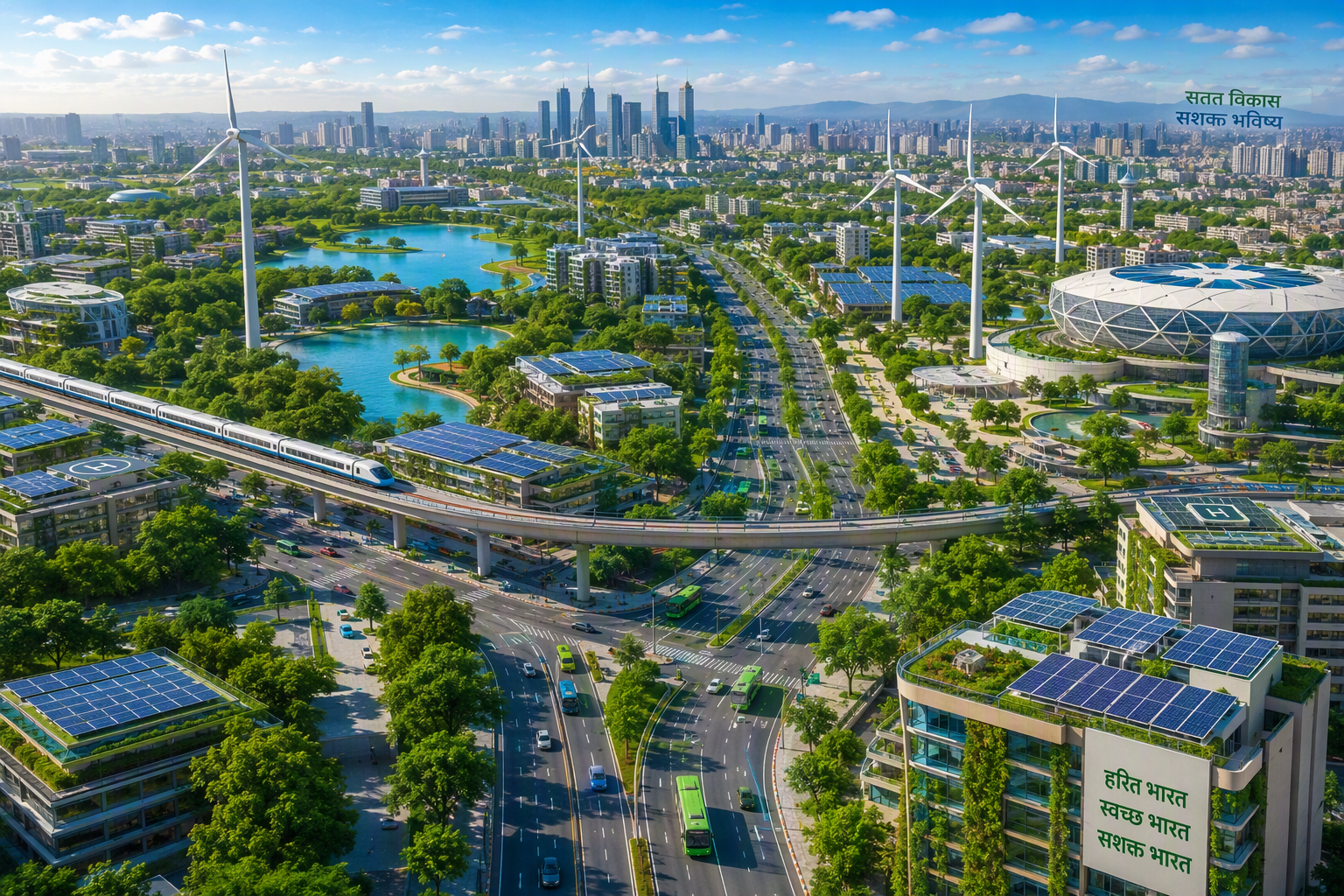
Key Highlights
- India’s green economy works to reach sustainable growth by lowering carbon emissions and using natural resources in a better way.
- Renewable energy is a big driver in this. Things like solar energy and wind energy push economic development and help with the energy transition.
- Waste management and the circular economy help reduce waste and improve how well we use resources. They also bring new green jobs for people.
- The government leads this change with plans like the national action plan, PM-KUSUM, and FAME. These help guide how India faces climate change.
- Investments, green finance, and working with other countries support India’s green transition. These efforts help all the main industries take part in building this future.
Introduction
India’s green economy is now a big part of how the country thinks about climate change and economic growth. It is more than a reaction to climate change. The green economy also helps India use clean energy, manage waste in a better way, and create new jobs for the people. Right now, renewable energy, waste management, sustainable agriculture, and policy support from the Government of India are big drivers in this area. To get a better idea about this change, it is important to know what the green economy means for India and how it works in our daily lives.
Defining the Green Economy in India
In India, the green economy is about growing in a way that is good for people and the earth. It uses less carbon, saves natural resources, and includes everyone. The green economy wants to support sustainable growth. So, it helps cut pollution, makes energy use better, and cares for natural resources. At the same time, it makes sure there is economic development.
Just as important, it links growth to fairness. It helps to create green jobs, public spending, and changes in policy. This plan helps several sectors use more sustainable development practices. It backs development goals and sustainable development goals too. It does this by joining jobs, climate action, and smart use of land, water, and energy. The ideas behind this get clearer in the next sections.
Core Principles of the Green Economy
India’s idea of green growth is all about balance. The country does not want to slow economic development. Instead, the goal is to make it cleaner, more fair, and able to last. To do this, people work to use fewer resources. The plan is also to give more people a chance to do well and take care of the land and nature that help us live.
Key principles include:
- Wellbeing helps to create green jobs, support education, and build strong systems for people and communities.
- Justice works for fairness, social inclusion, and gives help to groups who need more support.
- Resource efficiency means doing things in a way that is good for the planet. It supports sustainable practices, lowers waste, and makes better use of energy and raw materials.
- Good governance happens when there is accountability, everyone can see what is going on, and the public can take part.
Another idea is to stay within the limits of what our planet can handle. In simple words, india’s green economy must keep nature safe, lower risks to the environment, and stop harm that comes from using too many natural resources for a long time. These ideas guide the way people make rules and decide where to put money in the green economy.
Differences Between Green and Traditional Economies
A traditional economy puts output before everything else. It often deals with the cost to the environment later. This type of economy mostly uses fossil fuels. It depends on getting a lot from nature, and it follows a take-make-dispose pattern. A green economy is different. It works to cut down on carbon emissions and still keeps jobs and production going.
The difference is easy to spot:
- A green economy supports clean energy and green energy. It also helps with recycling and better use of resources.
- A traditional economy uses more fossil fuels. This leads to higher pollution and a straight line of use without much recycling.
- A green economy wants everyone to be included or have social inclusion. Older ways can make inequality worse.
For India, this change is important because it is not easy to make. Coal is still a big part of energy in the country. Problems with the infrastructure, getting money, and land make it tougher to move away from coal. Still, the green model gives a stronger way for long-term growth.
Global Influences on India’s Green Economy Model
India’s green economy model has grown to meet both the country’s needs and ideas from other countries. Talks around the world about climate action, sustainable development, and how to help everyone grow have helped shape green policies. India’s goals and plans now show this new way of thinking.
The United Nations has had a clear role in plans for sustainable development and decent work. Global platforms also help many people share ideas and work together. They make sure that plans for the economy and steps for environmental protection work well together. This lets India link green growth with jobs, being strong in tough times, and changes in industry.
One good example of this is PAGE. It is a group set up by the United Nations after Rio+20. It helps countries by offering technical help, advice on rules, and capacity building. In India, the help from PAGE and other groups adds to work done at home. It does not take over or replace what the country is doing.
Sustainable Development and the Green Economy
The green economy helps with sustainable development by linking economic development and environmental protection. It does not see growth and nature as being at odds. Instead, it brings them together by using cleaner ways to make things, lowering emissions, and using resources better.
For India, this is important because climate action should help protect jobs, people’s way of life, and the future. A green economy does this by making energy systems better, cutting down waste, and helping different parts of the country be strong. The clear link to development goals, like sustainable development goals, shows in the points below.
Linking Green Economy to Sustainable Development Goals (SDGs)
India’s green economy fits well with the sustainable development goals. It joins together renewable energy, new jobs, and care for the environment. This approach helps India move closer to cleaner development. At the same time, it does not leave out the fight against poverty, support for people’s jobs, or the need for better roads and buildings. Because of this, india’s green economy is practical for today—not just something people only dream about.
This connection appears in several ways:
- Renewable energy helps give us cleaner power, lower emissions, and more people can get modern energy.
- Green industries and services help the economy grow in a good way that does not put too much stress on nature.
- Working to stop climate change is now part of development planning, not just something extra.
The result is that progress comes together in a better way. When India works on energy efficiency, circular systems, and sustainable agriculture, it is not only doing good for the planet. It also pushes for goals like decent work, better cities, and climate resilience. This is how the green economy helps with real change and supports sustainable development.
Social and Environmental Benefits for India
The green economy in India is about more than cutting emissions. It helps make life better by being fair for everyone, keeping the air cleaner, and making jobs safer. This is very important in a country like India, where the air pollution, stress on resources, and unfair chances for people are big problems. A green economy can bring good changes for all.
Important gains include:
- The air can get better when we use cleaner energy and stop using fuels that make a lot of pollution.
- We help the earth more when we save land, take care of water, and protect forests.
- There will be more green jobs in solar energy, waste recycling, electric vehicles, and sustainable agriculture.
- Smarter use of natural resources helps future generations.
These outcomes help one another. A cleaner way to make things can protect people’s health. Using resources in a better way can help cut costs in the long run. More job creation means more people can join in and feel included. In India, the green economy is important because it can help improve the environment and help people at the same time.
Impact on Inclusive Economic Growth
Inclusive economic growth depends on who gets the benefits from change. In India, the green economy can give more people a chance, as it makes work in many places. There are jobs in clean power, recycling, green infrastructure, and rural work. This means job creation is an important part of it, not just a result on the side.
There is also a side to this that helps people get more done. Resource efficiency means less waste, lower costs, and better use of energy and raw materials. Over time, this helps companies to be stronger and grow without causing as much harm. When industries use resources better, they often get tougher and can handle changes well.
Social inclusion is also very important. A good change should help small businesses, people who need more help, and workers who are leaving work that causes a lot of carbon. When green jobs grow, and people get the right training and support, the green economy can help everyone do better. This growth is good, fair, and steady for all.
Key Sectors Shaping the Green Economy in India
Many areas now help shape india’s green economy, but some are bigger and matter more than others. Renewable energy plays a major role, with solar energy and wind energy growing fast. Clean energy is now at the center of how india plans to develop for the long term.
At the same time, waste management, the circular economy, and sustainable agriculture are getting stronger. These areas help make better use of resources. They also lower the stress on natural systems. People get jobs in both urban areas and rural areas because of these changes. All of these examples show where the green transition is easiest to see.
Renewable Energy and Clean Power
Renewable energy is one of the main parts of India’s green economy. The country has grown power capacity fast. Now there is 220.10 GW of it. In one year, there was a big increase of 29.52 GW. Solar energy made up 23.83 GW in the year, showing the most growth in that area.
This growth is important because clean energy helps cut carbon emissions. It also makes energy more secure and helps start new industries. India wants to have 500 GW of non-fossil fuel power by the year 2030. This promise is guiding choices in investment, building, and power supply across the country.
Green hydrogen is getting more important now. The National Green Hydrogen Mission wants to make India a main spot for it. The goal is to make 5 million metric tonnes each year by 2030. Solar energy, wind energy, and green hydrogen work together to help with climate action and change the economy.
Waste Management and Circular Economy
Waste management is now a big part of India’s green transition. A circular economy is different from the old way of take-make-dispose. It helps keep things in use for more time.
This change helps lower the need for landfills. It also cuts costs and helps resource efficiency for all industries and cities.
The circular approach includes:
- Waste recycling helps to use paper, plastic, metals, and electronics again.
- Better solid waste management in urban areas starts with good collection, sorting, and getting useful things back.
- Repairing, reusing, refurbishing, and recovering lowers the need for new raw materials.
- Waste reduction turns material that people throw out into things you can use to make new products.
This area also shows clear project examples. Things like recycling systems, zero-waste work, and local waste stream plans show how using circular thinking can help make jobs and lower harm to the environment. For India, better waste management is more than keeping things clean. It is also a way to help the economy.
Sustainable Agriculture and Food Systems
Sustainable agriculture is important in the green economy in India. Many people depend on it for their work and income. The main aim is to make food systems better but in a way that does not harm the earth. This means that people have to use land, water, and other resources well without making farm output go down. Sustainable agriculture plays a big part in india’s green economy.
This is important for climate resilience. Rural areas feel the impact of heat, floods, and droughts right now, so farming needs to be stronger. Better water management is one way to help. Local production can also make a big difference. If these places stop relying so much on dirty energy, people and the land can adjust better while keeping up the work of growing food for many years.
Water quality is also important here. Better ways of farming help keep the soil and water cleaner. Nature-based methods can help people and nature at the same time. In India, green growth in farming is more than just working on crops. It is about making life and farming in the countryside better for all.
Policy Frameworks Supporting India’s Green Transition
India’s green transition needs strong policy support. The Government of India has started many missions and schemes. It also uses market-based steps to lead investments and help clean production. These plans from the government are important. Big changes need good guidance, money, and clear rules so they can work.
The national action plan on climate change is still a key part of the effort. There are other programs too. They help to get more energy efficiency, push for renewable energy, and support industrial change. These policies work together to make a good base for sustainable growth. The next parts talk about the main plans, incentives, and what every state is doing.
National Action Plans and Major Policies
The National Action Plan on Climate Change is a key policy framework for India’s green transition. It brings together many national mission efforts that focus on emission reduction, climate action, and cleaner growth. At the same time, India has started targeted government schemes for solar manufacturing, hydrogen, and steps to help the environment.
Here is a simple view of major policies:
| Policy or Scheme | Main Focus |
|---|---|
| National Action Plan on Climate Change | Broad framework for climate action through multiple missions |
| National Solar Mission | Expansion of solar energy and clean power |
| Green India Mission | Forests, ecosystem restoration, and environmental improvement |
| National Mission on Energy Efficiency | Lower energy use and improved efficiency across sectors |
| National Green Hydrogen Mission | Green hydrogen production, jobs, and investment |
| PLI Scheme for Solar PV | Domestic solar pv manufacturing support |
These policies together answer an important question. Which ones have the biggest impact right now? The policies that matter most are the ones that grow clean energy, push more domestic manufacturing, and aim for long-term climate targets.
Incentives for Renewable Energy and Industry Transformation
The Indian government wants businesses to use greener ways of working. It is giving rewards to companies that use clean production and new investment. There is help for things like renewable energy, solar pv manufacturing, and green hydrogen. These steps make it easier for companies to move to ways that do not make as much carbon. This is important because, in the early days, these changes need help with costs.
Fiscal steps have already helped move things in this direction. For example, the budget gave more money for making high-efficiency solar PV modules. This made it possible to grow the clean energy business here at home. The Production Linked Incentive way is also key because it gives public help when there is more made in the country and from building supply chains around clean energy and solar PV.
These incentives help support the big shift in the way we use energy. When companies put money into green technologies, they use fewer parts from other countries. This helps them do better in the market and gives people new, skilled jobs. So, these policies are not only used to help renewable energy. They also help change the way the industry grows.
Role of State Governments and Local Initiatives
National policy gives direction. But, the state governments and local communities often pick how fast things change where they live. Things like land, power, city services, and how people in small towns make a living are decided by states and local communities. This means the states have a critical role in India’s green transition.
Important state and local actions include:
- Make policy support fit local energy, water, and land needs.
- Build new capacity building programs for local officials, workers, and groups in the community.
- Help places with a lot of renewable energy or those that depend on coal by giving them special transition plans.
This local role is important because India is very different in each state. A solution that works in Rajasthan may not work in Odisha or Tamil Nadu. If states have better planning and work together more, things will move faster. When people in the community join in, the green transition can happen in a way that includes everyone and feels right for all.
Government Initiatives Pushing Green Growth
Government schemes play a big role in moving India’s green growth plans forward. Because of these, the country is taking real steps instead of just talking. These programs focus on clean energy, better transport, farming, and ways to take care of the environment. They help India move toward more sustainable practices in many different ways.
The big schemes that really make a change are the ones that join together many parts like size, money, and real good things for people or for the industry. For example, national mission programs, support for solar power, and plans for electric cars stand out here. In the next sections, you will read about how national mission schemes, help for making things, and support for new companies are helping right now.
Flagship Missions and Schemes (National Solar Mission, PM-KUSUM, FAME)
Some of the most important government schemes for India’s green economy are easy to spot. These make a big change in major parts of the economy. The Government of India has brought flagship programs that push renewable energy. These programs also support farmers and help make transport cleaner. These schemes show how policy can shape everyday work and life in the green economy.
Three stand out:
- National Solar Mission helps speed up solar energy work and helps clean power grow.
- PM-KUSUM helps more people use solar energy for farming and wants to add solar power to 49 lakh farm pumps.
- FAME helps with electric cars and gives more clean ways for people to get around.
Each scheme is used in a different area, but when you put them together, they make a big impact. They help cut down on fossil fuel use, help more people get energy, and create green jobs. If you want to know which government schemes are most important, these examples stand out, because they show how policy can really help people and work in practice.
Programs Encouraging Green Manufacturing
Green manufacturing is now a big part of India’s plan for industry. The government wants businesses to change by giving production incentives. It also helps companies make clean energy equipment in the country. There are steps to set up more supply chains in India. These moves help with making things last longer and make the country’s factories stronger.
There is a strong push in sectors like solar pv and batteries. Growing local manufacturing helps people feel less need to import products. It also helps to change the industry in a big way. More manufacturing here helps people use sustainable practices. These cleaner ways and better design can lead to less waste, better efficiency, and lower long-term costs for the environment.
For businesses, the message is clear. Greener production is more linked to making money now. Programs that help local work, new ideas, and energy-saving systems are helping companies line up with the country’s bigger clean energy goals. This is how public policy is moving manufacturing toward cleaner energy and a greener way to work.
Investment Promotion for Green Startups
India’s green economy is seeing growth because new businesses are joining in. Green startups now work in recycling, clean ways to move around, energy services, and making goods in better ways. These small companies help because they can try out new ideas and ways of working faster than bigger businesses. This helps india’s green economy move ahead quicker.
Investment promotion for these firms is helped by:
- The private sector now shows more interest in business chances that link with climate.
- There is policy momentum in clean energy, circular systems, and local making of products.
- There is hope for green jobs and wider economic development.
This growth does not happen alone. Government schemes get bigger, and big companies change how they work. Because of this, startups find new spots in supply chains, services, and technology support. This helps explain why investment in the green economy in India is going up. New firms now take part in the big shift to india’s green economy. They are not just on the side anymore.
Major Industries Impacted by Green Economy Policies
Green economy policies are now changing many areas of work. But, the biggest effects are in places that need a lot of energy, transport, and strong infrastructure. These parts feel more pressure to reduce emissions. They also need to work better and use more sustainable practices.
Because of this, the industries that depend on power, vehicles, and the building of cities are going through big changes. These changes touch where money goes, the technology that is used, and how companies work. If you want to know which industries feel the most impact in India, the next three areas show it well.
Power and Energy Sector Transformation
The power sector plays a big role in the green transition in India. In this area, policy, money, and infrastructure development come together in the best way. When there is more renewable energy, the electricity system needs to change. It has to deal with new power sources, new needs for the grid, and different ways people use power.
This change is happening because the country is moving from coal to more clean energy. The goal is to cut down on carbon emissions, while also keeping energy security strong. It is not easy to do both at the same time, because coal still makes up a big part of how electricity is made in India.
Even though there is a challenge, the path is easy to see. Solar and wind are growing. The grid is getting better. There is support for green hydrogen too. All these things are changing the power sector. This sector may feel the biggest change since it is at the center of sustainable growth and cutting down on emissions.
Automotive and E-Mobility Shift
India is moving toward e-mobility and cleaner ways to travel. The automotive sector is seeing big changes now. This shift is not just about new cars or trucks. It also has an effect on fuel use, the way factories work, how people move in cities, and all the things needed to keep these vehicles going, like charging or battery help.
Electric vehicles are at the core of this change. They can cut down how much oil we use. They also help lower pollution in cities. When we use cleaner energy, these cars make things even better for energy efficiency. With help from policies like FAME, people find it easier to use electric vehicles. These policies also show that there is long-term support for e-mobility.
The move to green economy creates new jobs in many fields. There will be more work in battery production and making other parts for electric vehicles. People who know how to fix or look after these vehicles will also get more jobs. And companies that help with electric car-sharing or apps will grow, too. This is why the auto industry gets hit a lot by green economy rules in India now.
Green Urban Infrastructure and Smart Cities
Urban areas are the places where many problems with the environment be noticed first. You will see things like pollution in the air, too much waste, and traffic jams in these places. That is why green infrastructure is important for the future of India. Cities need better and cleaner ways to do things to get good air quality and make life better for people. If India wants growth that lasts and is good for everyone, cities must work on green systems.
Smart cities and urban planning can help make this change. They do it by having better ways to handle waste, using land better, making travel cleaner, and giving people better services. These steps go with the ideas of sustainable development and development goals. They connect how we treat the environment with how people feel and how the economy works. These changes help to reach the sustainable development goals for everyone.
The impact can be seen in many industries. This includes construction, transport services, utilities, and waste management. When cities put money into greener systems, they change what people and companies look for in the economy. That is why urban infrastructure is one of the most important areas where green economy policy shows up in daily life.
Investment Trends in India’s Green Economy
Investment in the green economy in India is going up. This growth is happening with help from public spending, private sector, and support from outside the country. This is important for India. The change needs a lot of money for energy, transport, making things, and climate resilience.
Green finance tools, green bonds, climate funds, and foreign direct investment are now more important. They help change policy plans into real projects and infrastructure. To understand how investment is changing, it is good to look at domestic finance, global partnerships, and funding instruments one by one.
Public and Private Green Finance Growth
India’s green finance is growing because the government and business are both getting more involved. The government uses public spending to help missions, set up money for making things, and build important things like roads and plants. At the same time, the private sector wants to do more with clean energy, new ways to move from place to place, and business ideas that help use things again.
Growth is coming from several channels:
- The government spends money and gives help for clean projects. It also gives money for plans linked to rules and laws.
- Public procurement makes more people want to buy things that use less energy and cause less pollution.
- The private sector, like big and small companies, is joining in to help make more renewable energy and green goods.
- Green bonds are used to help raise money for projects that fight climate change.
A wide base for getting money is important for economic development. India’s path needs a lot of long-term money, so it can not just get help from one place. Both public and private green finance have to work together if the country wants to make these projects bigger and faster.
International Collaborations and Foreign Direct Investments
International partnerships are making India’s green economy stronger. They are helping by giving better access to technology, good advice on rules, and more people who want to invest. These partnerships with world agencies and special country teams are important. This is because many clean industries need to share knowledge and products across borders. This helps india’s green economy to grow in many ways.
These collaborations support growth through:
- Foreign money is going into clean energy, making things, and new technology.
- Climate funds help to pay for tough or new green projects.
- Better supply chains for solar panels, batteries, hydrogen, and other tools.
India has worked with the Indo-German Task Force and the International Partnership for Hydrogen and Fuel Cells in the Economy. The links with these platforms do more than just bring in money. They help build skills, cut down problems, and link what we want at home with markets around the world.
Role of Green Bonds and Climate Funds
Green bonds and climate funds are now a key part of how India raises money for green projects. The country needs ways to put money into clean energy and things that help cut pollution or better the environment. The right kind of money support at the right time can help bring real change.
Green bonds are helpful because they bring in money just for green projects. Climate funds play a role too. They put money in places where business investors may not want to risk their cash. This can be things like adaptation, resilience, or new technology. Together, green bonds and climate funds help close part of the money gap on the way to a cleaner future.
These tools can shape how people invest. They show trust in the process. When the money is tied to clear sustainability outcomes, it’s easier for more groups to join in. This includes big companies and those who invest for a long time. In India, this is very important. The country needs green finance to keep growing. A steady rise in green finance is key for economic development in India.
India’s Success Stories in Green Economy Projects
India’s green economy already has some good stories that make us see what progress is like in real life. There are big renewable energy parks. Some farmers are using cleaner ways to grow crops. A few companies also use systems that save resources in the factory. All of these examples show how smart plans and money from investors can help people and the planet for real.
These projects are important because they change big plans into real results. They help answer a question many people ask: what are some good green economy projects in India that work well? The next sections will show you main stories from the energy area, farming, and circular economy ideas.
Large-Scale Renewable Energy Parks
Large renewable energy parks are one of the best examples from India’s green economy. They show how the country could go from plans to real results in the power sector. Over the last decade, there has been fast growth in solar pv and wind energy. This has helped to change the national energy mix in a big way.
These projects stand out because they:
- Add big renewable energy capacity at scale.
- Help the bigger energy transition away from high-emission power sources.
- Make jobs, start local activity, and grow broader economic development.
Their success gives a clear message to investors and makers. Large parks bring the need for gear, connections to the grid, shipping, and help. This means they are not just power tasks. These parks help all business grow and make people feel sure about India’s clean energy days ahead.
Innovations in Sustainable Farming and Water Conservation
Not every story of success comes from big factories. In many rural areas, the green economy starts with things like better farming and saving water. These projects help farmers look after their resources and be ready for changes in weather. This helps them to do well and take care of the land at the same time.
Saving water is very important now. Droughts, floods, and changes in rain are hurting farms more than before. There are ways we can help the soil, put less stress on our water, and help local farmers. These steps can make climate resilience stronger, and they help people in their own towns right away.
Green technologies and small changes on the farm go hand in hand. When farms in the country get better and can change with time, they help people earn a living and help with environmental protection too. That is why these projects are key in India’s bigger green transition story.
Eco-Industrial Parks and Circular Economy Initiatives
Eco-industrial parks and circular economy projects are good examples of how businesses can lower waste and do better at the same time. They do not see thrown-away items as things with no use. Instead, this system keeps value by finding ways to use things again, get things back, and think more about design. This does not just make business do better. It also makes it more green and strong for the future.
Their success is visible in areas such as:
- Waste can go down when there is better industrial planning and when people share materials.
- When there is more resource efficiency, people need less input and it can make the costs of running things lower.
- Green jobs can grow in the areas of recycling, repair, and in systems that help recover materials.
These actions are good examples because they show real change. They do not talk about just theory. India’s circular economy projects show how cleaner ways of making things can help both business and jobs at the same time. For a growing economy, this is a big lesson.
Challenges Facing India’s Green Economy Transition
India’s green economy is growing fast, but making the switch is not simple. There are some big problems, like not having enough money, not having the right technology, not having enough structure for support, and facing rules that get in the way. All of these things slow down how fast ideas for india’s green economy can become real steps we use in everyday life.
There is also a human side to this. A fair change for workers needs retraining, help for regions that are hit, and better plans for social inclusion. If you ask what the biggest problems are, they are about money, technology, how things are run, and jobs. The next sections talk about each of these.
Financing and Resource Mobilization Barriers
Financing is a big problem for India’s green transition. The country needs a huge amount of money to make this change happen, with some people saying it could take trillions by 2050. If there is not enough money coming in, even the best plans will take too long. This could make it hard for India to reach its climate action goals.
The main financial barriers include:
- There are very high long-term money needs in the energy, transport, and factory fields.
- Many projects and areas do not get enough green money that is easy to get and not too costly.
- There is a gap between what the public money can give and what private people want to put in.
This is important for economic development. When financing is slow, it can hold back new buildings, new technology, and job creation. India needs to use more blended finance, more green tools, and easier ways for climate-linked investment. This will help lower the problem and make it better for everyone.
Technological Gaps and Capacity Building Needs
There are still some big gaps in technology for india’s green economy. The country has grown fast in renewable energy, but there is more work to do in storage, better ways of making things, and how systems connect. A lot of parts still come from outside India, and that means some parts of the green economy can be at risk.
That is why capacity building is so important. Growing green technologies is not just about having the right equipment. You also need trained people, stronger organizations, and better action in local places. If people do not have enough technical skills, the projects can have delays, cost more money, or not work well.
Skill development and new ideas need to go hand in hand. India must bring in more research. It needs to grow the skills of workers in batteries, electric vehicles, and clean ways to make things. Better factories and broader training in these areas are important. If these gaps close, the change toward self-reliance will be smoother and stronger.
Policy Implementation and Regulatory Hurdles
India has a lot of strong green policies written down. But sometimes, the way these rules are used is not always the same everywhere. This can make a gap between what the country wants to do and what actually happens. Some problems, like confusing rules, slow approvals, and not enough teamwork, can hold up projects. This still happens even when there is policy support from the national level.
Part of the problem is that things are complex. The national action plan can show the way. But state governments are the ones who take care of land, permits, utilities, and doing the work in each area. When these systems are not able to work well together, things slow down. You can see this happen a lot in renewable energy and in how the environment is managed.
Civil society has a part to play in this too because open information and people joining in can help with accountability. A green transition will get better with good governance. Better governance in the green transition does not mean adding more rules. It needs simpler steps, stronger teamwork, and better follow-through. If this does not happen, the green transition might slow down at important times.
Social and Workforce Transition Issues
A green transition brings many changes to the job market. This can be hard for people who work in jobs that use a lot of carbon. In India, there are many states that depend on coal. Old industries in these places might have problems if new jobs do not come soon. Because of this, green transition for workers has become a big issue for leaders who make policy.
The main social concerns include:
- People who work in the fossil fuel sector may need new skills or support to move to a new place for work.
- There may be more green jobs in the future, but people need skill development to get these jobs.
- Social inclusion can grow weaker if people who are most in need do not have access to new opportunities.
This issue is not just about how many people get jobs. It is about being fair to everyone. When we talk about job creation in cleaner sectors, we also need to give training. People in every area must get support. We need good plans that last a long time. If we do not do these things, some people may feel left behind, even while we try to fix problems in the environment.
Strategies to Accelerate India’s Green Economic Transformation
India can speed up green growth by giving more policy support. It should also focus on skills, money, and doing things the right way. The country already has a path for this change. How fast it goes will be about how well India links its plans with people in industry, workers, and local places.
This means that there will be better skill development. It will help technology move faster from one place to another. State governments will also be more involved and active. The best way is to remove the things that slow people down and give more people a chance. In the next part, I will talk about incentives, new ideas, and action from the ground up.
Expanding Policy Incentives and Green Skill Development
One clear way to help is to give more support for clean production and local making of things. India has used plans and money steps to help solar pv and other green areas. With better policy support, this progress can grow and reach more industries.
Key priorities include:
- The government will offer more help for clean technologies and making things at home.
- There will be bigger skill development programs. These will help workers move to green jobs.
- Regions that feel the most trouble as we move away from fossil fuels will get better support.
These steps are important because economic development happens best when people are ready for work. If India grows green sectors but there are not enough people trained for the jobs, things will slow down. Progress will be faster when rewards for growth and people’s skills grow together.
Advancing Technology Transfer and Innovation
India needs technology transfer to help grow its green transition fast. A lot of clean areas use better equipment, smarter ways of doing things, and more skills at home. When India gets these tools, it can cut costs. It can also help things work better in the whole economy.
But moving things alone is not enough. India also needs new ways to do things in its own systems, like in making things, storing them, reusing, and in moving people or goods. This means there has to be more research, local work on design, and stronger capacity building. It is not just about bringing in new technology from outside, but about making it fit local needs and growing it at home too.
This is important for sustainable growth because the country needs to be strong if it wants to last for many years. When India gets better at coming up with new ideas in green technologies, it helps the people who work there and makes the country less likely to face big problems. It also helps India’s businesses do better than others. So, having a plan for technology is also a way to grow, and not just about helping the environment.
Supporting State-Level and Grassroots Green Projects
A faster green transition will not just depend on the actions of national governments and big companies. A lot will depend on what state governments, local communities, and small projects do. These groups often help new ideas become real, lasting changes. This is even more true in rural areas, where people rely on the land, and nature is very important to their way of life.
Important actions include:
- Give more support to state governments so they can make green programs fit the needs of their local areas.
- Back projects at the grassroots level to help with water, waste, energy, and how people earn a living.
- Get local communities involved in both the planning and doing parts.
These ways can make it better for people when things change. They help make the shift easy and make sure everyone is included. When people in the area feel like something is theirs, it builds trust. At the same time, giving freedom to each state helps deal with the problems that are different in each place. If India wants to go fast but still be fair, backing green efforts that start from the bottom-up is one of the best ways forward.
International Partnerships and the Role of UN PAGE in India
International partnerships help India to build a strong green economy. These efforts include sharing knowledge, money, and working together on rules and plans. These links are important because the green transition does not happen on its own. Technology, investment, and plans often move across the world through global groups.
UN PAGE is very important here. It gives countries help with technical work, expert advice, and tips for making greener and fairer economies. In India, this type of help links what the country wants with ideas and practice from other parts of the world. The next part will talk about this role in working together in a more clear way.
Collaboration with Global Platforms and Agencies
UN PAGE helps to move forward the green economy. It does this by helping countries put care for the earth into their money plans. Five United Nations agencies join together here. They give help, training, and advice on what steps to take. In India, this support helps the country plan better, but it does not take over the leader’s role.
Its contribution can be understood through:
- People share what they know on global platforms and from what their country is facing.
- There is help for making plans, putting them in place, and building capacity.
- Countries work together so growth, jobs, and nature can all do well.
PAGE came out of the Rio+20 process and helps with the 2030 Agenda. It supports goals to bring more growth for everyone and better jobs. This group is good for helping countries link the environment, the economy, and social results together. This is the reason PAGE is still important for India’s green transition.
Knowledge Sharing and Technical Assistance
Working together and sharing knowledge is important for growing India’s green economy. When government agencies, businesses, and people in local communities work as one, it helps everyone move faster toward green and sustainable practices. There are workshops and training programs that teach about things like solar energy and waste management. These programs help people feel ready to take on green jobs.
When the Government of India gives policy support, it becomes easier for people and groups to build new skills. This lets them cut down on carbon emissions by making better use of their resources. Doing this helps everyone learn and grow together.
All these efforts help India plan for sustainable growth and make the country stronger against changes in climate. This is good not only for us but also for future generations.
Conclusion
A better and more sustainable future is possible when we all help to build a green economy in India. When we focus on things like renewable energy, including solar and wind, we can protect our natural resources. By working on better waste management and recycling, we can also fight climate change and meet our development goals.
Switching over to clean energy does more than protect the environment. It helps with job creation and brings more social equity for people. Policy support from the government and taking part as a community can help us reach sustainable growth and see real change.
This will make sure we leave something good for future generations. If we stand together and keep up these efforts, our country can improve its quality of life and use its natural resources in a smart way. A better future is in our hands.
Frequently Asked Questions
What are the most impactful government schemes for India’s green economy?
The National Solar Mission, Pradhan Mantri Ujjwala Yojana, and the Perform, Achieve and Trade (PAT) scheme are some of the most important government schemes in India for the green economy. These help to boost renewable energy, give more people access to clean cooking, and improve energy efficiency in different areas.
How does the green economy benefit environmental sustainability in India?
The green economy helps the environment in India in many ways. It supports the use of renewable energy. It also helps to cut down on waste and save natural resources. This kind of economy pushes people and businesses to use eco-friendly ways. These actions fight climate change and keep plants and animals safe. In the end, this gives us better ecosystems and helps people in the country live a good life.
What are the biggest obstacles in adopting green economy practices?
The green economy faces several big problems. There are high start-up costs. Many people do not know enough or have the right skills yet. The government often does not have good policies to help either. Old industries do not want to change, and they can slow things down.
To fix these issues, there need to be more training and better rules. More money should go into teaching people, finding new ideas, and helping everyone make the change to a green economy. This will help us all move to a more green way of living and working.

