Key Highlights
- India’s first hydrogen passenger train will start running on 17 July 2026 on the Northern Railway Jind-Sonipat section.
- This passenger train uses hydrogen fuel cell technology to make its own electricity while it runs.
- Diesel trains make tailpipe carbon emissions because they burn fossil fuels, but hydrogen trains only give off water vapour and heat.
- The train helps to cut carbon emissions for rail transport and lowers how much we use diesel trains and other fuels.
- The project has hydrogen storage, refuelling, and safety systems that are made in India.
- It will also help India use more green hydrogen, help renewable energy grow, and give people a cleaner, better way to travel by train.
Introduction
Indian Railways has taken a big step in cleaner rail transport. The first hydrogen-powered train is now running. This is important for many people because hydrogen trains use fuel cell technology to create power right on the train. They do not use diesel. So, it is a clean option for tracks where Indian Railways wants to try new things for the future. This also helps Indian Railways be a part of the push for green hydrogen, better energy use, and more sustainable transportation for people and the railway network.
The Launch of India’s 1st Hydrogen Powered Train
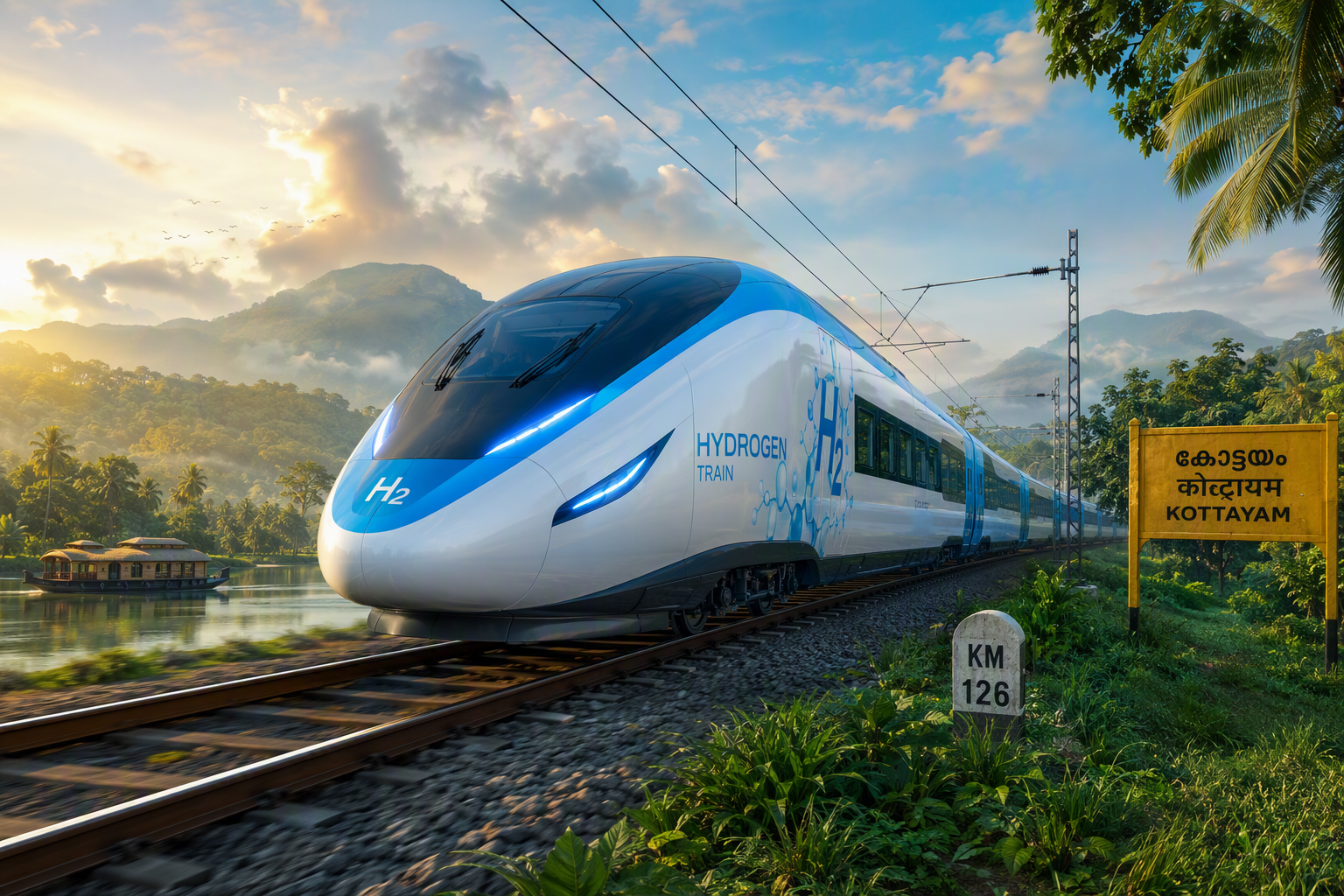
India’s first hydrogen powered passenger train will start running on 17 July 2026. Indian Railways built this project as a pilot. With this move, India will be part of a small group of countries that use hydrogen trains for cleaner ways to travel.
What makes this passenger train on Indian Railways special is that it uses hydrogen propulsion. It does not burn regular fuel. Instead, the train makes its own electricity right there with fuel cells. This shows how Indian Railways can use cleaner ways to move trains.
Timeline and Locations Served by the Hydrogen Powered Train
The plan for this project is ready. The hydrogen powered passenger train will begin running on 17 July 2026. It is part of a pilot project that is made in India. The train will run between Jind and Sonipat on the Northern Railway in Haryana. This will give Indian Railways real operational experience with this new technology.
Here is a short text table that has the main route details:
| Detail | Information |
|---|---|
| Start of operation | 17 July 2026 |
| Railway zone | Northern Railway |
| Main route | Jind-Sonipat section |
| Key cities or junctions | Jind Junction, Gohana Junction, Sonipat |
| Maximum speed | 75 kmph approved for operation |
| Design speed | 110 kmph |
The train will stop at many places while on the way. You can see stops like Jind City, Pandu Pindara Junction, Lalit Khera Halt, Bhambhewa, Isapur Kheri Halt, Butane Halt, Khandrai Halt, Rabrah Halt, Lath Halt, Mohana, Barwasni Halt, and Sonipat New. With all these stops, this passenger train is not only testing new things. It is also there to help people go where they need to be. This way, the train gives real help to people who have to travel.
Why This Innovation Matters for Green Rail Mobility
This new idea matters because railways need cleaner ways for future travel. A hydrogen train is good since it does not use as many fossil fuels. The train is also good for green rail travel as it gives off only water vapour and heat while working. This lets India see how sustainable transportation can work in real life.
It also helps Indian Railways get ready for more than one train. This project helps make bigger systems that Indian Railways will need in the future. It makes the skills better and helps with the way they run things and take care of the trains for hydrogen travel.
- It helps bring down tailpipe carbon emissions when you look at it next to diesel-powered trains.
- It goes well with the National Green Hydrogen Mission and the goal for net-zero carbon emissions.
- It lets green hydrogen be used more in rail work, which helps with its wider adoption.
This is why the launch means more than just building one road. It is a big step for cleaner and better transport planning in India.
Key Features of India’s First Hydrogen Powered Train
India’s first hydrogen powered passenger train has 10 cars. It uses hydrogen fuel cell technology for its engine. This train is made in India. It runs on a hydrogen propulsion system with a power of 1200 kW. The approved operational speed of the passenger train is 75 km per hour. The design speed can reach up to 110 km per hour. It can carry about 2,600 people. With this new fuel cell technology, the passenger train makes travel easy for many people.
The train comes with two power cars. Each of these power cars runs on hydrogen. The train also has eight trailer coaches. In every power car, you will see fuel cells, lithium iron phosphate batteries, and hydrogen storage systems inside. These parts are there to help with energy efficiency. They work together to make power as the train moves. This also helps the train give a good ride to people every single day. In the next parts, you will read how this whole system works and why it is so important to keep the setup safe.
Hydrogen Fuel Cell Technology and How It Works
Hydrogen is used as fuel in trains by using fuel cell technology. The train can make its own electricity by using fuel cells. In these hydrogen fuel cells, hydrogen mixes with oxygen. This gives out electricity that powers the train. After this, there is only water vapour and heat left.
The key part in hydrogen train technology is the Proton Exchange Membrane Fuel Cell. This fuel cell has a special membrane. The membrane lets protons go through it. With this, the chemical reaction happens and it changes the hydrogen supply into power that people use. So, the hydrogen train turns into a machine that moves and gives energy. The train does not need to burn fuel right away to work.
The train comes with hydrogen storage and energy storage systems. In the Hydrogen Driving Power Car, you can see fuel cells, lithium iron phosphate batteries, and hydrogen storage cylinders. These work together to help the train move, keep it on track, and make sure it works well when people use it.
Performance, Safety, and Environmental Benefits
Performance and safety are both very important for this pilot. Indian Railways has set up a new place in Jind. This place has all the things needed for the work. There is space to keep things, add more fuel, and help with compression. They also keep a close eye on things all the time to make sure everything is safe.
Running trains on hydrogen is still new. This project is here to help Indian Railways get more operational experience. It will help them learn what works best and get ready for bigger plans later.
There are safety systems in place on the train and with the support team too. Trained people will be there. Checks happen from time to time. There will also be technical staff at the start. Someone will be watching things all day and night. If there is an emergency, the Loco Pilot can move the train to make sure it is safe.
- Hydrogen leak detectors and flame detectors keep an eye on the places where you put away and fill up hydrogen.
- Automatic shutdown systems will stop the hydrogen supply if the system finds heat, sees smoke, or finds a flame.
- There is always ventilation running to keep air moving inside the train.
- The good side for the environment is clear. It gives off only water vapour and heat, so there are no tailpipe carbon emissions.
Conclusion
The launch of India’s first hydrogen-powered train is a big step for sustainable transportation. This new way helps bring down carbon emissions. It makes travel on Indian railways safer and better. When we start using green choices, we need to look at what this means for our environment and our economy. The use of hydrogen in Indian railways is more than a new idea. It moves us toward a cleaner future and shows that India wants to use more renewable energy. Stay updated and get involved in this change. India’s first hydrogen train is set to show what hydrogen technology can do for the rail system.
Frequently Asked Questions
How does the hydrogen powered train compare to diesel trains?
Hydrogen trains work in a different way from diesel trains. They use fuel cell technology to make their own power on the train. The trains do not burn diesel fuel. Because of that, hydrogen trains give off less carbon emissions. There is no heavy smoke—only water vapour and a little heat come out. On this route, these trains run at an operational speed of 75 kmph.
What are the main challenges faced in launching the 1st hydrogen power train?
The main challenges are there because the system is in an early stage. Indian Railways had to set up hydrogen storage and places where trains can get fuel. They also needed to put safety systems in and set clear rules for how people will use this. Like with many pilot projects, what they learn now will help them make better plans for the future. It will also help them grow this idea over time.
What role does hydrogen technology play in the future of Indian railways?
Hydrogen technology gives Indian Railways a cleaner way to move people in the future. This new way can help make energy efficiency better. It also supports the use of green hydrogen. Over time, the system can connect train operations with renewable sources. This is good for the railway, because it helps build skills, grow its structure, and get ready for wider adoption.