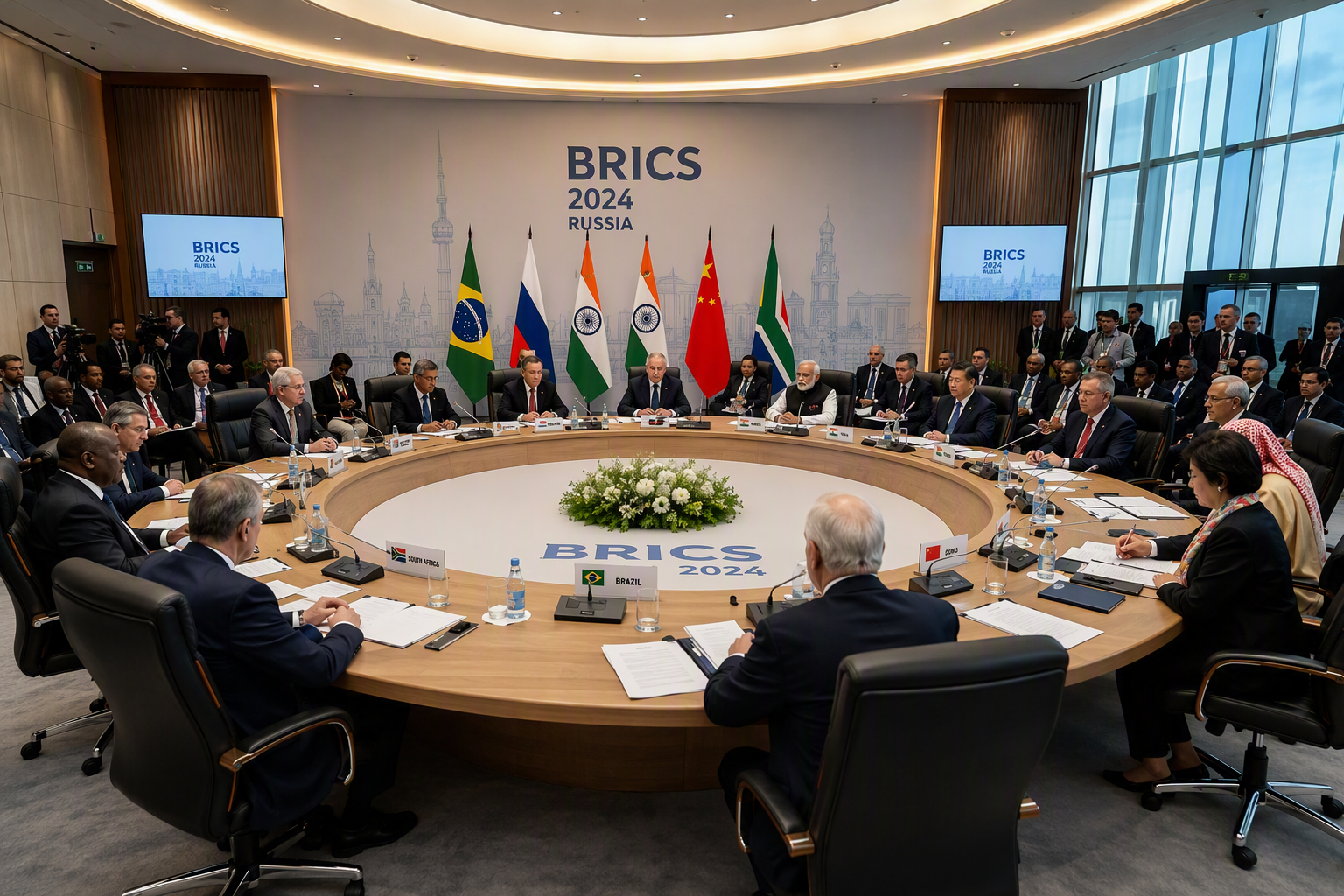
Key Highlights
- The BRICS countries came together to grow economic cooperation. They also want people in rising economies to have a stronger say in the world.
- The group started with Brazil, Russia, India, and China. South Africa joined later to make the group bigger.
- BRICS supports changes to global governance. They want all countries to be treated more fairly in international institutions.
- The group’s plans include sustainable development and financial stability. They also work on development projects with shared institutions.
- BRICS countries try to make international trade and investment stronger. They work closely for better teamwork among their member nations.
- The group invited new members. This shows they want to have a bigger part in the global economy.
Introduction
The BRICS group is now one of the most talked about groups in the world. This is because it brings together major new economies that have shared interests. If you want to know why it is important, you should look at how it focuses on economic growth, better group work, and a bigger part in international trade. BRICS has changed over the years. It started as just an economic idea. Now, it is a real group where leaders meet, make new plans, and work for a more fair world system.
The Genesis and Formation of BRICS
The start of BRICS goes back to the year 2001. A goldman sachs economist named Jim O’Neill first used the term BRIC to talk about Brazil, Russia, India, and China. This idea came from economist jim o’neill at goldman sachs. It showed that these countries were getting more important in the world economy.
Soon, that label became a political platform. The founders wanted to have better representation in financial institutions. They called for more space for the Global South and asked for closer coordination on development, trade, and global governance. In 2010, South Africa joined. This made the group reach even more people and places.
Historical Background and Evolution
The history of BRICS did not begin with a treaty. Instead, it started as a financial idea. In 2001, a goldman sachs economist pointed out how Brazil, Russia, India, and China could help shape the future. People took notice because these countries were growing stronger in the global economy.
A big change happened in 2009. The first formal BRIC Summit took place in Yekaterinburg, Russia. What started as an economic group began to become a place where heads of state could meet and talk. After that, annual summits became a regular thing.
Since that time, BRICS has become a strong voice for a fairer world order. The group now talks about global governance and ways to help the world’s economy recover. BRICS also looks at climate change and change in international institutions. When South Africa joined in 2010, it helped make the group’s identity bigger. This also made BRICS feel more tied to the global south.
Reasons Behind the Creation of BRICS
BRICS came into being because the big growing markets wanted to speak up together. They felt the world financial system and many top meetings did not show the new economic realities. As global GDP started to grow for them, they wanted to have more say in the world.
The founders wanted to set up something that stands on sovereign equality. They did not want to follow a bloc model. Instead, they wanted to work together and at the same time, respect each country’s own ways. This idea made BRICS appeal to developing countries that are trying to find their place in global affairs.
Key reasons behind its creation included:
- Pushing for fairer representation in global institutions
- Helping with economic development by working together and sharing money
- Giving emerging markets more say in how rules are set and what things are a top focus
Simply put, BRICS came together to link the power of their economies with their say in politics and to work better together in real ways.
Founding Members and Their Vision
The first members were Brazil, Russia, India, and China. These countries started out because they had fast-growing economies. They also had big populations, a lot of resources, and more influence in the world. South Africa joined later. This let the group cover more of the world, not just one place, and helped them have a bigger role in world politics.
At each BRICS Summit, the BRICS leaders talk about a vision they all share, not just one idea. They want stronger economic cooperation. They ask for better coordination with money matters. The group wants to have a bigger say in global governance. The BRICS leaders also prefer a global order where power is not held by just a few. Instead, they want more countries, including themselves, to have a role.
That vision is still important for the group. Brazil helped the group have more say in South America. Russia gave it more strength in bigger plans. India helped with size and more growth in services. China gave export power and more money. South Africa brought the bloc closer to Africa and the global south.
Understanding BRICS Full Form and Member Countries
BRICS is short for Brazil, Russia, India, China, and South Africa. The BRICS countries came together because they are large, they can grow fast, and they be more important in the global economy. As time went on, the name BRICS came to stand for much more than just these five words.
Today, the bloc has more member nations. It also works with partner countries. This is important. BRICS is now made up of a big part of the global population. That gives them more power in talks about development, trade, and making changes.
What Does BRICS Stand For?
The full form of BRICS is Brazil, Russia, India, China, and South Africa. This term was first used as BRIC in 2001. That was the year when Goldman Sachs pointed out these four big economies. They believed these countries would become strong in the world economy. Jim O’Neill gave them this name because he saw their huge potential. South Africa joined later, which made it BRICS.
At that time, it was just an idea about investment and the economy. It was not a group or organization yet. But this idea spread fast. The reason was that these countries’ economies were growing quickly and people around the world were watching them.
When South Africa joined in 2010, the group called BRIC changed to BRICS. This change gave the group a wider identity. It also made the links to Africa and the Global South stronger. Today, the BRICS nations are seen as a way for countries to work together and grow. The group also helps make the world system more open to everyone.
Overview of Member Countries
The first member countries were Brazil, Russia, India, and China. South Africa became part of the group in 2010. Later, BRICS grew to include more full members. Egypt, Ethiopia, Iran, the United Arab Emirates, Saudi Arabia, and Indonesia are also counted in the wider group of member countries.
The group also sees some countries as partner countries. These are Belarus, Bolivia, Kazakhstan, Cuba, Malaysia, Nigeria, Thailand, Uganda, and Uzbekistan. This setup lets BRICS grow its group without having to stick to a strict alliance model.
| Category | Countries |
|---|---|
| Original members | Brazil, Russia, India, China |
| Member added in 2010 | South Africa |
| Additional full members noted | Egypt, Ethiopia, Iran, United Arab Emirates, Saudi Arabia, Indonesia |
| Partner countries | Belarus, Bolivia, Kazakhstan, Cuba, Malaysia, Nigeria, Thailand, Uganda, Uzbekistan |
This mix of members and partner countries shows that the bloc is getting bigger and reaching more people.
Profiles of Each Country in BRICS
The main countries in the BRICS group are Brazil, Russia, India, China, and South Africa. Each of them is different in how they run their country and how they handle money and resources. They all have large economies and play a big part in the world. This mix of ways in which they do things makes the BRICS group important.
Brazil is known for farming, making things, oil, and minerals. Russia is big in size, and its money comes mainly from oil and gas. India has a mix of making things, farming, and services, with information technology as a key sector. China is famous for sending goods to other countries, making products, and new tech.
A quick profile of the core five:
- Brazil: It is the biggest country in South America. The place has many different resources and a growing economy.
- Russia: It is the largest country by land size. The country is strong in energy.
- India: A large country that is still developing. Its economy is growing quickly.
- China and South Africa: China is known for making goods. South Africa is important in Africa and has mining, tourism, and industry.
Core Objectives of BRICS as a Group
The main goals of BRICS are to help big growing countries work better together. They focus on economic cooperation and make sure there is financial coordination. BRICS also works to help support sustainable development not just in their own countries, but also in other places too.
The group also wants to change global governance by asking for better and fairer representation in international institutions. Through things like the BRICS Business Council and the New Development Bank, it works to turn these goals into real steps. The next parts explain these objectives in a clearer way.
Key Strategic Goals
BRICS works towards a few key goals. All of them aim to help rising economies work together better. The group also wants the world to be fair for all. Its members hope to play a bigger part in talks that decide how the global economy is run. They want to help build a more balanced global order.
BRICS is not just about trade. The group also works on financial cooperation, political talks, and building strong institutions. This is why BRICS made the New Development Bank and the Contingent Reserve Arrangement. These institutions help make members stronger and cut down their need for older systems.
Its main strategic goals include:
- improving the way members work together on big money and government issues
- helping to change how global governance and financial institutions work
- helping with development and stability, and finding good ways for members to work together
All these goals show that BRICS wants to help shape the rules for the world. They do not want to just react to them.
Focus on Economic Cooperation
Economic cooperation is a main focus for BRICS. The members are all big market economies with their own strengths. They work together in this group to talk about trade, investment, money, and ways to grow. By working as one on these topics, they can help with development.
One big step is to set up ways for money to help members right away. The New Development Bank gives money for infrastructure projects and other things that need development. The Contingent Reserve Arrangement helps keep financial stability when there is pressure on payments coming in from outside.
BRICS promotes economic cooperation through:
- helping to pay for infrastructure projects and work on clean energy
- making financial safety steps for when times are tough
- helping businesses connect through the BRICS Business Council
These actions focus on one question. How can countries grow quicker when they work together, instead of doing it alone?
Support for Developing Countries
BRICS acts as a place where the voices of developing countries can be heard. It is very much focused on countries in the Global South. Many members in BRICS are some of the largest developing countries of the world. For that reason, the group often connects what it does to the big development needs that these countries face.
This support is more than just words. The New Development Bank helps by giving financial support to development projects. This includes things like infrastructure and renewable energy in BRICS nations. The information shows that the bank has given about $8 billion for this work in these countries.
The main message here is easy to see. BRICS wants development money to be easier to get, easier to use, and not just controlled by older, powerful groups. BRICS also hopes to help with sustainable development, financial cooperation, and long-term investment. This can give more choices to countries that want to grow but do not want to give up their own ways of making rules.
Functions of BRICS in Global Affairs
In global affairs, the brics group is a place where countries work together and talk about big economic and political issues. It does not replace any international institutions. But the brics group does try to change how these international institutions work and who gets help from them.
BRICS helps to shape global governance through what it does and what it stands for. The group speaks for a big part of the global economy and a large number of people. BRICS builds its own groups and projects, too. This mix helps the bloc stand out in talks around the world.
Role in International Economic Governance
BRICS is easy to spot when it comes to global economic matters. The group believes global institutions need to match today’s economic world better. Its members have pushed for changes in the way groups that control money, loans, and rules do their work.
A big part of this work is with the International Monetary Fund and other global institutions. The report shows that BRICS often asks for changes in these places. They want less influence from Western countries. This is linked to the need for sovereign equality and having more voices and choices in the group.
The group also supports what it says with real tools you can use. It helps members who feel short-term money pressure by using the Contingent Reserve Arrangement, which gives financial stability. The New Development Bank offers a different way for development money to come in. This means BRICS takes part in world money rules. It is not just a critic of the World Bank and International Monetary Fund.
Promoting Multilateralism and Fair Trade
BRICS helps support the world economy by choosing open talk, agreed rules, and letting many take part. It is not set up as a military group. The members hold meetings, gather their leaders or ministers, and make shared statements to push for what they all want together.
Fair trade is one way BRICS countries look at things. These countries want the international trade rules to show the needs of both the big countries that are still growing and the ones that are already strong. In 2018, they all chose to work together to find and cut down technical problems that make international trade hard.
This is important because smoother trade can help not just those who are members, but also bigger markets around the world. When BRICS supports multilateral institutions, lowers trade barriers, and works for fairer rules, it helps global trade grow. BRICS tries not to depend only on the main power centers. This is one way they try to make the world economy fair for everyone.
Facilitating Development Projects and Initiatives
One clear job of BRICS is to help development projects by using their shared groups. The best-known example is the new development bank. People also call it the BRICS bank. This bank was set up in 2014 at the Fortaleza Summit.
The bank helps pay for infrastructure projects and other investments that are tied to sustainable development. The information also shows that the bank gives money to renewable energy. This means BRICS is not just working on roads or big building jobs. It is also putting money into areas that help people and places stay strong for a long time.
Financial cooperation is not just about one bank. The Contingent Reserve Arrangement helps members in the group when they have short-term money problems. Interbank systems also make it easier to borrow in local currencies. These tools show how BRICS turns big goals into steps that can help growth, keep things stable, and plan for development.
Impact of BRICS Objectives on International Trade
BRICS objectives help shape international trade. They do this by making member economies work closer together. BRICS countries also try to make trade easier between them. For these countries, trade is an important part of economic development. It brings in investment and helps with long-term growth.
The effects are not just for members. BRICS brings up trade problems in big talks around the world. This includes rules, trade blocks, and challenges like climate change. You can see how this plays out when you look at trade between members, the way they shape rules, and what they do in new areas for business.
Enhancing Trade Relations Among Members
BRICS helps the member nations work better together for trade. It does this by setting up forums where people from governments and businesses can work with each other. The BRICS Summit happens every year. At this summit, leaders of each country say what goals they want to focus on. There are also other ways BRICS helps to deal with anything that makes trade slow down.
A key part of this work is the use of local currencies. The group has set up a system for banks to work together. There is a way to give out credit in local currencies. This can help make transactions faster and easier. It also helps take the pressure off outside reserves. This way, trade and financial stability goals are linked together.
The contingent reserve arrangement is important in this case. When a member has trouble with its balance of payments, quick help with cash can make things easier. This way, BRICS does more than grow trade. It works to create a place where all can trade even when things get shaky.
Influence on Global Trade Policies
BRICS influences global trade by talking together at big world meetings. The BRICS nations make up a large part of the world’s trade, people, and global GDP. This means when they all agree on something, it matters and people pay attention to what they say about changes in the rules.
The bloc will often link trade issues to global governance reforms. Its members say that global institutions need to be more open and fair. They want countries that are still growing to have a bigger say in making decisions. This idea covers finance, trade, and broader ways we work together in the economy.
You can see the logic here. If a few big countries make all the trade rules, the other countries feel left out. BRICS is working to change that. It tries to make global trade rules that are fair to more people. BRICS does not run the whole system, but it now has an important role. Today, it speaks out in talks about how to make global trade more fair.
Driving Growth in Emerging Markets
BRICS is important for the Global South. It proves that big countries still growing can work together on money, trade, and policy. This helps people see that there are more choices for development. It also shows that there does not have to be heavy reliance on just a few institutions.
Its impact comes in two main ways. One is through symbols, showing that BRICS lets new markets take part in talks about the global economy. The other is through what it builds. It gives tools like the New Development Bank, options for financial cooperation, and help for infrastructure projects.
This helps drive growth in several ways:
- funding transport, energy, and clean energy investments
- improving financial cooperation during hard times
- giving developing countries a stronger voice together
For countries that are still developing, BRICS does not solve every problem. But, it is now a helpful place for the countries to work together. It helps with economic growth and with how they plan together.
Challenges and Evolution of BRICS Objectives
BRICS is now a bigger player in the world. But the group needs to deal with problems too. The countries in BRICS are not all the same. Each has its own way to run the country, its economy, and its ideas about dealing with other nations. This makes it hard for them to work together. That can be a problem when they want to reach the same goals.
BRICS goals have changed as the world order changes and new members join in. Bringing in more countries can give the group more chances, but it can also lead to questions on how to stay together, what to focus on, and how to make choices. The next parts show how the group deals with this balance.
Key Challenges Faced by BRICS
One big challenge for BRICS is its internal diversity. The member countries do not have the same way of running their economies. They also have different regional interests and do not always see eye to eye on foreign affairs. This can make it hard for them to reach agreement fast, even if they all like the main idea of working together.
Another challenge is putting ideas into practice. It is easy to make joint statements. But it is hard to keep policies in line across big and different economies. Financial stability worries, trade barriers, and home issues can all slow things down.
Major challenges include:
- balancing the needs and goals of each member country
- keeping strong economic cooperation when there are worldwide problems
- letting more countries join, but not losing the main focus or unity
These problems do not take away from the importance of BRICS. They show that a big group like this needs to work all the time to keep its goals real and useful for people.
How BRICS Decides and Updates Its Objectives
BRICS changes its goals by using a rotating presidency and having annual summits. Every year, one of the member countries leads and helps make the plan. This way, all members get a turn to focus on what is important to them over time.
The way decisions get made is helped by meetings. These meetings are between national governments, ministers, working groups, and some other official ways. The information put together explains this with Track I, Track II, and Track III cooperation. This means that diplomacy, talking between different groups and groups linked to national governments, and connections between people all matter.
BRICS leaders meet and talk at summits. After that, they use Summit declarations to guide their steps. They also use follow-up from their group to make ideas happen. Financial institutions like the New Development Bank and the Contingent Reserve Arrangement help push these plans forward. So, the BRICS objectives do change with time. But, they shift slowly, with agreement and yearly planning, not in sudden or big changes.
Expansion of BRICS and Its Future Goals
The growth of BRICS shows that more want to join in, and the group now looks more attractive. New members help the bloc reach more areas, while partner countries bring more working together. This growth tells us that many feel there is value in being on a team that cares about development, being seen, and sharing power.
Recent new members, like Saudi Arabia and the United Arab Emirates, show that BRICS is drawing in countries from many places. Indonesia joining as a full member shows the group keeps getting bigger. But, all members must agree if there will be more new countries, which helps keep control shared.
Its future goals are likely to include:
- deeper teamwork between old members and new members
- more development work and financial cooperation
- stronger say in global governance reforms
Expansion can help make BRICS stronger. But, this can happen only if the group keeps what it wants to do clear and easy to work on.
Conclusion
To sum up, BRICS is an important group that helps members work together on economic cooperation. It also supports multilateral trade between its member countries. The group tries to help developing nations and build better trade links. It wants to shape how global trade and economic decisions are made. BRICS does face some problems, but it keeps working to adjust its plans as the world changes. If we look at what BRICS wants to do, we can see its big effect on global trade and development. If you want to know more about how BRICS works, feel free to get in touch for more information!
Frequently Asked Questions
What are the main objectives of BRICS?
The main goals of BRICS countries are to have better economic cooperation and help with sustainable development. They also want a bigger say in global governance. BRICS countries work together to improve how they handle money and finance development projects. They also push for changes in international institutions. This way, emerging economies can get more say and be better represented.
How does BRICS differ from other international groups?
The BRICS group is not like Western powers that have been around for a long time. Instead, it brings together big market economies that are on the rise. The member nations of the BRICS group want to change global institutions so they can help make a more balanced world order. They also work to set up their own ways to manage money and development. At the same time, the BRICS group keeps a flexible setup and does not form a closed group or bloc.
What role does India play in achieving BRICS objectives?
India is part of the BRICS group. The country joins meetings and takes part in talks. It helps set what is important for the group. India also works for goals about economic development.
India adds to talks about global governance and trade. The country supports cooperation with other partners. India gets help from institutions tied to infrastructure projects. The nation also helps with plans about financial coordination.