
Key Highlights
- The Indo-Pacific connects the Indian Ocean and the Pacific Ocean.
- This part of the world is key for India because there is a lot of global trade here.
- The South China Sea and the main chokepoints control maritime security and how energy is moved.
- India’s Act East Policy puts more attention on this part in foreign policy.
- Plans like SAGAR, IPOI, and Quad meetings now guide how India works with this area.
- If you want to know about the UPSC, this topic talks about strategy, how countries connect, rules, and ways to keep balance in the region.
Introduction
The Indo-Pacific is now very important for India when it comes to power, safety, and growth. This place is more than just lines on a map. The sea here helps join different countries. It is where you see trade routes, the flow of energy, and big countries trying to get ahead of each other. For India, what happens here changes the way it plans for the sea. A big part of global trade moves through waters near India. If you want to get ready for the UPSC test, you need to know about this area. This will help you know how geography, the way countries talk to each other, and keeping the country strong all match up in an easy way.
Understanding the Indo-Pacific Region for UPSC
The Indo-Pacific is where the Indian Ocean and the Pacific Ocean come together to make a single big area that matters a lot. This place is important for trade, the navy, and power, because these things do not stop at the shore. India now thinks this part of the world is wide, connected, and more important than ever.
For UPSC, you need to look at southeast asia as a place and as a main area. Southeast asia sits in the middle of this link. To write a good answer, you have to know what places it covers. You also need to know which countries are in it and the sea paths that shape India’s steps.
Definition and Geographical Scope
The Indo-Pacific idea is larger than the older Asia-Pacific view. The Asia-Pacific was about East Asia and the water near it. The Indo-Pacific joins the Indian Ocean and the Pacific Ocean. It sees both as one big area that we think about together. This new way comes from trade, safety, and how we talk with other countries, as all these now cross both the Indian Ocean and the Pacific Ocean.
India has an open idea about the indian ocean region. For india, this area stretches from the coast of Africa to the Americas. It includes the full indian ocean, part of the Pacific in the middle and west, and large parts of southeast asia and east asia. This big indian ocean region is why india puts it at the center of its foreign policy.
The UPSC looks at countries that are in or near the Indian Ocean, Southeast Asia, and East Asia. There are also countries along the edge of the Indian Ocean that are looked at. Some of these countries are partners with the Pacific area. You will see that the UPSC covers many regional powers in these places. This group of countries is not always the same. It is based on where they are and how important that is, not on a fixed list.
Key Countries and Strategic Maritime Chokepoints
Some countries matter a lot because they sit near key sea routes. Others are important because they use their navy and work together with other countries. India, the United States, Japan, Australia, and the ASEAN states all have a big role to play in this area. The South China Sea is a tough spot. This is because the south china sea disputes can change how ships go, how steady things feel, and what people think about trade.
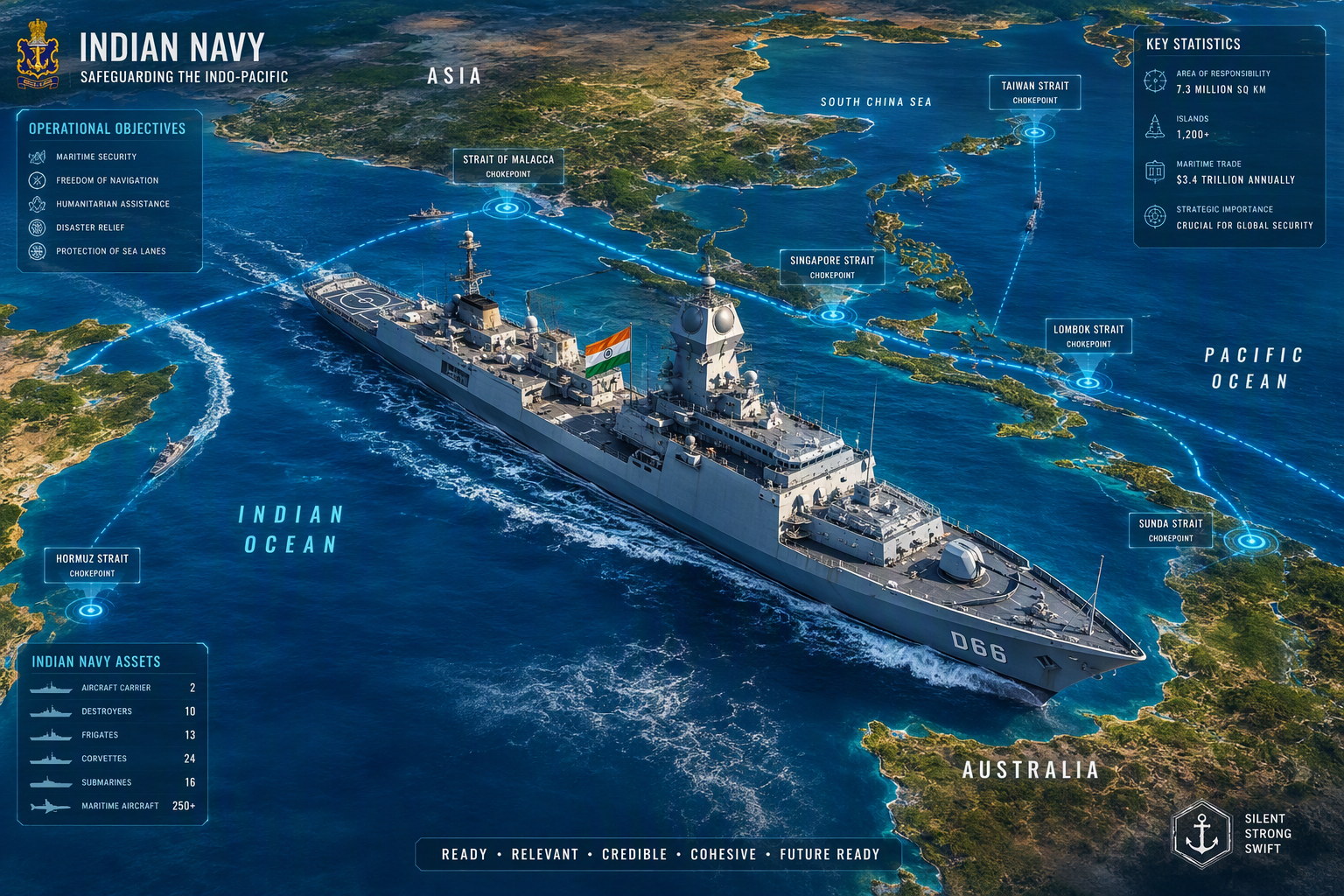
The main chokepoints are narrow places on sea routes. A lot of the world’s trade and energy supplies go through them. Each one is important for India’s trade and for its energy supplies. These spots also lead to many maritime security concerns for the country.
If something blocks one of these chokepoints, oil and gas might not get to India. This can cause real problems with energy supplies and make things cost more. If one of these places is blocked, India’s trade can feel the change right away. Goods that come or go by ship may get stuck. This hurts both exports and imports.
There is also a big issue with maritime security in these areas. India must keep watch on these chokepoints so that pirates, people who want to hurt the country, or other bad groups do not cause trouble. To watch out for its own interests, India keeps an eye on the area. It also works with other countries. Because these sea lanes are so important, security concerns there need a lot of attention.
In the end, these chokepoints affect India’s trade, the flow of energy supplies, and many security concerns out in the sea. A problem at any chokepoint can have a big impact on the country.
- The Strait of Malacca and the Malacca Straits join the Indian Ocean to East Asia and the Pacific.
- The Strait of Hormuz and the Suez Canal are important. People use them to move oil and do other sea trades.
These routes matter a lot for India. If there are any problems, costs can rise fast. These problems also put supply chains at risk and add new security risks. That is why India wants freedom of navigation. India also looks for steady sea lanes and better maritime cooperation with other countries.
Significance of Indo-Pacific in India’s Foreign Policy
The Indo-Pacific is a key part of India’s foreign policy. A lot of global trade goes on in this area. It links money matters and safety for the country. India needs sea routes to stay open, steady business ties, and strong partners for growth. What happens here can change the way people live in India.
There is a strong plan to this. For India, maritime security is very important. It wants the power in the area to be fair. India also wants others to stay with the rules. These things help shape what India decides to do. If you want to know more about it, look at how important its ties with other countries are. You should also see what India’s main strategic interests are in the area.
Indo Pacific Policy UPSC and Relevance in International Relations
The Indo-Pacific is a key area in world relations. Many trade routes and strong navies are found here. There are big rivalries as well. For UPSC, this place shows how geography shapes foreign policy and the way countries act. India now thinks the Indo-Pacific is very important. India wants this area to help keep the world steady and fair for all.
India is next to the Indian Ocean. The country is close to what happens there. It is part of this area and has its own goals. These goals include shipping, energy resources, and keeping peace in the Indian Ocean region. This is why the indian ocean region is very important for India. It helps the country as it moves from being a power that balances things to a power that leads.
You should also talk about rules. India supports the law of the sea and wants everybody to follow a rules-based order. India stands by the ideas in UNCLOS. In easy words, India wants a peaceful settlement of disputes. It asks that people follow the rules at sea, and that everyone gets equal access to the sea.
Major Strategic Interests of India
India’s top plans in the Indo-Pacific area are good for the country and will work for a long time. The region helps India have economic growth. It keeps trade paths safe. It also helps India to be important in the world. When sea routes stay open and steady, India gets more out of trade, energy, and working with nearby countries.
You can put the interests of India into a few simple groups when you write for the UPSC exam.
- Keep maritime security strong so that trade and shipping are safe.
- Make sure that supply chains and energy supplies moving through key waters are also safe.
- Stop any one group from having all the control over the main paths of global trade.
India also has a bigger goal. It wants this region to stay open for all people. India does not want one group to have all the control. That is why India’s economic interests are about working together, being present, and helping keep peace over this large ocean area.
Historical Evolution of India’s Indo-Pacific Vision
India’s Indo-Pacific vision has been there for many years. It did not happen overnight. This idea started with India’s outreach, mainly called the Look East approach. After the Cold War, India took this step to connect to southeast asia. This move made regional cooperation stronger.
Later, India started to use the Act East Policy. This made the country’s plan more lively and smart. As time went by, it grew bigger and started to focus more on the sea. Now, the Act East Policy is also about how places are joined, how to keep people safe, and how to stick to an international order that has clear rules. The next two parts will help us know how these changes took place.
Shifts from Look East to Act East Policy
The Look East Policy began in 1991. At this time, India wanted to connect again with southeast asia after the Cold War ended. When it started, the policy was mostly about money and making more friends. India wanted to grow trade with southeast asia. The country also wanted to join big asian groups and be part of new changes in the area.
The act east policy was shared in 2014. This policy pushed the idea forward more than before. It was more active and came with a plan. It did not only look at making economic links. The act east policy also looked for closer ties in things like roads, safety, and talking with other nations. This shift showed India is ready for a bigger role in that region.
A major sign that things were changing is that India started to join many regional meetings like the East Asia Summit. With this, India worked for both economic integration and better security ties at the same time. In simple words, the Look East plan opened the door for India. Act East let India go ahead with more energy and purpose.
Emergence of Indo Pacific Vision UPSC Perspectives
India’s Indo-Pacific vision became more clear as people in the region began to talk about more than just the usual Asia-Pacific idea. The focus is now on the whole area, not just different parts. It is about one large sea system where trade, plans, and talks come together. India saw this change and made a bigger and more open view for everyone.
A big moment happened in 2018. In that year, Prime Minister Modi shared that India wants to be open, free, and welcoming to everyone. He said this to show that India does not want to be stuck in small group politics. This idea also matched well with India supporting ASEAN to have a main part and to follow agreed rules.
Since then, India has worked on this idea by doing things like joining maritime cooperation, SAGAR, IPOI, and taking part in the quadrilateral security dialogue. All these steps help India be a net security provider, not just in nearby waters but also in the larger Indo-Pacific area.
India’s Maritime Policy in the Indo-Pacific Context
India’s maritime policy in the Indo-Pacific mixes defense, working with other countries, and development. It is not only about sending out the Indian Navy. The aim is to make the seas safer, build better partnerships with other nations, and raise maritime domain awareness in the area. This region is very busy and sometimes has disputes, so doing these things is important.
India’s plan is not just about safety. It also looks at sustainable development. The plan uses ideas like the blue economy, taking care of the sea, and being ready for bad events. This means the policy is about more than just keeping safe. To get what it means, you should know the ideas behind it first. After that, you can see how the navy helps make it happen.
Core Principles and Objectives
India’s maritime policy is based on a few main ideas. The country wants the region to be open and welcoming for all. India believes that every country should respect the freedom of others. A peaceful settlement of disputes is also at the heart of their goals. These things matter because any problems at sea can make trade harder, harm ties with other countries, or put the safety of the nation at risk.
Another important idea is support for the law of the sea. India always speaks up for the freedom of navigation as well as flying over in worldwide waters. For UPSC, you can link this to how UNCLOS gives rules for what people do at sea. It is key for all to act in a clear and expected way in those places as the law of the sea helps keep things safe and fair for everyone.
India has a simple goal. The country wants to get better at maritime domain awareness. This helps India see dangers early and tell their partners fast. India keeps an eye on what moves on the water. It works to protect exclusive economic zones. The country also tries to stop piracy and other illegal things. India wants to be ready for any sudden problem that comes up.
Role of Indian Navy and Maritime Diplomacy
The Indian Navy plays a big part in making sure plans work in real life. It watches over the main waters and works with other navies. This helps things stay safe and go well at sea. India also uses the navy to talk and work with other countries. This helps build trust and brings people closer. So, working together with other nations on the sea is an important part of what India wants to do.
This role is not only about stopping others from coming close. The navy gives India a way to be one of the first to help when there is a problem. It also shows that India can be a good friend to other countries when things get hard.
- The group works to help with capacity building. It does this by giving training, sharing facts, and doing practice with others like Malabar and Milan.
- It gives humanitarian assistance and disaster relief to people when countries in the area face trouble.
India’s maritime cooperation gets help from groups like IFC-IOR. This group helps everyone to get better shared awareness. In his talks for UPSC, one can see that the navy and speaking with neighbors are both important. India does not just keep the sea lanes safe, it also works to make the area safe for all.
Addressing Security Challenges in the Indo-Pacific
The Indo-Pacific does bring many security challenges for India. There are some old problems, such as rivalry, more weapons, and stress on sea routes. There are also new problems that are not traditional. These include piracy, disasters, and illegal work at sea. All of these issues shape maritime security in the area.
India does not use just one way to respond. It uses many different things. There is a strong presence. There are also good partnerships. India works together with others. It uses disaster risk reduction and talks with countries near it. This is a big part of how India does things. The next parts will show what India does to handle Chinese dominance. They also say why partnerships are very important.
Responses to Chinese Dominance
India’s Indo-Pacific strategy does not use strong words against China. But, in practice, it tries to balance China’s power. India supports a region that is open and where everyone can take part. It also means that no single country should control the seas in that area. With this approach, India acts carefully. At the same time, it keeps its right to make its own choices.
A big worry is that China is doing more in the South China Sea and the Indian Ocean. Many people think the “string of pearls” means China is trying to get more control near India. This lets China use more ports, build more bases, and have more power near India’s sea borders. These things can bring security risks for trade and navy ships in this area.
India deals with these issues by getting closer to other countries. It keeps a close watch in the area, sends navy ships, and supports freedom of navigation by following world law. India stands with ASEAN and works with groups like the Quad. In your UPSC answers, say that India uses balance as its main way and does not fight.
Collaborative Initiatives and Partnerships
India works best when it partners with others. India teams up on important issues with ASEAN countries, regional powers, big democracies, and more. This helps India protect its interests. It also makes sure that no one feels left out. In such a big region, it is important that we all work together.
Several platforms support this approach.
- The Quadrilateral Security Dialogue brings together India, the united states, Japan, and Australia.
- ASEAN-led forums help make sure that Southeast Asian voices be at the center of this region.
- Small group talks like India-France-Australia and India-Japan-Australia give more ways to stay flexible.
These partnerships are important for things like maritime security, fixing infrastructure, handling disasters, and keeping supply chain resilience strong. They help a country to not rely too much on just one. For UPSC, know this. India gets stronger when it works with other countries at different levels. This does not happen if India works alone or is in just one group all the time.
Recent Developments and India’s Leadership Role
Recent events show that the Indo-Pacific is now more than just an idea. It is turning into real steps and actions. India is an active participant now. The country is helping shape talks about trade, security, and how people connect in the region. This matters because global trade and keeping the region stable go together here.
India shows strong leadership in regional meetings, sea growth projects, and by making good ties with islands. The country does not want to take over the area. It works to help make an international order that is open and fair for all. The next parts will talk about where this work stands out and why it matters.
Key Regional Forums and India’s Engagement
India joins many regional groups to push its Indo-Pacific vision. This is big for UPSC, because the updates cover more than just navy work. They also talk about meeting and talking at many levels, working on the economy, and helping to make rules. India wants to work with open groups that connect safety and growth.
Here is a quick text table you can revise from:
| Forum/Framework | India’s relevance |
|---|---|
| East Asia Summit | Platform where India advanced regional strategic engagement and launched IPOI in 2019 |
| ASEAN Regional Forum | Useful for dialogue on security and confidence building with ASEAN states |
| Indian Ocean Rim Association | Supports cooperation across the Indian Ocean on shared regional concerns |
| United Nations Convention on the Law of the Sea | Legal basis India invokes for maritime conduct, freedom of navigation, and peaceful settlement |
India is now a part of IPEF. The country is also building ties with Pacific islands through FIPIC. Indian navy ships and teams are in the south china sea and there to watch and be seen. All these things show that India has a bigger and more open role in the south china sea area.
Impact on India’s Global Connectivity
The Indo-Pacific is very important for how India connects with the world. It sits across the sea routes that link India to East Asia, the Pacific, west asia, and many other areas. If the seas here stay open and stable, this helps India move forward. India can reach markets, get energy, and work with other big partners more easily.
India puts in a lot of work to improve its infrastructure development and transport links. There are big projects like the India-Myanmar-Thailand Trilateral Highway and the Kaladan Multi-modal project. These help the country get better trade routes. The projects are also good for bringing the region together. They make supply chains stronger by connecting them to sea routes. All these things help people and goods move faster and easier.
The wider effect of this can be seen in global maritime trade. A safe Indo-Pacific lets India connect its factories, ports, and foreign markets with less trouble. In simple words, when things are connected well, trade gets better. India also gets more power to shape the region’s economic ties and make its own reach bigger.
Role of West Asia in India’s Indo-Pacific Strategy
West Asia is a big part of India’s Indo-Pacific plan. India does not see this place in a small or limited way. The country looks at the sea as one line that links the seas in the east to the west. This includes West Asia and the Middle East. A lot of energy supplies come from this place.
For India, this is not only about working with other countries. The country is also thinking about crude oil routes. It wants to keep shipping safe and get more strong reach in the area. To really know what this means, you need to look at the paths that crude oil takes. Then, you can see how India tries to grow its power in the world by working with friends from the West.
Strategic Energy Routes and Partnerships
West Asia matters a lot to India because it helps meet the country’s energy needs. A big part of the oil comes from the Persian Gulf, and goes through the Strait of Hormuz. This happens before the oil moves on to larger sea routes. If there is any problem in this area, it can impact India’s economy fast. Prices may go up and there might not be enough oil.
This connects West Asia with India’s larger Indo-Pacific plan. The area links India’s Link West plan with its sea plan. In words used for UPSC, the flow of energy matters a lot. These routes move many barrels of oil. This helps to keep growth steady in the country.
India has a good location advantage. The country sits in the Indian Ocean. It works with many partners, like those in Sri Lanka and other places. Because of this, India can watch and act when energy moves by sea. This is one reason why West Asia is always so important for this region.
Enhancing Geopolitical Influence
India’s link with West Asia makes its spot in the world stronger. This sea area lets India get to the big energy suppliers, key trade routes, and other top countries. So, being active there keeps India’s economy safe and gives it more power when talking with others.
It also helps India have good links with other regional powers. At the same time, it lets India keep its own choices. This matters because in West Asia more countries have a say, not just the local ones. The United States and the United Kingdom are part of this too. These links help shape how safe the sea paths are in that area.
From the view of UPSC, there is one clear point to see here. West Asia makes the western side of India’s Indo-Pacific vision bigger. When India works with the main regional powers and its sea partners, this helps protect important access for the country. It also helps India grow its influence and keep the area more balanced.
Major Challenges and Opportunities for India
India looks at the Indo-Pacific region and sees both good and bad things. There are real security concerns, as well as growing military competition. The area can feel unstable at times. But, this region also gives India new chances for economic growth. There is a way for India to help make better connections here and to build close partnerships. It is clear that India can not step back from being part of it.
Maritime security is at the center of both the problem and the chance to change things. If India works well to handle risks, it can grow in trade and power. The next two parts look first at the big threats that are there. Then, they talk about good ways to move ahead.
Regional Instability and Non-Traditional Threats
India faces many challenges in the Indo-Pacific area. These are not only about the military. There are power struggles in the region, and some countries are getting more weapons. Because of this, trade routes can become less safe, and it can be harder for countries to talk with each other in a good way. India also has some gaps in shipping and does not have enough infrastructure. This means it cannot always answer quickly or well in certain places.
Non-traditional threats are also very serious. Things like piracy, illegal acts at sea, and bad weather can hurt trade and trust in the area. Climate change makes things even harder. It puts places near the coast or out on islands more at risk. These problems are not small. They change the way people plan, and the way people feel safe here.
India can deal with these risks in more than one way. It can use its navy for work in this region. Another good way is to work with other countries. Regional cooperation helps a lot. India should build stronger systems with others to solve these problems.
It is not good to face all security risks by force alone. A mix of teamwork and good rules will help keep things safe for all. Working together through regional cooperation makes a big difference.
Opportunities for Strengthening Maritime Security
There are real challenges, but the Indo-Pacific gives India many good chances. The best of these come from teamwork. India does better when it does not work alone. India can make maritime security better. At the same time, when India does simple and clear things with others, it helps build trust. This also helps all partners’ interests.
A few opportunities stand out clearly.
- Increase capacity building for the smaller littoral states by giving training and sharing information.
- Improve how we work together on security by doing more with surveillance, practice drills, and white shipping coordination.
- Use disaster risk reduction and help during disasters to make the region stronger and more trusted.
These new openings help India look like a trusted leader at sea over time. They also fit well with plans like SAGAR, IPOI, and IFC-IOR. When you write UPSC answers, say that the best chances come up when security, development, and working together back each other up.
UPSC Focus: How to Approach Indo-Pacific Questions
Many students know the facts, but find it hard to write answers. For Indo-Pacific questions, UPSC looks for good structure. You must be clear. The answer should also show how the geography links with policy. So, try to make a simple plan for your answer. Do not only learn many single points.
A good way to answer is to start by giving the meaning first. Then talk about why the topic is important. After this, talk about what India wants, what problems it faces, and how it is taking action. Always keep the indian ocean and the indian ocean region in mind when you talk about india pacific policy.
The next two sections will show how you can make good answers for mains. They will also tell you how to stay away from common mistakes.
Tips for Framing Mains Answers Using Indo Pacific Policy UPSC Concepts
In UPSC mains, your answer should be clear right at the start. First, give a short meaning of the Indo-Pacific. Then, talk about why the Indo-Pacific matters for India. After that, say what India wants in that area, the problems India faces, and what can be done to fix them. When you use this method, the person checking your answer will find it easy to read and understand.
You can use this simple model in sample answers:
- The Indo-Pacific is a joined area where the Indian Ocean and the Pacific Ocean meet.
- India has many interests in this part of the world. This includes trade paths, energy needs, and strong maritime security.
- India uses many policy ideas like Act East, SAGAR, IPOI, and works with others in the region.
- A rules-based order and the law of the sea should show the way for all countries in the Indo-Pacific.
Try to share both the facts and your thoughts when you write. Do not just say what steps were done. Tell why each step is important. Good writing will show how every example can help prove a point about India’s role, the area’s peace, or how the country can make its own choices.
Sample Answer Structure and Common Pitfalls
A good sample structure is easy to keep in mind. First, start with a short intro that tells what the region is. In the next part, talk about why this place is important, why India cares, the problems India deals with, and what India has done so far. End with a line about the way forward, which should focus on making the region more open, better connected, or safer for ships that go through.
Many students do not get good marks because they write too much in their answers. You can do better in your test if you make simple links between geography and policy. For example, when you talk about chokepoints, say how these connect to global trade, energy security, and India’s worries about the sea.
Watch out for these common pitfalls:
- Writing only about China and not talking about ASEAN, trade, or working with groups and institutions.
- Seeing the Indo-Pacific as just a loose idea, and not as a real, useful space for plans and actions.
Sure, please provide the text you’d like me to rephrase.
Conclusion
To sum up, it is important to know what the Indo-Pacific region means for India. This matters a lot for India’s maritime policy and its foreign ties. The world is changing now, so India must work to make its maritime security strong. It also needs to handle problems in the area in a good way. New partnerships and projects are now coming up. These will give India more say in this changing place. If you keep these points in mind for your UPSC books, you will get a good view of India’s role in the Indo-Pacific. If you want to know more or have any questions, ask for a free talk with our experts!
Frequently Asked Questions
Which countries are included in the Indo-Pacific region for UPSC?
For UPSC, the Indo-Pacific has many countries. The countries are in the Indian Ocean and the Pacific Ocean. The Indo-Pacific also takes in places from Southeast Asia, East Asia, and the lands by the Indian Ocean. India looks at the Indo-Pacific in a wide way. This area goes from Africa all the way to the Americas. So, it is a large and open region for making plans and working with others.
What are the key maritime chokepoints and their significance for India?
The Strait of Malacca, the Strait of Hormuz, south china sea routes, and the Suez Canal are very important for many countries. They move most of the trade and energy people need. For India, these routes help keep maritime security strong. They also make sure that shipping stays safe and steady.
If something happens in these areas, it can slow down or stop the movement of goods, supplies, and people. That can make problems for business and block important paths. This is why south china sea, south china, strait of hormuz, strait of malacca, and suez canal are key for India’s safety and trade.
How is India’s maritime leadership shaping the Indo-Pacific region?
Indian Navy plays a big part in the area because it works with others, works close to nearby areas, and helps other places when needed. Indian Navy is important for things like keeping sea routes safe, being ready for disasters, working as a team, and letting people feel secure. These things are there so sea lanes stay open and safe for everyone in the world. It shows that Indian Navy takes responsibility and supports people when there is a problem. The Indian Navy is important for the whole world in these ways.

